

Table of Contents
- When to Hire a Public Adjuster for Water Damage
- How Water Damage Claims Work
- Water Damage Insurance Claim Documentation
- What to Say to an Insurance Adjuster About Water Damage
- Public Adjuster Fees and Percentage
- How a Public Adjuster Negotiates Your Water Damage Claim
- Choosing the Right Public Adjuster for Your Claim
- Frequently Asked Questions
Last Updated: October 11, 2026
When to Hire a Public Adjuster for Water Damage
Public adjuster water damage claims are complex. Insurance companies often deny or underpay them. But hiring a public adjuster is not always necessary. The decision depends on your specific situation.
Use this checklist to decide whether a public adjuster makes financial and practical sense for your claim:
Claim Size and Complexity
Claim size matters. Small claims under $10,000 rarely justify a public adjuster’s fee, even if they recover additional funds. The percentage fee may consume most of the gain. Claims between $10,000 and $25,000 are borderline; the adjuster’s expertise and your policy’s complexity determine whether hiring is worthwhile.
Complexity also matters. Simple claims, a single burst pipe, clear coverage, straightforward damage, may not need an adjuster. Complex claims involving hidden damage, multiple coverage questions, disputed causation, or damage spanning multiple areas of your home justify professional help regardless of size.
Denial or Underpayment Risk
You should hire a public adjuster if:
- Your claim was denied and you believe the denial is incorrect
- The insurer’s initial offer seems significantly lower than repair estimates you obtained
- Your claim involves water damage the insurer’s adjuster may have missed (behind walls, under flooring, in crawl spaces)
- Coverage is disputed (e.g., the insurer claims the damage is gradual rather than sudden)
- The insurer cited a policy exclusion you believe does not apply
You may not need an adjuster if:
- Your claim was approved and the settlement aligns with contractor estimates
- The insurer’s adjuster conducted a thorough inspection and documented all visible damage
- Your policy clearly covers the damage and no exclusions apply
Don’t accept the first offer without comparison. Obtain at least two independent contractor estimates for repairs. If the insurer’s offer falls significantly short of these estimates, a public adjuster can often recover the difference and more.
Policy Limits and Coverage Exclusions
Before hiring an adjuster, review your policy’s coverage limits and exclusions. A public adjuster cannot overcome policy limits, if your coverage cap is $50,000, they cannot recover more than that. They also cannot force coverage for excluded damage (e.g., gradual leaks or flood damage if you lack flood insurance).
However, an adjuster can:
- Challenge the insurer’s interpretation of exclusions
- Identify damage within covered categories the insurer missed
- Ensure you receive the full limit if damage justifies it
- Help you understand whether supplemental coverage (e.g., flood insurance) applies
If your policy limit is low relative to the damage, or if the damage falls squarely under an exclusion, hiring an adjuster may not help. Conversely, if coverage is ambiguous or the insurer is underpaying within your limit, an adjuster is valuable.
Financial Breakeven Analysis
Calculate whether the adjuster’s fee is worth it:
- Estimate the gap between the insurer’s offer and what you believe the claim is worth (based on contractor estimates).
- Multiply that gap by the adjuster’s fee percentage (typically 8-10%).
- If the adjuster recovers the gap, you pay that fee and keep the rest.
- If the gap is small relative to the fee, hiring may not be worthwhile.
Example: Insurer offers $40,000. Your contractor estimates $60,000 in repairs. The gap is $20,000. At a 10% fee, the adjuster costs $2,000 if they recover the full gap. You net $58,000, a $18,000 gain. This is worthwhile. If the gap were only $5,000, the fee would be $500, and the net gain $4,500, still worthwhile but marginal.
Timing Considerations
Hire an adjuster promptly after denial or underpayment. Most policies require claims to be filed within one to three years of the loss, but evidence degrades over time. Mold growth, additional structural damage, and fading documentation weaken your position. Early engagement allows the adjuster to conduct a thorough inspection while evidence is fresh.
If your claim was denied, do not assume it cannot be overturned. Many denials are based on incomplete inspections or misinterpretation of policy language. A public adjuster can challenge the denial with additional evidence and expert documentation. However, act quickly, delays strengthen the insurer’s position.
How Water Damage Claims Work
Water damage claims follow a specific process. Understanding each step helps you prepare documentation and know what to expect.
What the Insurance Company Covers
Your homeowners insurance policy covers sudden, accidental water damage in most cases. This includes damage from burst pipes, ice dams, and sudden flooding. However, coverage varies by policy and exclusions are common.
Most policies do NOT cover damage from gradual leaks, poor maintenance, or flooding from external sources. Flood damage requires separate flood insurance through the National Flood Insurance Program (NFIP). Read your policy carefully to understand your coverage limits and exclusions.
Common Reasons Claims Get Denied or Underpaid
Insurance companies deny water damage claims for several reasons. The most common is classifying damage as gradual rather than sudden. They may also claim the damage falls under an exclusion in your policy.
Underpayment happens when the insurer’s adjuster underestimates repair costs or ignores hidden water damage behind walls and under flooring. They may also apply depreciation too aggressively, reducing your payout. This is where a public adjuster water damage expert makes a real difference by identifying damage the insurer missed.
Water Damage Insurance Claim Documentation
Documentation is everything in water damage claims. The more evidence you provide, the stronger your position during negotiation.
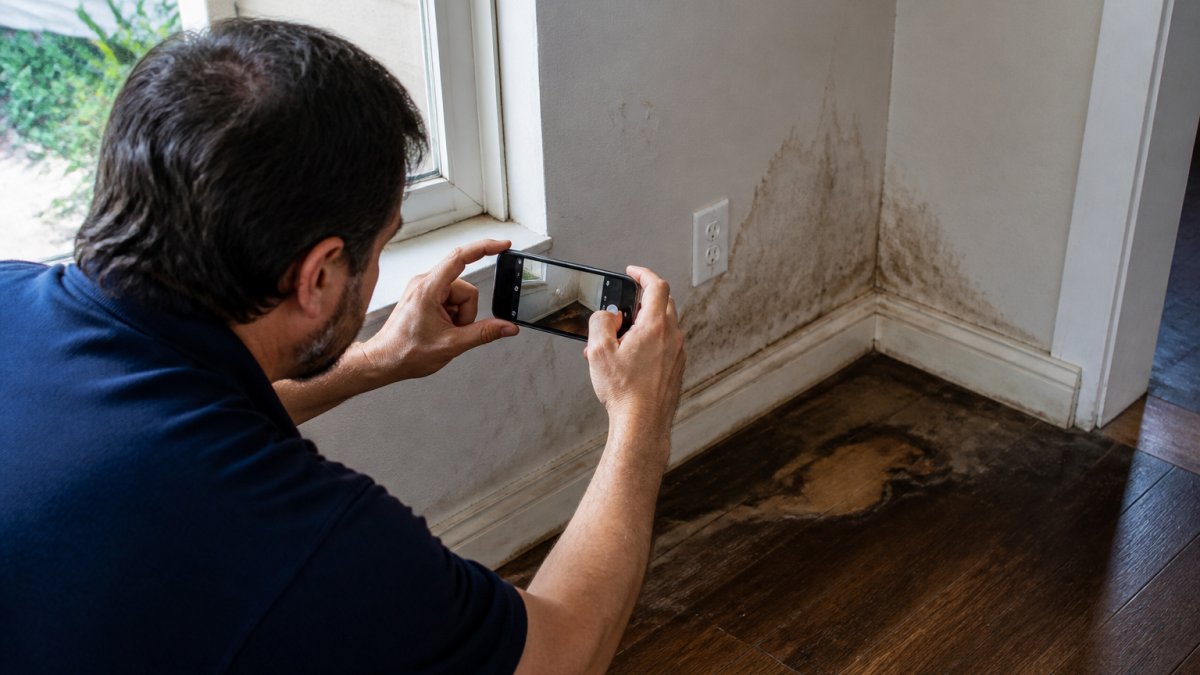
Start documenting immediately after water damage occurs. Take photos and videos of all affected areas, including water stains, mold growth, and structural damage.
Keep receipts for any emergency mitigation work (water extraction, dehumidifiers, temporary repairs). Write down a detailed timeline of events.
Contact your insurance company promptly and provide all documentation. File your claim within the timeframe specified in your policy. Keep copies of everything you submit.
What to Say to an Insurance Adjuster About Water Damage
How you communicate with the insurance adjuster affects your claim outcome. Be factual, detailed, and professional.
Describe the damage clearly and chronologically. Explain exactly what happened and when you discovered it. Point out all affected areas, including hidden damage behind walls and under flooring.
Do not minimize the damage or make assumptions about coverage. Let the adjuster see everything. Mention any previous similar incidents only if directly asked.
Ask the adjuster to explain any coverage exclusions or limitations they cite. If something seems wrong, note it and discuss it with a public adjuster before accepting any settlement offer.
Public Adjuster Fees and Percentage
Public adjusters work on a contingency fee basis. You pay only if they recover money for you. This aligns their incentive with yours: maximize your settlement.
Schedule your FREE Claim Consultation today →
Fee Structure and Typical Ranges
Most public adjusters charge a percentage of the additional recovery, that is, the amount above the insurer’s initial offer. Some adjusters charge a flat percentage of the total settlement instead. A few may negotiate a hybrid model combining a percentage fee with a cap or a minimum recovery threshold.
State regulations may impose fee caps. Always verify your state’s rules and confirm the adjuster’s fee complies with them. Request the fee agreement in writing before signing.
Fee Examples and Net-Payout Calculations
Understanding how fees affect your final payout is critical. Here are realistic scenarios:
Scenario 1: Small Claim
- Insurer’s initial offer: $15,000
- Public adjuster recovers: $22,000
- Additional recovery: $7,000
- Adjuster fee at 10%: $700
- Your net payout: $21,300
- Benefit vs. initial offer: $6,300 (42% increase)
Scenario 2: Mid-Range Claim
- Insurer’s initial offer: $50,000
- Public adjuster recovers: $75,000
- Additional recovery: $25,000
- Adjuster fee at 10%: $2,500
- Your net payout: $72,500
- Benefit vs. initial offer: $22,500 (45% increase)
Scenario 3: Large Claim
- Insurer’s initial offer: $120,000
- Public adjuster recovers: $180,000
- Additional recovery: $60,000
- Adjuster fee at 8%: $4,800
- Your net payout: $175,200
- Benefit vs. initial offer: $55,200 (46% increase)
These examples show that even with a percentage fee, the adjuster’s recovery often far exceeds their cost. The key is ensuring the additional recovery justifies the fee.
When Fees May Not Make Sense
For very small claims, typically under $10,000, a public adjuster’s fee may consume a significant portion of the recovery. If your insurer’s offer is already reasonable and your claim is straightforward (e.g., a single burst pipe with clear coverage), the fee may outweigh the benefit. This is why evaluating claim size and complexity before hiring is essential.
“No Recovery, No Fee” Policies
Many public adjusters, including Barclays Public Adjusters, operate under a “No Recovery, No Fee” policy. This means you pay nothing if the adjuster does not recover additional funds beyond the insurer’s initial offer. This structure protects you from out-of-pocket costs and ensures the adjuster is motivated to work aggressively on your behalf.
Confirm this policy is explicitly stated in your contract. Some adjusters may charge for initial inspection or consultation even if no recovery occurs, so clarify all potential costs upfront.
Comparing Fees Across Adjusters
Do not choose an adjuster solely on the lowest fee percentage. An adjuster charging 8% who recovers $80,000 from a $50,000 offer nets you $29,600. An adjuster charging 5% who recovers only $65,000 nets you $61,750, significantly less despite the lower percentage. Experience, track record, and expertise often justify a slightly higher fee through substantially higher recovery.
Calculate the net benefit, not just the fee percentage. A public adjuster’s value lies in the additional recovery they secure, not in their fee rate alone.
How a Public Adjuster Negotiates Your Water Damage Claim
Public adjusters use strategy and expertise to increase your settlement. They do not simply ask for more money.
First, we conduct a thorough independent inspection. We identify all damage, including hidden damage the insurer’s adjuster missed.
We then prepare a comprehensive demand package.
We negotiate directly with the insurance company. We present evidence, challenge low estimates, and counter their arguments.
If the insurer refuses a fair settlement, we can pursue supplemental claims. Our goal is always maximum recovery for you.
Public adjusters handle the entire claims process so you can focus on repairs and recovery. We manage documentation, negotiation, and all communication with the insurance company.
Choosing the Right Public Adjuster for Your Claim
Not all public adjusters are equal. Choose someone with expertise in water damage claims and a strong track record in your area.
Verify licensing. Public adjusters must be licensed in your state. Check the Florida Department of Financial Services website to confirm licensing and any disciplinary history.
Ask about experience. Request references from past clients.
Understand the fee structure. Compare fees across adjusters, but do not choose solely on price.
Review the contract carefully. Ensure it specifies the fee percentage, what services are included, and your right to cancel.
Frequently Asked Questions
When should I hire a public adjuster for a water damage claim?
Hire a public adjuster if your insurance company denies your water damage claim, offers a significantly lower settlement than you believe is fair, or you lack the expertise to navigate the claims process. If your initial offer seems unreasonably low, a public adjuster can evaluate your policy, document hidden damage, and negotiate on your behalf. They’re especially valuable when water damage is extensive, involves mold, or affects multiple areas of your property.
How much do public adjusters typically charge for water damage claims?
Public adjusters work on a contingency basis, earning a percentage of the claim settlement they recover for you. Many operate on a ‘No Recovery, No Fee’ model, meaning you only pay if they secure additional funds. Contact your adjuster directly for specific fee details and ensure you understand the net amount you’ll receive after their commission is deducted.
Can a public adjuster overturn a denied water damage claim?
Yes, a public adjuster can challenge a claim denial by reviewing your policy language, gathering additional evidence, documenting hidden damage, and presenting a stronger case to the insurance company. They often identify coverage the insurer overlooked or prove that exclusions don’t apply to your specific damage. While denial doesn’t guarantee reversal, an experienced adjuster significantly improves your chances of appeal success and fair settlement negotiation.
What documentation do I need for a water damage insurance claim?
Gather photos and videos of all water damage, including wet walls, flooring, personal property, and any visible mold. Keep receipts for emergency repairs or mitigation efforts. Document the date and cause of the damage (burst pipe, flood, leak). Collect your insurance policy and any correspondence with your insurer. Create an inventory of damaged items with approximate replacement costs. A public adjuster can guide you through what additional documentation strengthens your claim and maximizes your settlement.
Water damage claims are stressful and complex. Insurance companies have teams of adjusters working to minimize payouts. You deserve representation that fights for your full entitlement. Barclays Public Adjusters evaluates your policy, documents all damage, and negotiates aggressively to recover the maximum settlement. Schedule your FREE Claim Consultation today and let us show you how much more your claim is worth.