
Table of Contents
- How Insurance Adjusters Use Delay Tactics and Lowball Offers
- What Not to Say to an Insurance Adjuster
- How to Document Property Damage for Insurance
- Insurance Claim Settlement Negotiation Tips
- Hiring a Public Adjuster: What to Expect
- Common Mistakes to Avoid After a Property Loss
- Frequently Asked Questions
Last Updated: September 25, 2026
How Insurance Adjusters Use Delay Tactics and Lowball Offers
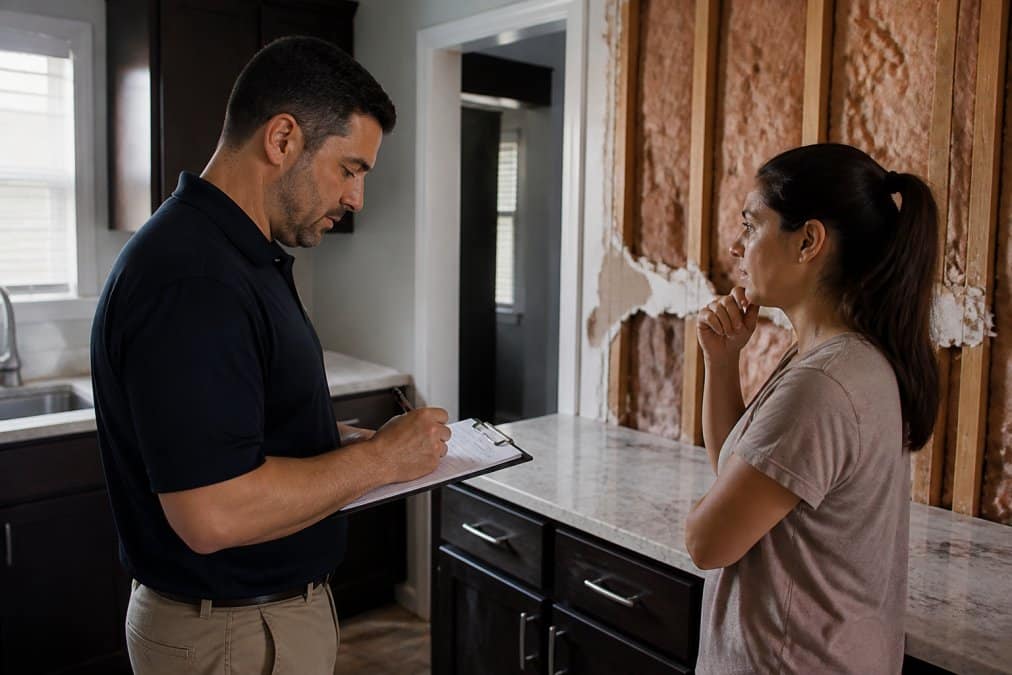
The insurance adjuster on your claim is not a neutral fact-finder. They are a trained negotiator working for the company that pays your claim, measured on how little it costs.
The most expensive mistake is accepting a settlement check before you understand your full scope of damage. Once you cash it, recovering the difference usually means litigation, not a phone call.
Internal Metrics That Drive Adjuster Behavior
Adjusters work against internal metrics most policyholders never see: average payout per claim, claim cycle time, and the ratio of paid claims to reserves. An adjuster who closes claims quickly and cheaply is rewarded; one who pays generously gets scrutinized.
What Not to Say to an Insurance Adjuster
The fastest way to damage your claim is to talk too much. Anything you say to an adjuster can be recorded and used to reduce your payout. The adjuster’s friendliness is not a personality trait, rapport is a documented interview technique, and the small talk is the interview.
Avoid these phrases entirely:
- “It’s probably not a big deal.” Downplays your damages.
- “I think it happened around…” Guessing at timelines invites dispute.
- “We were already planning to fix that.” Hands them a pre-existing condition argument.
- “I just want this over with.” Signals you will accept a lowball offer.
- “My neighbor’s claim paid more.” Invites comparison and delay.
- “I’m not sure, but maybe…” Speculation is treated as an admission, not a guess.
- “I haven’t seen a doctor yet.” Creates a gap the insurer will argue proves no injury.
The Recorded Statement Trap
A recorded statement is a formal interview the adjuster records and transcribes, and one of the most effective tools for lowering a settlement. The request sounds routine, but your words become a sworn account the insurer can hold you to, and small inconsistencies, a date off by a day, a room described differently than in your photos, get used to question your credibility on everything else.
A Script for the Recorded Statement
You do not need to be a lawyer to control this conversation. You need three sentences and the discipline to repeat them.
Before the call:
- Confirm in writing who is asking, which carrier they represent, and whether the statement is for your own claim or the other party’s.
- Write your timeline on one page, date, time, what you saw, what you did next. Read from it, do not improvise.
- Have your photos, receipts, and any medical records in front of you.
- Ask for the questions in advance. Some adjusters will provide them; all of them will note that you asked.
What the Transcript Actually Does
A recorded statement is not a formality, it is a deposition the insurer wrote the questions for. Adjusters walk you from easy, factual questions into loaded ones, building a rhythm of agreement before the loaded questions land. By the time the transcript is typed, a sentence you never intended can read as an admission that the damage was gradual, the injury pre-existing, or the loss your fault.
Never give a recorded statement on the same day it is requested. “I need to review my records first” is a complete answer, and it costs you nothing. The insurer’s deadline pressure is not a legal deadline.
When to Decline Entirely
If the request comes from the other driver’s carrier, you have no contractual duty to participate, decline in writing and route all contact to your own insurer or attorney. If it comes from your own carrier and the claim is straightforward, a prepared statement is usually fine. If the claim is large, disputed, or involves injury, most practitioners recommend declining until you have representation.
Keep a one-page “statement log” for every call: date, time, who called, what carrier, what was asked, what you said. If the insurer later claims you said something you didn’t, your log is the first exhibit.
How to Document Property Damage for Insurance
Documentation wins claims. The policyholder with dated photos, receipts, and a written timeline gets a larger settlement than the one relying on memory.
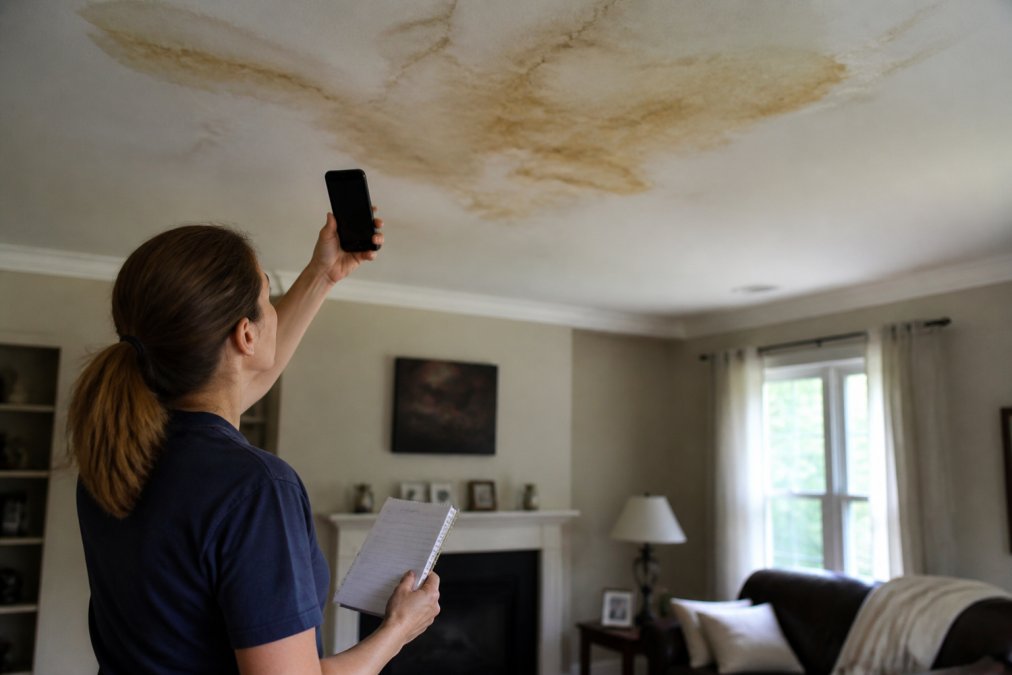
Build a documentation log that tracks:
- Date and time of each photo or video
- Receipts for emergency repairs, lodging, and replacement items
- Names and contact details of any contractors who inspected the damage
- Every call and email with the insurer, including who said what
Insurance Claim Settlement Negotiation Tips
Treat negotiation as a documented, evidence-based process, not a confrontation. The goal is to make your number the most defensible one in the file, defensible enough that denying it costs the insurer more than paying it.
Why the First Offer Is Low: The Adjuster’s Scorecard
Most policyholders take the lowball personally. It is not personal, it is arithmetic. Adjusters work against internal metrics most policyholders never see: average payout per claim, claim cycle time, and the ratio of paid claims to reserves. An adjuster who closes claims quickly and cheaply is rewarded; one who pays generously gets scrutinized.
AI and Automated Claims Processing
Insurers increasingly route claims through automated systems that flag files based on patterns, not people. A claim with missing photos, an unclear cause of loss, or a repair estimate outside the system’s expected range may get auto-flagged, adding weeks of delay and giving the adjuster a documented reason to request more information before paying.
- Clear cause of loss. One sentence, supported by documentation. “Sudden pipe failure under the kitchen sink on March 4” beats “water damage.”
- Dated evidence. Photos with intact metadata, receipts with timestamps, contractor reports with dates.
- A scope that matches the estimate. If your contractor’s estimate includes line items the adjuster’s does not, attach the report explaining why each is necessary.
- No gaps in the timeline. Every day between the loss and the claim should be accounted for.
You cannot out-argue an adjuster’s scorecard, but you can change what the scorecard sees. A complete file with no flags and no gaps is the single most effective negotiation tool you have.
Escalation: What to Do When the Number Won’t Move
If two rounds of itemized counter-offers produce no movement, the file is no longer a negotiation problem, it is a dispute. Most policies include an appraisal clause for exactly this: each side hires a qualified appraiser, the two appraisers select an umpire, and the panel sets the amount of loss. Appraisal is usually faster and cheaper than litigation, and it is a contractual right, not a favor.
Hiring a Public Adjuster: What to Expect
A public adjuster is a licensed professional who represents you, the policyholder, rather than the insurance company, and negotiates your claim for a fee, typically a percentage of the settlement, so the adjuster only gets paid when you do.
The process usually runs in four stages:
- Policy review. The adjuster reads your policy to establish exactly what is covered and what limits apply.
- Damage evaluation. A full inspection and independent estimate, often catching scope the insurer’s adjuster missed.
- Documentation and filing. A complete claim package assembled to withstand scrutiny.
- Negotiation. Direct back-and-forth with the insurer, including counter-offers and, if needed, appraisal.
The single biggest reason claims get underpaid is not a bad policy. It is a thin file. Documentation, not argument, moves the number.
Common Mistakes to Avoid After a Property Loss
- Signing a medical or broad release. A general release can hand the insurer access to records far beyond the claim, giving them ammunition to dispute causation.
- Posting on social media. Insurers review public profiles. A photo of a “normal” weekend can be used to argue the damage was not as severe as claimed.
- Missing the statute of limitations. Every state sets a deadline for filing suit on a denied or underpaid claim, and it is unforgiving. Miss it and the claim is gone.
- Accepting the first offer. The initial number is a starting point, not a verdict.
- Going it alone on a complex claim. On a large or disputed loss, professional representation typically pays for itself.
Keep a single folder, physical or digital, for the entire claim. Every receipt, photo, and email goes in it the same day. When the adjuster asks for something, you answer in minutes, not days, and delay tactics lose their grip.
If your claim has been denied, delayed, or underpaid, a free review of your policy and file tells you whether you have a fight worth having. Barclays Public Adjusters handles water, fire, smoke, mold, and roof damage claims across South Florida, from policy evaluation through final negotiation, so you can focus on recovery instead of paperwork. Schedule your FREE Claim Consultation today.
Frequently Asked Questions
What should you never say to an insurance adjuster?
Never say ‘I’m not sure’ or speculate about the cause of damage. Avoid phrases like ‘it’s been like that for a while’ or ‘I think it might be my fault.’ These statements can be used to deny your claim or reduce your settlement. Stick to facts you can verify and refer the adjuster to your documentation. If you’re unsure, say you’ll need to check your records and get back to them.
How do you handle a lowball settlement offer from an adjuster?
Do not accept the first offer. Request a detailed breakdown of how they calculated the amount, including line items for materials, labor, and depreciation. Compare it to your own contractor estimates and documentation. Then submit a counter-offer with evidence. If the adjuster won’t budge, consider hiring a public adjuster or invoking your policy’s appraisal clause to resolve the dispute.
What documentation is essential to counter adjuster tactics?
Keep a documentation log with dates, times, and names of everyone you speak with. Take dated photos and videos of all damage before repairs. Save receipts for emergency repairs, hotel stays, and out-of-pocket expenses. Get written estimates from licensed contractors. Also retain copies of your policy, claim number, and all correspondence. This evidence prevents the adjuster from disputing the scope or cause of your loss.
Can a public adjuster really get me a higher settlement?
Public adjusters work exclusively for you, not the insurance company. They review your policy, document damage thoroughly, and negotiate on your behalf. Many homeowners find that having a professional handle the claim reduces stress and uncovers overlooked damages. However, results vary by claim. Barclays Public Adjusters offers a No Recovery, No Fee policy, so you pay nothing unless they recover funds for you.
How long does it take to settle a property damage claim?
Timelines vary based on claim complexity, damage type, and your insurer’s workload. Simple claims might settle in a few weeks, while complex cases involving mold, sinkhole, or fire damage can take months. Delays often occur when documentation is incomplete or the adjuster requests more information. Hiring a public adjuster can help move the process forward by ensuring all paperwork is submitted correctly and following up with the insurer.
Insurance companies have entire departments built to minimize what they pay, and they count on policyholders not knowing the rules. You do not have to match them alone. Barclays Public Adjusters brings expert policy evaluation, comprehensive documentation, and direct negotiation with your insurer to every claim, all under a No Recovery, No Fee policy. Schedule your free claim consultation today and find out what your claim is actually worth.