

Table of Contents
- How the No Recovery, No Fee Model Works
- What Counts as a Recovery
- The Hidden Costs That Still Apply
- Public Adjuster Fee Percentage: Caps, Contingency, and What You Owe
- Public Adjuster vs Insurance Company Adjuster: Who Actually Works for You
- What to Look For in a Public Adjuster Contract
- How a No Recovery Claim Affects Your Future Coverage and Options
- When Hiring a Public Adjuster on Contingency Is Worth It
- Frequently Asked Questions
Last Updated: September 19, 2026
How the No Recovery, No Fee Model Works
A public adjuster no recovery no fee arrangement means you pay nothing unless the adjuster recovers money on your claim, a true no recovery no fee model. The fee comes out of the settlement, not your pocket, shifting the financial risk from the policyholder to the professional.
Florida Department of Financial Services consumer resources
What Counts as a Recovery
A recovery typically means any money the carrier pays out as a result of the claim, whether through negotiation, appraisal, or settlement. If the insurer issues a payment for covered damages, that payment is the recovery.
- Additional funds negotiated above the initial offer
- Payments made after a claim denial is overturned
- Settlement amounts reached through appraisal or mediation
- Supplemental payments for newly discovered damage
Some contracts exclude payments made under your policy’s “loss of use” or “additional living expenses” provisions from the recovery calculation. If your family needs temporary housing during repairs, that money might not count toward the fee base, but it also might. Clarify this in writing before you sign.
The Hidden Costs That Still Apply
Even with a no recovery, no fee arrangement, certain costs can exist outside the contingency structure, real expenses that can surface during a claim.
Common examples include:
- Appraisal costs. If your claim goes to appraisal, you may need to pay for your own independent appraiser. This is separate from the public adjuster‘s contingency fee.
- Engineering reports. Structural damage claims sometimes require a licensed engineer’s assessment. That report may carry a cost.
- Documentation and administrative expenses. Some contracts allow for reimbursement of filing fees, records requests, or similar costs.
- Cancellation penalties. If you terminate the contract after work has begun, some agreements include a fee for services already rendered.
Public Adjuster Fee Percentage: Caps, Contingency, and What You Owe
Public adjuster fee percentage structures vary, and most states that license public adjusters set statutory caps on what they can charge. A licensed adjuster who exceeds one risks losing their license.
The Two Ways a Contingency Fee Is Calculated
Before you compare percentages, you need to know which base the percentage applies to. There are two common structures:
- Percentage of total recovery. The adjuster takes, say, 10% of the entire settlement. If the carrier pays $80,000, the fee is $8,000 and you net $72,000.
- Percentage of new money only. The adjuster takes a percentage of only the amount they recovered above the insurer’s initial offer. If the carrier first offered $50,000 and the final settlement is $80,000, the fee applies to the $30,000 increase, not the full $80,000.
Emergency Versus Non-Emergency Claim Rates
Emergency declarations after hurricanes or major storms frequently trigger different fee rules. Some states cap fees lower during declared emergencies to prevent price gouging when homeowners are most vulnerable.
What the Cap Does and Does Not Cover
A statutory cap limits the adjuster’s compensation. It does not automatically limit:
- Appraisal or umpire costs if the claim goes to appraisal
- Independent engineering or cause-and-origin reports
- Fees charged by a public adjuster’s affiliated contractor or restoration company
- Attorney fees if the claim moves into litigation
How to Verify the Cap in Your State
- Find the Florida Department of Financial Services website.
- Search for the public adjuster licensing statute or the consumer bill of rights for public adjusting.
- Look for the maximum compensation percentage and any emergency-claim exception.
- Compare that number to the percentage in the contract you were handed.
If the contract percentage exceeds the statutory cap, do not sign. If the adjuster can’t point you to the statute authorizing their rate, treat that as a warning sign.
Public Adjuster vs Insurance Company Adjuster: Who Actually Works for You
The difference between a public adjuster and an insurance company adjuster comes down to one word: loyalty. The company adjuster is employed or contracted by the carrier. The public adjuster is hired by you.
| Factor | Company Adjuster | Public Adjuster |
|---|---|---|
| Who pays them | Insurance carrier | Policyholder (via contingency fee) |
| Primary loyalty | Insurer | Property owner |
| Fee structure | Salary or carrier contract | Percentage of recovery |
| Scope of work | Evaluate claim for carrier | Document, negotiate, advocate for you |
| Negotiation stance | Protect carrier’s interests | Maximize your settlement |
What to Look For in a Public Adjuster Contract
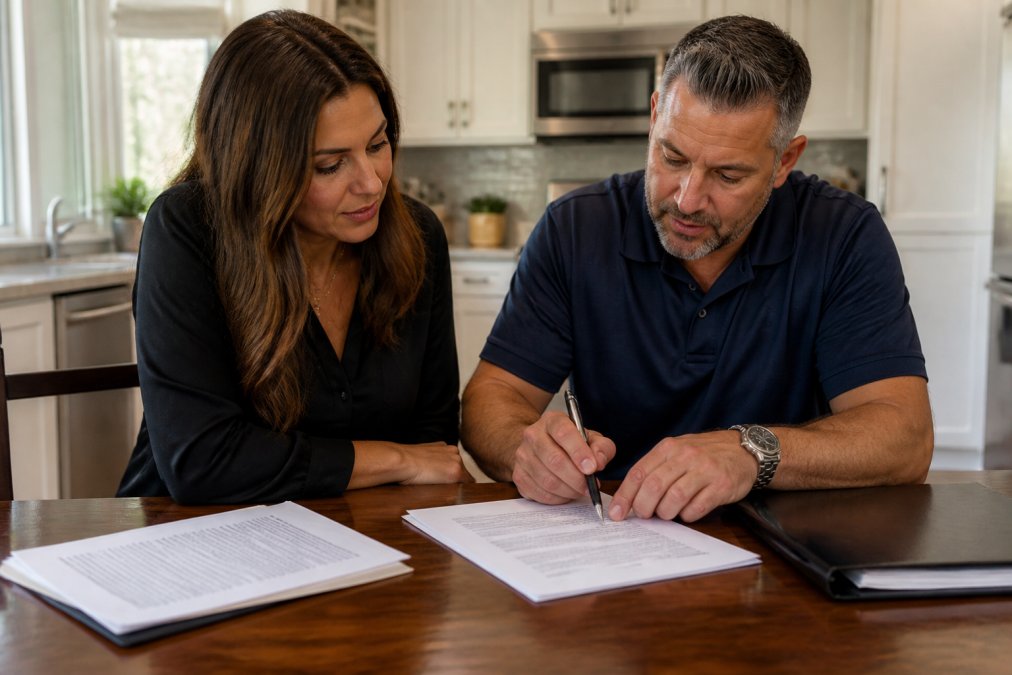
Before signing any public adjuster contract, verify these five things: the fee percentage and the base it applies to, the definition of recovery, cancellation and termination terms, costs outside the contingency fee, and whether the adjuster is licensed in your state.
- Is the adjuster licensed with the state insurance department?
- Is the fee percentage within your state’s statutory cap?
- Does the contract state whether the fee applies to total recovery or new money only?
- Does the contract clearly define what counts as a recovery?
- Are cancellation and termination rights spelled out, including any post-window fee?
- Are any additional costs disclosed in writing?
- Is the contract free of blank spaces or unclear language?
- Do you have a copy of the signed agreement?
Cancellation and Termination Rights: The Clause Most Homeowners Never Read
Almost everyone skips this part. Homeowners focus on the fee percentage and gloss over the termination clause, then circumstances change, the claim stalls, and they discover they can’t exit without owing money.
- A short rescission window. Florida requires a window of a few business days after signing during which you can cancel for any reason and owe nothing. The length is set by statute, not by the adjuster.
- A post-window termination right with a fee. After the rescission window closes, you may still be able to terminate, but you may owe a fee for work already performed. How that fee is calculated, flat, hourly, or a percentage of work completed, is where contracts differ most.
- A no-cancellation clause. Some contracts purport to lock you in for the life of the claim. Whether that is enforceable depends on state law; some states limit or prohibit such clauses.
What to Ask Before You Sign
Ask these questions and get the answers in writing:
Schedule your FREE Claim Consultation today →
- “If I cancel within the rescission window, what do I owe?”
- “If I cancel after that window, how is the fee for work already performed calculated?”
- “Can I terminate if the adjuster fails to communicate or misses deadlines?”
- “Does the contract assign my claim or any rights to a third party?”
- “What happens to the contract if I sell the property or the claim is denied?”
A reputable adjuster will answer without hesitation. Evasiveness here tells you something important.
Ask specifically: “If I cancel after the rescission window, what do I owe, and how is that number calculated?” Get the answer in writing. If the contract does not answer this, do not sign until it does.
The Underperformance Problem
Most contracts are silent on what happens when the adjuster, not the policyholder, is the problem. If your adjuster stops responding, fails to submit documentation, or misses a statutory deadline, you may have grounds to terminate for cause, but only if the contract or state law gives you that right.
A few practical protections to look for:
- A defined communication standard (for example, a response within a set number of business days)
- A termination-for-cause provision that does not trigger a penalty when the adjuster is at fault
- A clause confirming that you, not the adjuster, control settlement decisions
- A clear statement that the adjuster cannot settle your claim without your written authorization
Some contracts include a cancellation penalty calculated as a percentage of the estimated claim value rather than work actually performed. That can leave you owing money on a claim that was never filed. Read the penalty formula, not just the word “penalty.”
Keep Your Own File
Regardless of what the contract says, keep a complete copy of everything: the signed agreement, every email and text, dated call notes, and every document the adjuster submits for you. If a dispute arises over termination or fees, that file is your evidence.
How a No Recovery Claim Affects Your Future Coverage and Options
A no recovery outcome doesn’t automatically harm your future coverage, but it can affect how your insurer views subsequent claims.
National Association of Insurance Commissioners consumer guidance
When Hiring a Public Adjuster on Contingency Is Worth It
Hiring a public adjuster on contingency is worth it when your claim is complex, undervalued, or denied, and you don’t have the time or expertise to negotiate alone. The no recovery, no fee model removes the financial risk of getting professional help.
Consider these scenarios:
Worth hiring an adjuster:
- Your claim was denied and you believe the denial is wrong
- The settlement offer seems far below your actual repair costs
- You’re dealing with multiple types of damage (water, mold, structural)
- The claims process has stalled or become confusing
- You don’t have time to document, file, and negotiate yourself
May not need an adjuster:
- The claim is small and straightforward
- The insurer’s offer already covers your documented costs
- You have experience navigating insurance claims
Frequently Asked Questions
What is the maximum fee a public adjuster can charge in Florida?
Florida caps public adjuster fees at 20% of the recovery for claims paid under a state of emergency and 10% for non-emergency claims, per the Florida Department of Financial Services. The cap applies to the settlement amount, not the claim’s total value. Fees are typically taken as a percentage of the final recovery, so a larger settlement does not automatically mean a higher percentage. Always confirm the rate in writing before signing.
Does no recovery, no fee mean I never pay anything out of pocket?
No. The model means the public adjuster’s fee is contingent on a recovery, but you may still owe third-party costs such as appraisal fees, engineering reports, or independent adjuster costs. Some contracts cap these; others do not. Ask the adjuster to list every cost you could owe if the claim settles for zero, and get that list in the contract. A truly transparent agreement puts these numbers in writing before you sign.
Can I cancel a public adjuster contract after I sign it?
In Florida, you generally have a right to cancel within a set window after signing, and some contracts allow cancellation at any time with written notice. The exact terms vary. Read the cancellation clause before signing and confirm whether you owe anything for work already performed. If the contract does not clearly state your exit rights, that is a red flag. Ask for the cancellation terms in writing and keep a copy.
Is a public adjuster worth the cost for a small claim?
It depends on the gap between what your insurer offered and what your policy actually covers. For small claims where the difference is a few hundred dollars, the fee percentage may not justify hiring help. For denied or underpaid claims involving roof, water, or mold damage, a public adjuster can often recover enough above the initial offer to cover the fee and then some. Run the math on your specific numbers before deciding.