
Table of Contents
- How to Document Property Damage for Insurance Claims That Hold Up
- Reviewing Your Policy Limits, Deductible, and Coverage Exclusions Before You Negotiate
- What Not to Say to an Insurance Adjuster (and What to Say Instead)
- Depreciation Schedules, Actual Cash Value, and Replacement Cost Value Explained
- How to Write a Demand Letter for Property Damage That Gets Results
- Reasons Insurance Companies Deny Claims and How to Counter a Low Settlement Offer
- When to Hire a Public Adjuster for Property Damage Settlements
- Frequently Asked Questions
Last Updated: October 2, 2026
How to Document Property Damage for Insurance Claims That Hold Up
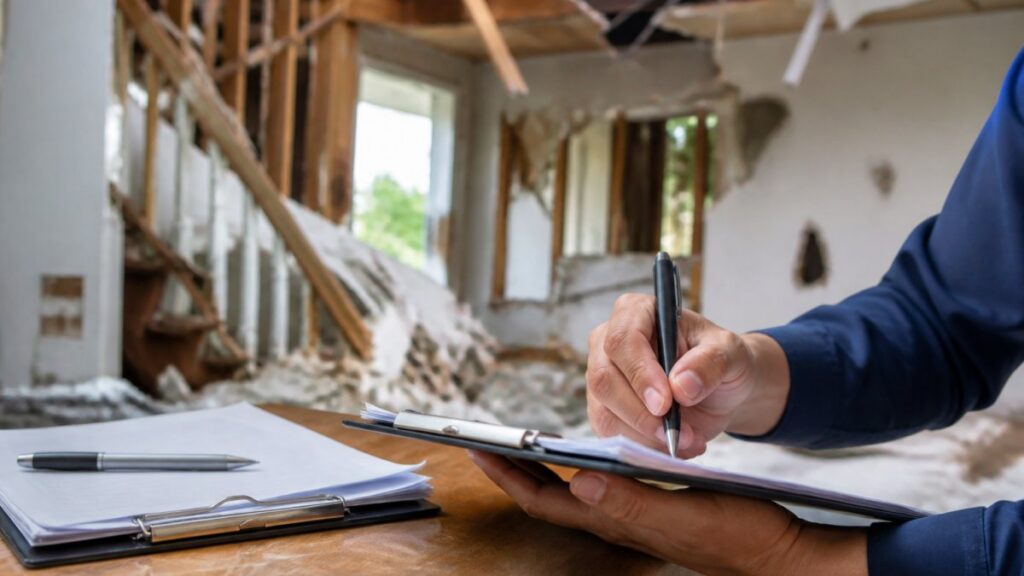
The strongest claims are built before you ever speak to an adjuster. Documentation is what separates a full payout from a low-ball offer, and learning how to maximize property damage settlements starts with the evidence you gather in the first 48 hours after a loss.
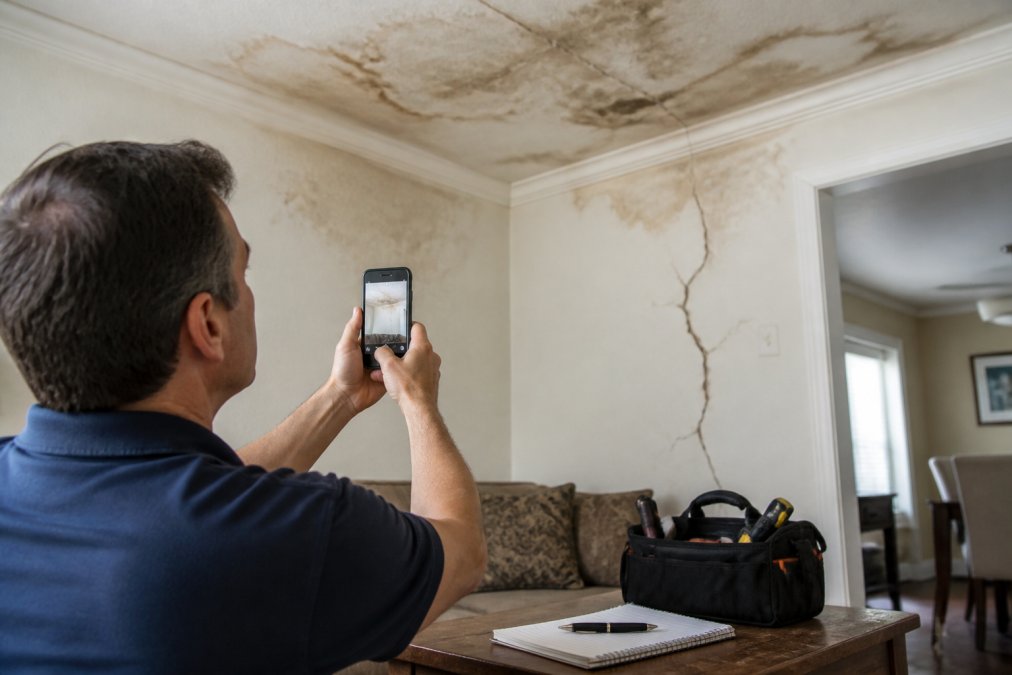
Photos, Video, and High-Resolution Imagery That Adjusters Can’t Ignore
Adjusters process hundreds of claims, and vague evidence gets discounted fast. Timestamped photos, wide shots paired with close-ups, and video that shows the full scope of damage give your claim representative less room to dispute what happened. Store everything in the cloud with a backup on a physical drive.
Building an Itemized List of Damaged Contents and Structural Damage
An itemized list turns a general claim into a precise one. Walk room by room and record each damaged item with its approximate age, original cost if known, and a photo. Separate contents from structural damage so nothing gets lumped into a single line item that’s easy to underpay. Keep receipts for anything you replace out of pocket, since those become part of your out-of-pocket expenses record.
Photograph the serial number or model plate on major appliances before disposal. Adjusters often dispute age and value later, and that one photo settles the argument.
Reviewing Your Policy Limits, Deductible, and Coverage Exclusions Before You Negotiate
Read your policy before you argue about money. Policy limits cap what the insurer will pay, your deductible comes off the top, and coverage exclusions quietly remove entire categories of damage from the table.
What Not to Say to an Insurance Adjuster (and What to Say Instead)
What you say during the first adjuster visit can shrink your settlement before the paperwork even starts. Stick to facts you can verify and avoid speculating about cause, value, or fault.
Say this:
- “Here is my documentation and itemized list.”
- “I’d like a copy of your damage assessment in writing.”
- “I’m not ready to discuss a settlement figure today.”
Avoid this:
- Guessing at the cause of damage (“It’s probably just old pipes”)
- Accepting a number on the spot
- Saying the damage is “not that bad” or “mostly cosmetic”
- Offering opinions on what your policy should cover
Depreciation Schedules, Actual Cash Value, and Replacement Cost Value Explained
Actual cash value (ACV) is replacement cost minus depreciation: what your damaged property was worth the moment before the loss, not what it costs to replace. Replacement cost value (RCV) pays what it actually costs to repair or rebuild at current prices, with no deduction for age. Most policies are written on one basis or the other, and the difference is usually the single largest driver of how much money lands in your pocket.
How to Read and Challenge a Depreciation Schedule
Ask the adjuster for the depreciation schedule in writing, line by line. Then check three things:
- Useful life assigned to each item. If the schedule says your roof has a 15-year life but the manufacturer’s warranty or your contractor’s estimate says 25 to 30 years, the depreciation is overstated. Request the correction in writing with the warranty or estimate attached.
- Age used. Adjusters sometimes default to the age of the home rather than the age of the specific item. A roof replaced six years ago should not be depreciated as if it were 20 years old. Your permit records or contractor invoice prove the install date.
- Condition adjustments. Some schedules apply an additional ‘condition’ deduction on top of age-based depreciation. Ask what evidence supports it. If the item was in good repair, that deduction is negotiable.
Recoverable Depreciation: The Clause That Gets You Paid Twice
If your policy is RCV, confirm whether it includes recoverable (or recoverable withheld) depreciation. Under this structure, the insurer pays the ACV amount first, you complete the repairs, submit the final invoices, and the insurer then releases the withheld depreciation, the gap between ACV and RCV, up to your policy limit. This is why the first check is almost always smaller than the final settlement. Two rules matter:
- You generally must complete the repairs and submit paid invoices within a set window (often 180 days, sometimes up to one year) to recover the withheld depreciation.
- If you do not repair, you typically keep only the ACV amount. That is a legitimate choice, but understand you are forfeiting the recoverable portion.
Before you accept any ACV figure, get the depreciation schedule in writing, verify the useful life and age of each major line item, and confirm in your policy whether depreciation is recoverable. Those three steps routinely move a settlement by thousands of dollars without a single argument about fault.
| Coverage Type | How Payout Is Calculated | Best For |
|---|---|---|
| Actual Cash Value | Replacement cost minus depreciation | Older property, lower premiums |
| Replacement Cost Value | Full repair or rebuild cost | Newer homes, full recovery |
| RCV with recoverable depreciation | ACV upfront, remainder released after repairs are completed and invoiced | Most homeowners filing large claims |
How to Write a Demand Letter for Property Damage That Gets Results
A demand letter is a formal, written request that states your claim, the amount you’re owed, and a deadline for response. It creates a paper trail and often moves a stalled negotiation forward.
Letter Templates and the Proof of Loss Requirement
Dear [Adjuster Name],
This letter concerns claim #[number] for damage that occurred on [date] at [property address]. Based on my documentation, the total covered loss is $[amount]. Enclosed are my itemized list, photographs, and receipts. I request a written response within 15 days. If we cannot reach agreement, I intend to pursue appraisal and, if necessary, a bad faith claim under [state] law.
Sincerely, [Your Name]
Reasons Insurance Companies Deny Claims and How to Counter a Low Settlement Offer
Denials usually cite coverage exclusions, missed deadlines, or ‘wear and tear.’ Countering a denial means addressing the specific stated reason in writing and pointing to the policy language that supports your position, not arguing about the total dollar figure.
Common denial reasons and counters:
- Wear and tear: Request the adjuster’s written basis and submit an independent property damage appraisal. Wear and tear is a maintenance exclusion, not a blanket excuse for sudden damage.
- Missed proof of loss deadline: Document every communication showing good-faith effort to comply. Many policies allow an extension if you request one in writing before the deadline passes.
- Excluded peril: Re-read the exclusions and check whether a covered peril (wind, fire, sudden water) also contributed. When a covered and an excluded peril combine to cause one loss, the covered peril often controls.
- Under-insurance: Negotiate the scope of damage rather than the total, since the limit is fixed. Recovering more line items within the limit is the only lever left.
The Appraisal Clause: Your Contractual Right to a Second Opinion
Most homeowners policies contain an appraisal clause. When you and the insurer disagree on the amount of the loss (not on whether it is covered), either side can demand appraisal. Each side selects a competent, disinterested appraiser, the two appraisers select an umpire, and the decision of any two of the three is binding on the amount. This is often faster and cheaper than litigation, and simply invoking it in writing frequently produces a revised offer before an appraiser is ever named.
Bad Faith Tactics and How to Document Them
Never cash a settlement check marked ‘full and final payment’ if you believe the amount is wrong. Cashing it can release the insurer from further liability on that claim. If you need the funds, ask the adjuster in writing to reissue the check without the release language.
NAIC consumer insurance resources explains how to file a complaint with your state insurance regulator and what prompt-pay protections may apply.
When to Hire a Public Adjuster for Property Damage Settlements
A public adjuster works for you, not the insurer, and is paid a percentage of what they recover. Hire one when the claim is large, the denial seems baseless, or the settlement offer falls well below your documentation.
Frequently Asked Questions
Can you negotiate a property damage settlement with your insurance company?
Yes. Property damage settlements are negotiable. After you receive a settlement offer, you can submit a counter-demand with supporting documentation such as contractor estimates, receipts for out-of-pocket expenses, and an independent property damage appraisal. Insurance adjusters expect negotiation, and policyholders who present organized evidence often see higher payouts. If talks stall, you can request the appraisal process outlined in most policies or hire a public adjuster to negotiate on your behalf.
What should you never say to an insurance claims adjuster?
Avoid saying the damage is minor, that you are not sure what happened, or that you have not reviewed your policy. Never speculate about cause, admit fault, or accept a quick settlement before getting your own estimates. Also avoid saying you will handle repairs yourself without receipts. Adjusters document every statement. Stick to facts about the damage, provide your documentation, and direct coverage questions to your policy language or a public adjuster.
What is the 80% rule in property insurance and how does it affect my payout?
The 80% rule generally applies to dwelling coverage: if your policy limit is below 80% of your home’s replacement cost, your insurer may only pay a proportional share of a partial loss. For example, if your home would cost $400,000 to rebuild and you carry $280,000 in coverage (70%), a $50,000 claim could be reduced to roughly $35,000. Review your policy limits annually and adjust for construction cost increases to avoid under-insurance.
What documentation is required to prove the full extent of property damage?
You need high-resolution photos and video of all affected areas before any repairs, an itemized list of damaged contents with purchase dates and values, contractor estimates for structural damage, receipts for emergency repairs and out-of-pocket expenses, and a written claim diary logging every call and email with your claim representative. For large losses, a professional property damage appraisal strengthens your position and supports a higher replacement cost value calculation.
When should you hire a public adjuster to handle your claim?
Hire a public adjuster when your claim is denied, the settlement offer is far below your contractor estimates, or the insurer cites coverage exclusions you believe are wrong. Complex losses involving mold, sinkhole damage, or fire and smoke often benefit from professional representation. A licensed public adjuster reviews your policy, documents the loss, and negotiates directly with the insurance company. Many work on a no recovery, no fee basis, so you pay only if they increase your settlement.
How much money can you realistically sue for in a property damage claim?
The amount depends on your documented losses, policy limits, and whether the insurer acted in bad faith. You can sue for the difference between what was paid and what your evidence shows is owed, plus certain expenses. Some states allow additional damages when an insurer unreasonably delays or denies a valid claim. Consult a licensed attorney or public adjuster to evaluate whether litigation makes sense for your specific claim size and policy.
A denied or underpaid claim rarely fixes itself, and every week of delay makes repairs more expensive. If your documentation is solid but the offer isn’t, you don’t have to negotiate alone. Barclays Public Adjusters brings expert policy evaluation, strategic documentation, and direct negotiation with your insurer, all under a No Recovery, No Fee policy. Schedule your FREE Claim Consultation today and find out what your claim is actually worth.