
Last Updated: November 24, 2026
Quick Summary
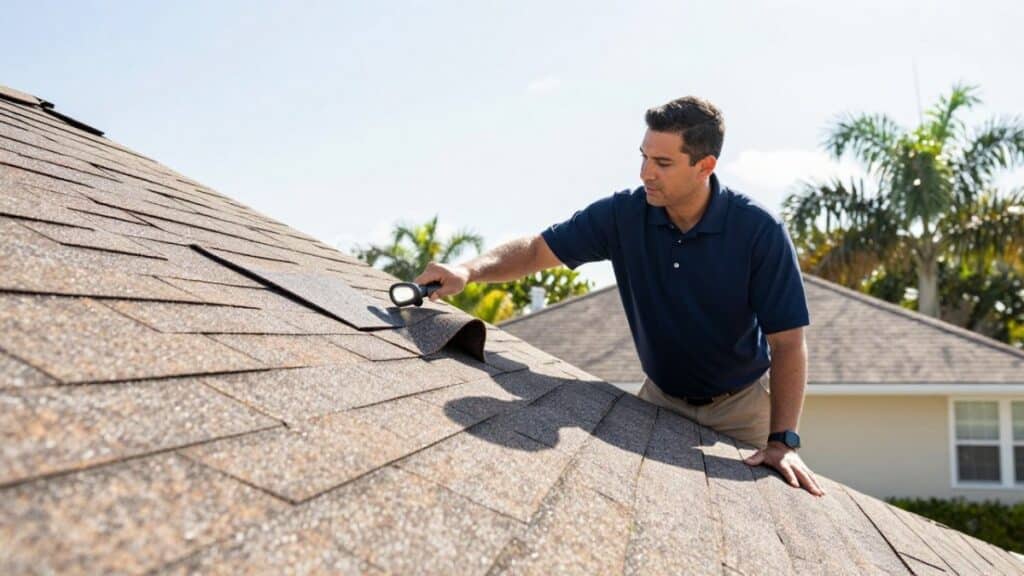
Homeowners insurance does not cover a roof simply because it is old, but roof age can still affect whether a policy renews, what it costs, and how a claim is paid. Does homeowners insurance cover roof age issues? Age alone is rarely the cause of coverage, but it often shapes the outcome.
- Insurers may use roof age to decide renewal, require an inspection, or pay at actual cash value.
- Many sources cite 15 to 20 years as a common threshold for asphalt-shingle roofs.
- Covered storm damage on an older roof can still be paid, but insurers may dispute it as age-related wear.
- Under RCV policies, recoverable depreciation is typically released only after proof the roof was replaced.
- Strong proof of roof age includes a building permit with final inspection and a dated contractor invoice.
Table of Contents
- Does Homeowners Insurance Cover Roof Age Issues?
- How Roof Age Affects Insurance Eligibility and Renewal
- What Happens When a Roof Reaches 15 to 20 Years
- Will Insurance Cover a 20-Year-Old Roof?
- Actual Cash Value vs. Replacement Cost for Older Roofs
- How to Prove Roof Age to Insurance
- Can You Get Homeowners Insurance Without Roof Coverage?
- Does a New Roof Affect Your Homeowners Insurance?
- Steps to Take If Your Roof Claim Is Denied or Underpaid
- Frequently Asked Questions
Does Homeowners Insurance Cover Roof Age Issues?
Homeowners insurance does not cover a roof simply because it is old, but roof age can still affect whether a policy renews, what it costs, and how a claim is paid. Property owners in South Florida can review these rules before a loss happens and after a claim is denied or underpaid. A roof that has reached a carrier’s age threshold can trigger different outcomes, so knowing what your policy says matters.
Insurance is designed to pay for sudden, covered damage such as a windstorm that tears off shingles. Our guide on cosmetic versus functional roof damage coverage explains how each type is treated. It generally does not pay to replace a roof that has simply worn out. Insurance Information Institute guidance on roof age and covered perils explains that roof age and condition influence insurance decisions, while policies typically cover damage caused by covered perils.
Does homeowners insurance cover roof age issues? The short answer is that age alone is rarely the cause of coverage, but it often shapes the outcome.
How Roof Age Affects Insurance Eligibility and Renewal
Insurers may use roof age to decide whether to renew a policy, whether to require an inspection, or whether to pay a loss at actual cash value instead of replacement cost. Progressive’s explanation of roof age and coverage outcomes lists denial, pre-policy inspection, and actual-cash-value settlement as possible results when a roof reaches an insurer’s age threshold.
Thresholds are not uniform. Some sources report that carriers may restrict coverage for roofs older than 10 years, while others set the cutoff at 20 years. Many 2026 guides describe 15 to 20 years as a common range for asphalt-shingle roofs, according to GoNano’s 2026 homeowner guide. Check your carrier’s underwriting guidelines rather than assuming a single rule applies.
What Happens When a Roof Reaches 15 to 20 Years
Around the 15- to 20-year mark, many homeowners see changes at renewal. The carrier may request a roof inspection, ask for documentation of the roof’s age, or adjust the premium. In some cases the policy may not be renewed at all.
RoofVista’s 2026 guide to insurer roof-age thresholds notes that 15 to 20 years is a typical threshold for standard three-tab and architectural shingles. Some carriers also restrict coverage on roofs older than 20 years, according to Krause Companies’ 2026 roof insurance overview.
If your roof is approaching this range, ask your agent now which requirements apply before renewal.
Will Insurance Cover a 20-Year-Old Roof?
A 20-year-old roof may still be covered, but coverage depends on the carrier, the policy form, and the roof’s condition. Damage from a covered event such as a storm is generally handled under the policy, even when the roof is old. Wear, deterioration, and end-of-life replacement generally are not.
Peterson Roofing’s 2026 article on the practical lifespan of asphalt shingles reports that local companies and brokers increasingly treat about 15 years, rather than 20, as the practical safe age for an asphalt-shingle roof. That view reflects local observations, not a national standard.
A claim for storm damage on an older roof can still be disputed if the insurer attributes the damage to age-related wear. Keep records that show the cause and timing of the damage. A public claims adjuster for roof leak claims can help you assemble and present this documentation.
Actual Cash Value vs. Replacement Cost for Older Roofs
Actual cash value (ACV) pays the depreciated value of a roof, after accounting for its age and condition.
The mechanism works like this. Under an RCV policy, the insurer typically pays the ACV amount first, replacement cost minus depreciation, and then releases the remaining “recoverable depreciation” once you submit proof that the roof was replaced.
Three variables drive the depreciation calculation:
- Useful life assumed by the carrier. A carrier may assign asphalt shingles a 20-year useful life, while another uses 25 or 30. The shorter the assumed life, the faster the roof depreciates.
- Depreciation method. Straight-line depreciation reduces value evenly each year; some carriers apply accelerated methods in the later years of a roof’s life.
- Condition adjustments. A roof with prior repairs, granule loss, or visible curling may be depreciated further than its age alone would suggest.
A simple illustration: suppose a roof would cost $20,000 to replace and the carrier assigns it a 20-year useful life.
Watch out: some policies apply ACV settlement only to roofs above a stated age, while paying RCV on newer roofs.
Before you file, confirm three things on your declarations page and endorsements: whether the roof is settled at ACV or RCV, whether recoverable depreciation is available and what proof the carrier requires to release it, and whether a separate roof endorsement or actual-cash-value schedule applies. If the answer is ACV-only, factor that into any repair-or-replace decision, because a covered loss may not fund a full replacement.
The gap between actual cash value and replacement cost can be large on an older roof, and the article’s three depreciation variables help explain why.
| Factor | What it does | Example in the article |
|---|---|---|
| Useful life assumed by carrier | Shorter life means faster depreciation | 20 years vs. 25 or 30 years |
| Depreciation method | Sets how value falls over time | Straight-line, or accelerated in later years |
| Condition adjustments | Can depreciate a roof further than age alone | Prior repairs, granule loss, curling |
How to Prove Roof Age to Insurance
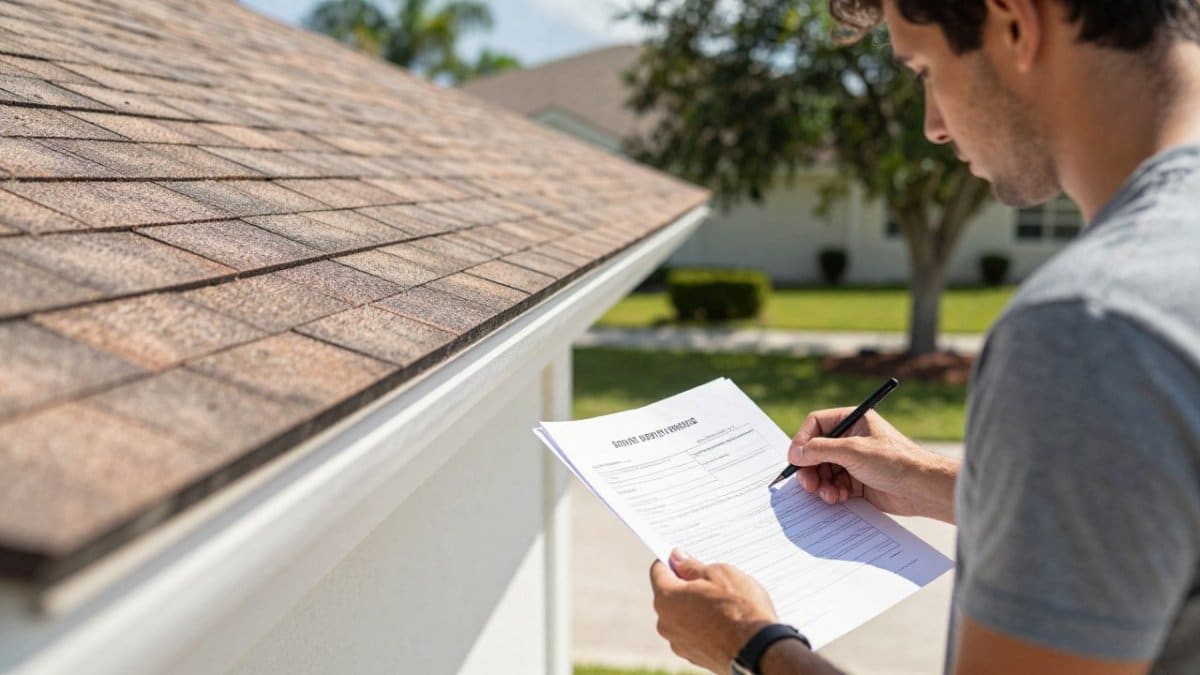
Carriers may ask for proof of roof age in various forms. The following is a general checklist of commonly accepted documents.
Tier 1, Strongest evidence (dated, third-party, or government-issued):
- Building permit and final inspection card. A permit pulled for the roof replacement, with the final inspection sign-off, is the single most persuasive document because it is issued by the local building department and carries a date the carrier can verify.
- Contractor invoice or signed contract with completion date. Pair the invoice with the contractor’s license number so the carrier can confirm the company was licensed at the time.
- Manufacturer warranty registration or shingle bundle date stamps. Warranty paperwork often carries the installation date, and bundle wrappers left in the attic or garage can show the manufacturing window.
Tier 2, Supporting evidence (useful when Tier 1 is missing):
- Closing statement or seller’s disclosure from the purchase. If the roof was replaced before you bought the home, the seller’s disclosure or the home inspection report from that purchase may state the roof’s age.
- Home inspection report. A licensed inspector’s written estimate of roof age, with photos, supports the file even though it is an estimate rather than a record.
- Dated photographs. Photos of the roof at installation, or dated photos showing the shingle style and condition at a known point in time, help establish a timeline.
- Insurance application or prior policy declarations. If a prior carrier recorded the roof age at binding, that record can corroborate your figure.
Tier 3, Last resort:
- Licensed roofer’s or inspector’s age estimate. When no paper trail exists, a written estimate based on shingle type, granule loss, and condition can support the file, but expect the carrier to weigh it less heavily than a permit.
How to submit the package. Send copies, never originals, and organize them in the order above with a one-page cover sheet that states the installation date you are asserting and lists each document by name and date.
Watch out: a permit alone does not prove the work was completed to code or that the roof currently in place is the one the permit covers.
Can You Get Homeowners Insurance Without Roof Coverage?
Some policies exclude or limit roof coverage, particularly for older roofs or roofs in high-wind areas. A policy may also use a roof endorsement that changes how roof damage is settled. Ask your carrier whether any roof-related exclusions or limits appear on your policy before you buy or renew.
If you cannot get standard roof coverage, compare quotes from more than one insurer. Some carriers and state-backed programs may offer alternatives, though terms vary widely.
Does a New Roof Affect Your Homeowners Insurance?
A new roof can help with renewal and can reduce the risk of age-related restrictions. Many carriers view a recently replaced roof more favorably, and some offer premium discounts for qualifying roof upgrades. Keep proof of the installation, including the contract, permit, and final invoice, and send a copy to your insurer.
Confirm with your agent whether a new roof changes your coverage settlement method, since some policies still pay on a depreciated basis for the replaced roof.
Steps to Take If Your Roof Claim Is Denied or Underpaid
If your roof claim is denied or the settlement seems too low, start by requesting the denial in writing and the specific policy language the insurer relied on. Gather your roof age records, inspection reports, and dated photos, then ask the insurer to reconsider with that evidence.
Barclays Public Adjusters works on denied and underpaid claims across South Florida. Read how to overturn a denied roof claim step by step before you respond to the insurer, and see whether a claim filed earlier can still be reopened. If the denial came from a local carrier decision, our denied insurance claim review service in Fort Lauderdale can look at your file.
Our “No Recovery, No Fee” policy means you do not pay unless we recover money on your claim. To discuss your roof claim, schedule your FREE Claim Consultation with Barclays Public Adjusters today.
Frequently Asked Questions
Is a 20-year-old roof insurable?
Often, but it depends on the carrier and the roof’s condition. Many insurers in hail- and hurricane-prone states use roof-age thresholds of 15 to 20 years when deciding whether to renew or restrict coverage. Some carriers reject or limit roofs older than 10 years, while others set the cutoff at 20. A roof in good condition with documented maintenance may still be insurable, while an older roof with visible damage may face inspection requirements or actual cash value settlement. Ask your agent for the carrier’s written roof-age guidelines before your renewal date.
Will insurance cover a 30-year-old roof?
Coverage for a 30-year-old roof is increasingly limited. Insurance generally covers sudden, covered events such as a storm that tears off shingles, not gradual aging or replacement at the end of a roof’s useful life. Some insurers restrict coverage for roofs older than 20 years, and a roof that old may be settled at actual cash value rather than replacement cost. If a storm damages a 30-year-old roof, the claim can still be valid, but the payout may reflect depreciation.
How do you prove a roof’s age to insurance?
Gather documents that show the installation date. Useful records include the original contract or invoice, building permits for the replacement, manufacturer warranty registration, and receipts for repairs. If records are missing, a licensed roofing contractor or inspector can provide a written age estimate based on shingle type, condition and wear. Keep these documents with your policy file, since insurers may ask for proof at renewal or during a claim. A public adjuster can help organize this documentation when a claim is disputed.
Does a new roof affect homeowners insurance?
A new roof often helps. Many insurers reduce concern about roof-age thresholds once a roof is replaced, and some offer premium credits or remove roof-related restrictions after an inspection. Keep the permit, contract and final inspection report, since carriers typically request them. Coverage for the new roof generally applies to sudden, covered damage rather than normal wear, so confirm with your carrier whether the policy pays replacement cost or actual cash value.
