
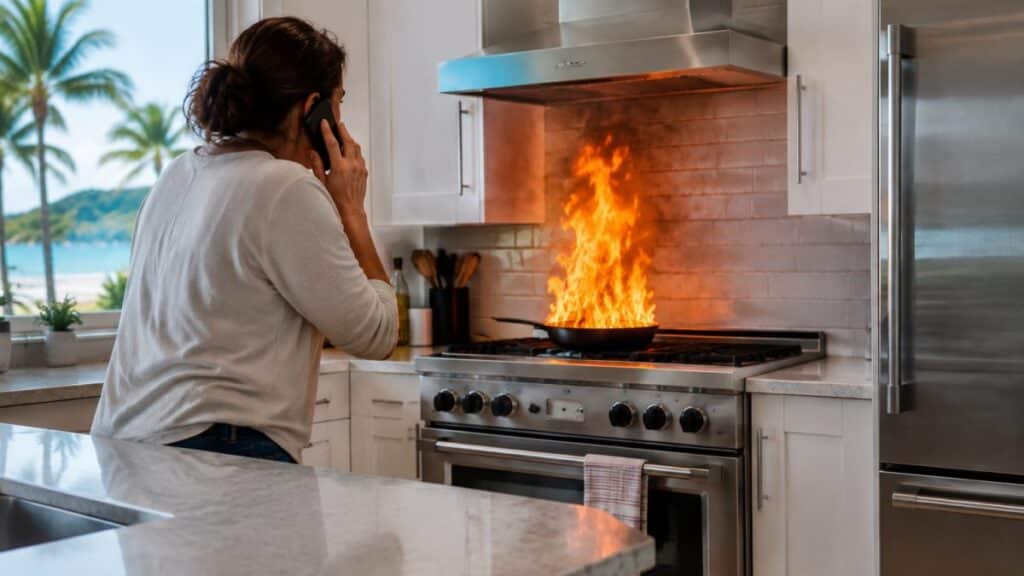
Quick Summary
After a kitchen fire in Florida, first make sure the home is safe to re-enter, and do not go back inside until the fire department clears the property. Then call your insurance company promptly, document all damage with photos and an inventory before any cleanup, and have licensed professionals inspect wiring, HVAC systems and structural damage before repairs begin.
- Stay out until the fire department clears the property, since hidden heat, gas and structural hazards can remain.
- Notify your insurance company as soon as possible, because most policies require prompt notice.
- Photograph and video every affected room and keep a list of damaged items before any cleanup.
- Brush or vacuum dry soot before wiping, and never use bleach on soot-stained surfaces.
- Have a licensed electrician and HVAC technician inspect systems before restoring power or running appliances.
Table of Contents
- Step 1: Make Sure the Home Is Safe to Re-Enter
- Step 2: Call the Fire Department and Check Utilities
- Step 3: Contact Your Insurance Company and Understand Florida Deadlines
- Step 4: Document Fire and Smoke Damage Before Any Cleanup
- Step 5: Remove Smoke Odor and Soot the Right Way
- Step 6: Watch for Hidden Hazards and Call the Right Professionals
- Step 7: Plan Permits, Repairs, and Your Recovery Timeline
- Getting Help With Your Kitchen Fire Insurance Claim in South Florida
- Frequently Asked Questions
Step 1: Make Sure the Home Is Safe to Re-Enter
Last Updated: November 5, 2026
A kitchen fire in Florida can leave a home looking fine on the surface while hiding serious danger. Smoke, heat, and structural weakness do not always show. Before you walk back inside, you need to know whether the home is safe.
Stay out until the fire department clears the property. Firefighters often check for hot spots, gas leaks, and collapsed ceilings. Do not re-enter on your own, even for a quick grab of belongings.
Signs the Structure or Air Is Still Unsafe
Watch for these warning signs before you go in:
- Sagging ceilings or floors
- Cracks spreading across walls or ceilings
- A strong smell of gas or burning
- Lingering smoke or haze in the air
- Water pooling near electrical outlets or panels
- Doors or windows that will not close properly
If you notice any of these, stay outside and call for help. Smoke can irritate the lungs, and it can hide hazards you cannot see (the EPA).
Step 2: Call the Fire Department and Check Utilities
Call 911 right away if the fire is out but you still smell gas or see heavy smoke. Even a small fire can spread again if embers hide in walls or cabinets.
Once emergency crews leave, check your utilities carefully. Turn off the gas at the meter if you smell gas, and call your utility provider. Shut off electricity at the main breaker only if it is safe to reach the panel without standing in water.
Never use a light switch, appliance, or flame near a suspected gas leak.
Step 3: Contact Your Insurance Company and Understand Florida Deadlines
Notify your insurance company as soon as possible. Most policies require prompt notice, and waiting can complicate your claim.
Florida has strict deadlines for filing claims, so check your policy and act quickly. Keep written records of every call, including dates, names, and claim numbers.
If your claim is large or the insurer is slow or disputes the damage, a licensed public adjuster can review your policy and handle negotiations. Learn why a public adjuster helps after fire or smoke damage before you decide whether to bring in help. Barclays Public Adjusters works with property owners across South Florida on fire and smoke claims.
Step 4: Document Fire and Smoke Damage Before Any Cleanup
Document everything before you clean or throw anything away. Insurers rely heavily on photos and records to decide what they will pay.
Take clear photos and video of every room, including ceilings, walls, cabinets, appliances, and personal property. Make a list of damaged items with estimated values, and save receipts for purchases when you can find them.
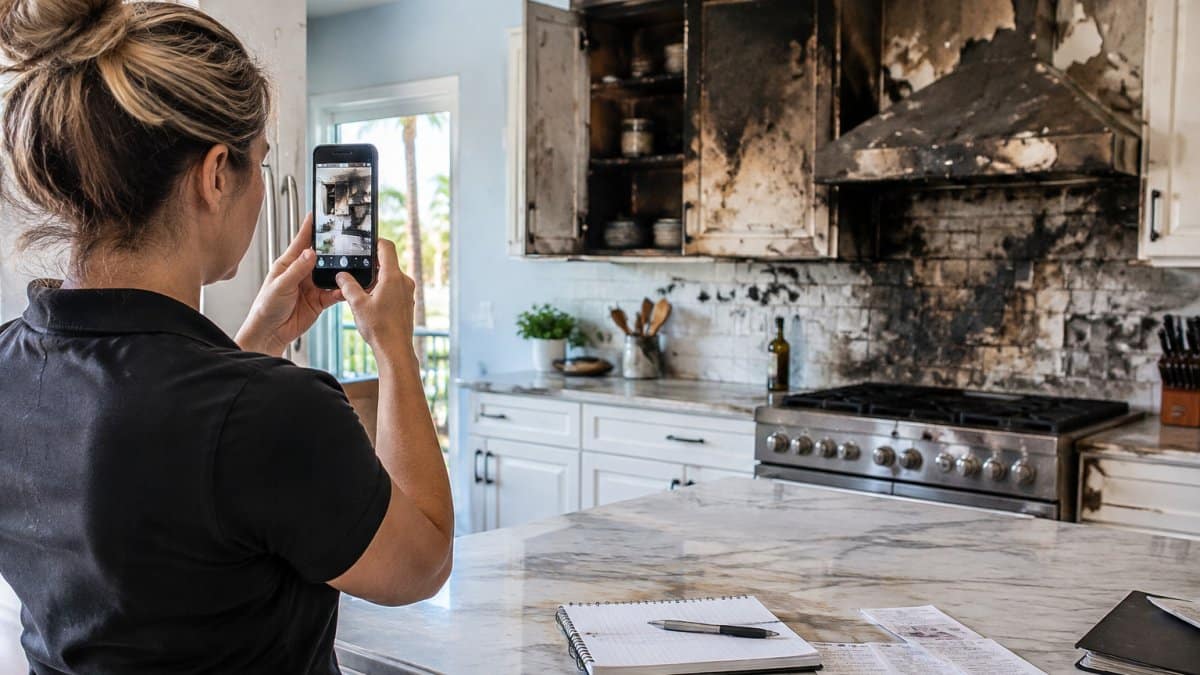
Keep damaged food, medicine, and electronics until your adjuster has reviewed them.
Step 5: Remove Smoke Odor and Soot the Right Way
Soot is not just dirt. It is a mix of carbon particles, oils, and acidic residues that can stain surfaces, pit metal, and corrode wiring if left in place. The longer it sits, the harder it is to remove, so start as soon as your insurer has documented the damage and the fire department has cleared the property.
Work From the Top Down and Use the Right Tools
Dry soot smears when you wipe it with a wet cloth. Start by brushing or vacuuming loose residue with a dry chemical sponge or a soft brush, then clean with a mild detergent and warm water. Work from the ceiling down so you do not re-contaminate clean surfaces. Change rinse water often, and use separate cloths for each room to avoid spreading oils.
Porous materials are a different problem. Drywall, insulation, upholstery, and ceiling tiles absorb smoke and usually cannot be fully cleaned. In most cases they need to be removed and replaced, which is why documentation before demolition matters.
HVAC Ducts and Air Handlers
Smoke travels through the return-air system and can coat ducts, the blower, and the evaporator coil. Running the system before it is cleaned can push soot into every room. Have an HVAC technician inspect the air handler and ducts, and ask whether duct cleaning or component replacement is needed. In humid climates, moisture in the system can combine with soot to create odors that return every time the system runs.
Schedule your FREE Claim Consultation today →
When to Call a Professional
Light soot on hard surfaces is often a homeowner job. Heavy residue, odor that persists after cleaning, or soot in the HVAC system calls for a licensed restoration or deodorization professional.
Watch out: Never mix cleaning products, and never use bleach on soot-stained surfaces; the combination can create dangerous fumes and can set stains rather than remove them.
Protect Yourself While Cleaning
Wear nitrile gloves, eye protection, and an N95 or P100 respirator (the CDC). Keep children and pets out of the work area. If anyone in the home has asthma, allergies, or other respiratory conditions, limit their exposure and consult a healthcare provider if symptoms develop.
The table below summarises the key points for removing soot and smoke odor, so you can scan them quickly.
| Item | Guidance | Note |
|---|---|---|
| Dry soot | Brush or vacuum before wiping | Wet wiping smears soot |
| Cleaning order | Work from ceiling down | Avoids re-contaminating clean surfaces |
| Rinse water | Change often | Separate cloths for each room |
| Porous materials | Drywall, insulation, upholstery | Usually need removal and replacement |
| HVAC system | Inspect ducts and air handler | Running it can spread soot |
| Bleach | Never use on soot | Dangerous fumes and sets stains |
| Protective gear | Gloves, eye protection, N95 or P100 respirator | Keep children and pets away |
Step 6: Watch for Hidden Hazards and Call the Right Professionals
A kitchen fire can damage more than what you can see. Heat and water from firefighting can harm wiring, appliances, and building systems.
Electrical, HVAC, and Appliance Concerns
Have a licensed electrician inspect wiring before you restore power. Have an HVAC technician check ducts and air handlers, since smoke can spread through the system. Do not run appliances that were in the fire zone until a professional has checked them.
For major structural damage, hire licensed restoration and structural professionals. These experts can tell you what must be replaced and what can be saved.
Step 7: Plan Permits, Repairs, and Your Recovery Timeline
Repairs after a kitchen fire rarely move as fast as homeowners expect. Permits, inspections, insurance approvals, and contractor schedules all add time. A realistic plan helps you avoid costly mistakes and keeps your claim on track.
Permits and Inspections
Most structural, electrical, plumbing, and HVAC repairs require a building permit. Local building departments review plans and inspect work at set stages. Unpermitted work can complicate a future sale, and it can give an insurer a reason to deny part of a claim. Before work starts, ask your contractor who is pulling the permit and confirm that inspections are scheduled.
A Practical Timeline
- First hours: Safety clearance, utility shutoffs, and photos of every affected area.
- First day: Insurance notice, a written inventory of damaged items, and a call to a licensed restoration company if water or heavy soot is present.
- First week: Adjuster visit, contractor estimates, and a permit application if structural work is needed.
- Following weeks: Repairs, inspections, and replacement of damaged appliances and materials.
Insurance Deadlines and Documentation
Policies typically require prompt notice of a loss, and some set specific deadlines for proof of loss or for submitting receipts. Keep a claim log with dates, names, and claim numbers. Save every receipt for temporary housing, meals, and repairs, because additional living expense coverage often requires documentation.
Choosing Contractors
Avoid contractors who ask for large upfront payments or who cannot show a license. A public adjuster can help you compare estimates and negotiate with the insurer if the claim is disputed.
Watch out: Do not sign a repair contract before your insurer has reviewed the scope of damage; doing so can limit your ability to recover additional costs later.
Getting Help With Your Kitchen Fire Insurance Claim in South Florida
Handling a kitchen fire claim can feel overwhelming, especially while you are still dealing with the damage. You do not have to manage the process alone.
If your insurer has denied part of your claim or offered less than the damage requires, consider getting outside help. Barclays Public Adjusters can review your policy, document your losses, and negotiate with the insurance company on your behalf. Their fire damage insurance claim help in Fort Lauderdale and fire damage insurance claim help in Boca Raton services are built for South Florida homeowners and business owners.
When you are ready to talk through your options, schedule your FREE Claim Consultation today.
Frequently Asked Questions
What should you do immediately after a kitchen fire?
Get everyone out, call 911, and do not re-enter until the fire department confirms the home is safe. Once you are safe, turn off utilities only if you can do so without risk, and avoid touching damaged appliances or electrical panels. Keep children and pets away from debris, and seek medical care for anyone with breathing trouble, since smoke exposure can worsen over time.
Does homeowners insurance cover kitchen fire and smoke damage?
Most standard homeowners policies cover fire and smoke damage from a sudden kitchen fire, but coverage depends on your specific policy language, deductible and exclusions. Review your declarations page and ask your insurer to explain what is covered for structural repairs, contents, temporary living costs and cleanup. Document everything, and consider a licensed public adjuster if the offer seems too low or your claim is delayed.
Should you clean up fire damage before the insurance adjuster visits?
Do not begin major cleanup or discard damaged items before the adjuster has documented the loss. Take photos and video first, keep damaged items until they are inventoried, and only perform emergency steps such as covering broken windows or removing spoiled food. Clear documentation protects your claim and helps prevent disputes over what was damaged.
How long does it take to restore a home after a kitchen fire?
Restoration timelines vary with the extent of damage, permit approvals, contractor availability and claim decisions. Smaller kitchen fires may be repaired in a few weeks, while structural or electrical work can take several months. Ask your contractor for a written schedule, confirm that Florida permits are pulled where required, and track every delay in writing.
