
Last Updated: November 12, 2026
Quick Summary
Yes, you can file a water damage claim for old pipes if the damage came from a sudden, accidental failure, such as a pipe that suddenly bursts. Slow leaks and corrosion are usually excluded, so the cause of the loss matters more than the pipe’s age.
- Sudden pipe bursts are the clearest case for a claim and are often covered.
- Slow leaks over months and corrosion are often excluded as gradual damage or wear and tear.
- Shut off the water and document the event right away to stop further damage.
- Preserve the failed pipe section and get a written plumber’s report on the cause.
- Do not sign permanent repairs or discard the failed pipe before the insurer inspects it.
Table of Contents
- When Homeowners Insurance Covers Water Damage From Old Pipes
- Does Homeowners Insurance Cover Plumbing Leaks?
- How Insurers Tell a Sudden Failure From a Long-Term Leak
- Does Homeowners Insurance Cover Broken Pipes Under the Foundation?
- Does Homeowners Insurance Cover Plumbing Repairs and Pipe Replacement?
- Water Damage Insurance Claim Tips: A Documentation and Filing Checklist
- Filing Your Claim Next: Get a Coverage Review Before You Accept a Denial
- Frequently Asked Questions
When Homeowners Insurance Covers Water Damage From Old Pipes
Yes, you can file a water damage claim for old pipes, but the answer depends on how the damage happened. Most homeowners policies cover sudden and accidental water damage, such as a pipe that suddenly bursts. They usually do not cover damage that builds up slowly over months or years, like a slow leak or corrosion.
Coverage turns on the cause of the loss, not the age of the pipe alone. A pipe can be 40 years old and still produce a covered claim if it fails suddenly. A new pipe with a slow, ignored leak may produce a denied one.
Here is how the two situations usually compare:
| Situation | Typical Coverage | Why |
|---|---|---|
| Sudden pipe burst | Often covered | Sudden, accidental event |
| Slow leak over months | Often excluded | Gradual damage or neglect |
| Corrosion and deterioration | Often excluded | Wear and tear |
| Resulting water damage from a covered burst | Often covered | Caused by a covered event |
Sudden, accidental pipe bursts
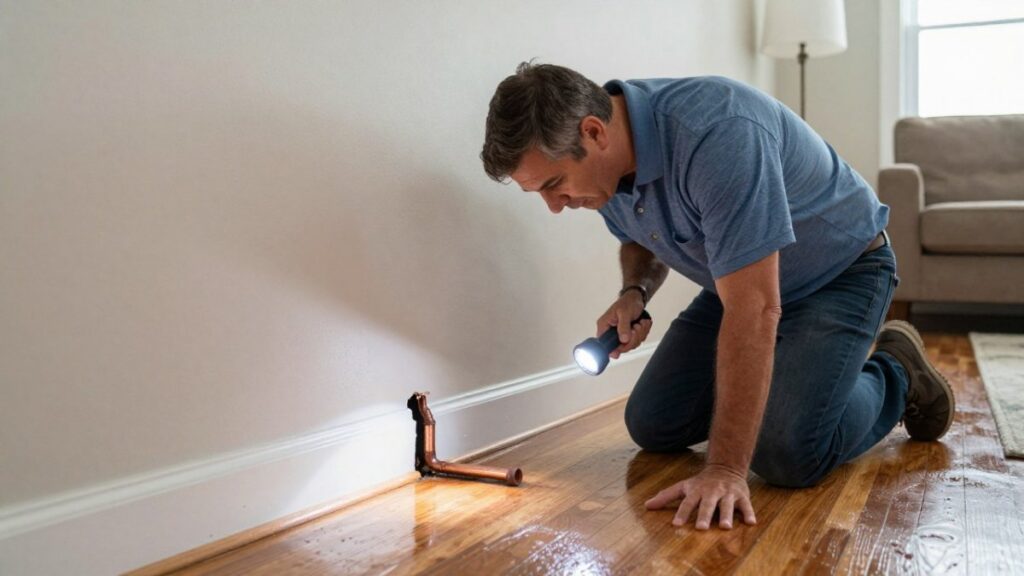
A sudden burst is the clearest case for a claim. The pipe fails all at once, water pours out, and the damage happens fast. Document the event right away and shut off the water to stop further damage.
Insurers look for evidence that the failure was sudden. Compare how coverage differs for a plumbing leak versus flood damage to see which situation your loss fits. Photos, plumber invoices, and a timeline can help support a water damage claim.
Gradual leaks and wear and tear
Slow leaks are harder to claim. Insurers often treat long-term seepage as neglect or wear and tear, which most policies exclude. If you noticed a leak and did nothing, expect the claim to face resistance.
Many homeowners assume the damage is covered because the pipe was old. That assumption often fails.
Does Homeowners Insurance Cover Plumbing Leaks?
Homeowners insurance often covers the water damage from a plumbing leak, but usually not the cost to fix the leak itself. The policy typically pays to repair the damage the water caused, such as drywall, flooring, and personal property. The pipe repair is usually excluded.
Read your policy’s exclusions closely. Some policies include limited coverage for the leak source only when it is sudden. Others exclude plumbing leaks that were not promptly repaired.
- Covered: Damage to walls, floors, and belongings from a sudden leak
- Often excluded: The cost to repair the leaking pipe itself
- Often excluded: Damage from a leak you knew about and ignored
How Insurers Tell a Sudden Failure From a Long-Term Leak
The sudden-versus-gradual question is where most old-pipe claims are won or lost. Insurers are not deciding whether the pipe was old; they are deciding whether the loss was a discrete event or the visible end of a condition that existed for weeks, months, or years. Adjusters typically build that judgment from several independent evidence categories, and the more of them you can address up front, the harder it is for the insurer to default to a gradual-damage denial.
Pattern and distribution of damage. A sudden burst usually produces water concentrated around the failure point, with a clear wet-to-dry boundary and damage that tracks the path of escaping water. A long-term leak tends to show layered staining, tide lines on drywall, swollen and delaminated subfloor, and corrosion or mineral buildup around the fitting. Adjusters photograph these patterns and compare them to the date you say you discovered the loss.
Moisture readings and drying evidence. Fresh, uniform moisture near a single failure point supports a sudden event. Widely varied readings across a large area, or moisture in materials that would take a long time to saturate, support a gradual-loss theory. If you have already begun mitigation, keep the mitigation company’s moisture logs, they are often the best independent record of how wet the structure was on day one.
Condition of the failed pipe. Corrosion, pitting, scale, and cracking at the failure point are the adjuster’s central physical evidence. A pipe that shows uniform wall thinning or a long corrosion channel looks like deterioration; a clean split or a failed solder joint on an otherwise sound pipe looks more like a sudden mechanical failure. This is why preserving the failed section matters, see the checklist below.
Repair and maintenance history. Insurers ask whether the plumbing had been repaired, patched, or flagged before the loss. Prior repairs to the same line, a plumber’s note recommending replacement, or a home inspection report that called out aging plumbing can all be used to argue the condition was known. Conversely, a documented service history with no warnings supports your position.
Your own statements and timeline. The recorded statement and the date-of-loss you report are compared against the physical evidence. Inconsistencies, a discovery date that does not match the drying pattern, or a description of the event that shifts over time, are commonly cited in denial letters.
Watch out: Do not tell the insurer the leak was “probably going on for a while” or that you “noticed it months ago and meant to fix it.” Offhand statements like that are routinely quoted in denial letters as admissions of a known, gradual condition.
A common pattern practitioners describe is that the insurer’s decision hinges less on the age of the pipe than on whether the file contains credible evidence of a single, datable failure event. Your job is to supply that evidence before the adjuster forms a view.
Does Homeowners Insurance Cover Broken Pipes Under the Foundation?
Coverage for pipes under a foundation depends on the policy and the cause of the break. Some policies cover sudden breaks in underground or slab-level pipes, while others exclude them or require a separate endorsement.
Because these repairs can be costly, check whether your policy addresses sub-slab and underground plumbing. Ask your insurer directly before you assume coverage.
Does Homeowners Insurance Cover Plumbing Repairs and Pipe Replacement?
Most homeowners policies do not pay to repair or replace the failed pipe itself. They are designed to cover resulting damage, meaning the water damage that the pipe failure caused. The pipe is treated as the source of the loss, not the covered property.
This distinction matters. You may receive payment for drywall, flooring, and furniture while still paying the full bill for the new pipe. Some policies offer limited coverage for the access needed to reach the pipe, such as opening a wall.
Ask your agent what your policy says about tear-out, access, and pipe repairs.
Water Damage Insurance Claim Tips: A Documentation and Filing Checklist
Work through this sequence in order, and keep a single folder (digital or paper) for everything.
1. Stop the water and protect the structure. Shut off the main supply or the nearest isolation valve, then shut off power to any wet electrical areas before you enter them. Call a licensed plumber to make the repair.
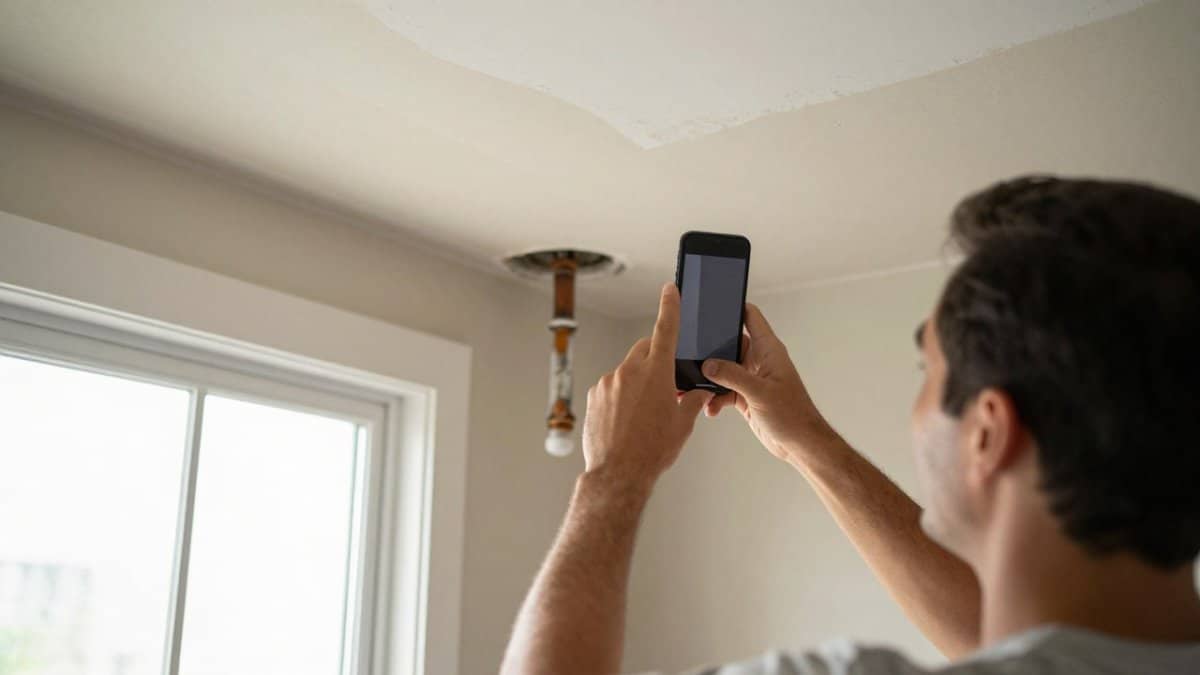
2. Photograph and video before cleanup. Capture wide shots of each affected room, then close-ups of the failure point, the water line on walls, stained ceilings, and damaged belongings. Include a photo of a tape measure or a common object for scale.
3. Preserve the failed pipe section. Ask the plumber to cut out and save the failed section rather than hauling it away. Label it with the date and location. This is the physical evidence an adjuster or an independent expert will examine to distinguish corrosion from a sudden split.
4. Get a written plumber’s report on cause. Ask the plumber to state, in writing, what failed and why, for example, a failed supply line, a cracked fitting, or a joint that gave way, and whether the condition appeared sudden or long-standing.
5. Build a timeline. Write down when you first noticed water, what you did, who you called, and when. Keep it factual and consistent; you will be asked to repeat it in the recorded statement.
6. Inventory damaged belongings. List each item with description, approximate age, purchase price if known, and replacement cost. Photograph items before discarding them, and keep receipts or credit card records where available. Do not throw away damaged property until the adjuster has seen it or has authorized disposal.
7. Keep every receipt. Save receipts for emergency repairs, mitigation, drying equipment rental, temporary lodging if the home is uninhabitable, and any replacement purchases the insurer authorizes. These are typically claimed separately from the structural damage.
8. Notify the insurer promptly and in writing. Report the claim as soon as practical, and follow up with an email or portal message summarizing the date of loss and what happened. Prompt notice is a policy condition; delay gives the insurer an argument that the damage worsened through neglect.
9. Cooperate with the inspection but stay organized. Be present for the adjuster’s inspection if you can, provide your documentation package, and ask for the adjuster’s name and a copy of the inspection report. Keep a log of every call, email, and visit.
Watch out: Do not sign a repair contract, authorize permanent repairs, or discard the failed pipe before the insurer has inspected, doing so can be treated as spoliation of evidence and weaken an otherwise valid claim.
A practical claim file for an old-pipe loss usually contains: photos and video, the preserved pipe section, the plumber’s written report, mitigation invoices and moisture logs, a belongings inventory, receipts, your timeline, and a written log of all insurer communications.
Filing Your Claim Next: Get a Coverage Review Before You Accept a Denial
If your claim is denied or the settlement offer looks too low, do not accept it without a closer look. Insurers sometimes deny claims based on a cause-of-loss argument that does not match the evidence. Ask for the denial in writing and the specific policy language they relied on. Learn why insurers deny claims before you decide on your next step.
A licensed public adjuster can review the denial, evaluate the damage, and negotiate with the insurance company’s appraisers on your behalf. At Barclays Public Adjusters, we offer a No Recovery, No Fee policy, so you pay nothing unless we recover funds for you. Schedule your FREE Claim Consultation today to get a coverage review before you accept a denial.
Barclays Public Adjusters can help you challenge a denial and document your loss the right way. File your Burst Pipe Insurance Claim Fort Lauderdale with our team, or see our Burst Pipe Insurance Claim Florida service for help with coverage and payment.
Frequently Asked Questions
Does homeowners insurance cover water damage from old pipes?
It can, but the question is usually about how the damage happened rather than the pipe’s age. Policies generally pay for sudden, accidental water discharge, such as a pipe that suddenly bursts. Damage from gradual leaks, corrosion, wear and tear, or a known leak that the owner failed to repair is commonly excluded. Read your policy’s exclusions and the wording of the cause of loss, and document when the leak started and what you did once you discovered it.
Does insurance cover the cost to repair or replace old pipes?
Many standard homeowners policies do not pay to repair or replace the broken pipe itself, because the pipe is treated as the source of the loss rather than the damage. Coverage typically extends to the resulting damage, such as flooring, drywall, cabinets, and personal property, when the water damage is covered. Some policies include limited endorsements for plumbing system breakdowns, so check your declarations page and endorsements.
What should you document before filing a water damage claim?
Photograph and video the damage before any cleanup, and keep the damaged materials if you can. Save repair receipts, plumber invoices, and any records of past plumbing repairs or maintenance. Write down when you first noticed the water, shut off the water supply to stop further loss, and keep a log of every call with your insurer, including dates and the names of representatives. Clear documentation makes it harder for a disputed cause of loss to succeed.
