
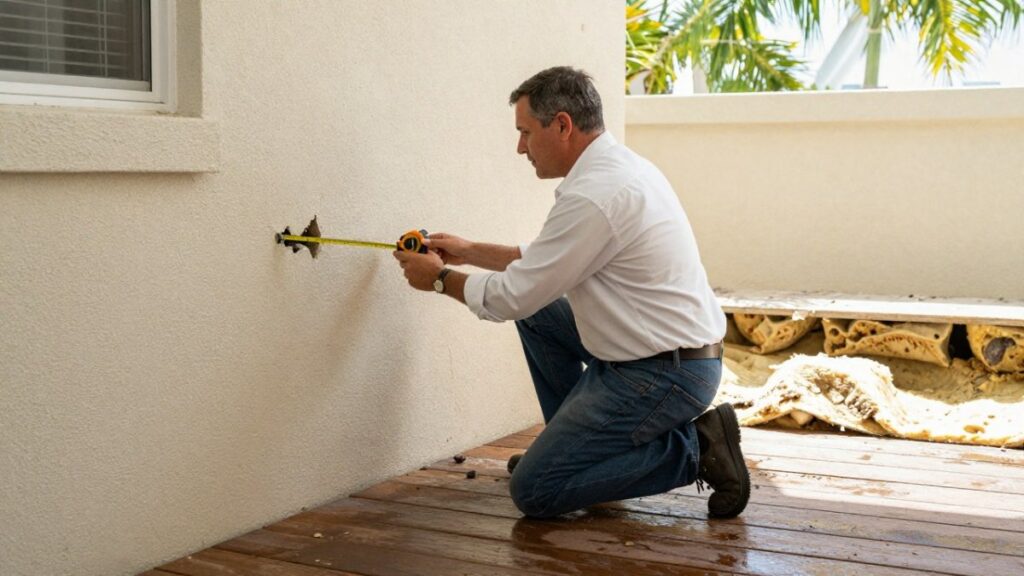
Last Updated: November 27, 2026
Quick Summary
Calculate hurricane damage repair by documenting each affected room, then building a line-item estimate with quantities and local contractor bids. Add overhead, profit, and a contingency for hidden damage, then compare your total with the insurer’s estimate.
- Document every room, attic, and exterior area with dated photos and measured dimensions before requesting estimates.
- Price each damage item as quantity times unit cost, using at least two or three written contractor bids per major category.
- Add a separate contingency line for concealed damage, since hidden moisture and mold often raise estimates.
- Confirm whether your policy uses replacement cost or actual cash value, because depreciation changes your payout.
- Check your hurricane deductible percentage and whether it applies to the dwelling limit or the claim amount.
Table of Contents
- How Much Does Hurricane Damage Repair Cost?
- Step 1: Document the Damage Room by Room
- Step 2: Build a Line-Item Hurricane Damage Repair Cost Estimate
- Step 3: Use a Hurricane Repair Cost Calculator to Check Your Math
- Step 4: Work Out Your Hurricane Deductible Calculation
- Step 5: Compare Your Estimate to the Insurer’s Hurricane Damage Insurance Claim Estimate
- When to Hire a Professional Instead of Doing It Yourself
- Booking Your Free Claim Consultation
- Frequently Asked Questions
How Much Does Hurricane Damage Repair Cost?
Hurricane damage repair costs in the United States vary widely, from about $2,632 to $22,127 for storm damage in general, according to Angi’s national storm-damage repair cost data.
The first step is knowing what you are paying for. Most hurricane losses fall into a few groups:
- Roof damage, including missing shingles and exposed decking
- Water intrusion from wind-driven rain or storm surge
- Interior repairs such as drywall, flooring, and insulation
- Cleanup, drying, and debris removal
A typical storm-damaged roof repair costs $400 to $1,900, while hail-related repairs can run $700 to $4,000, according to Handvetted’s review of Angi national data.
Repair costs can also climb if work waits. Cotality’s 2026 Hurricane Risk Report reports that remediation costs may rise by 100% to 200% by day 21.
Step 1: Document the Damage Room by Room
Walk through every room, attic, and exterior area before you request any estimate. Record each location, the type of damage, and its approximate size. Good documentation is the foundation of every repair number you will use later.
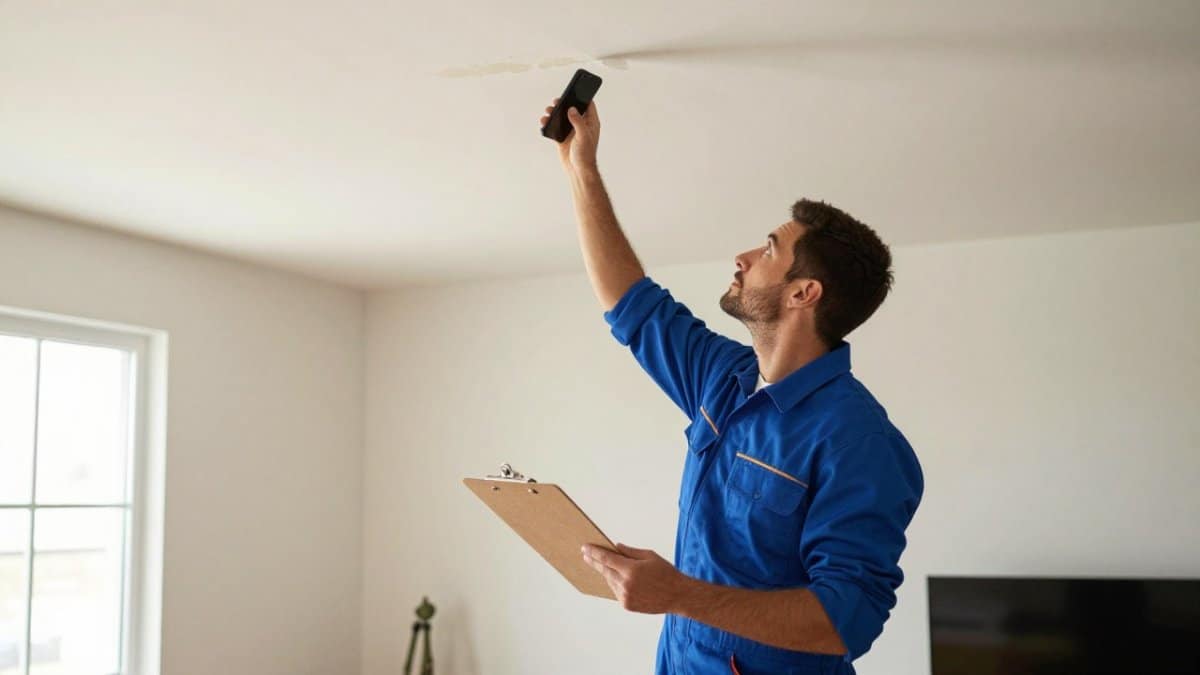
!A homeowner in work clothes photographing water stains on a ceiling in a damaged living room
Use this simple checklist for each room:
- Photograph the damage from wide and close angles
- Note the room dimensions in feet
- Record the material affected, such as drywall, flooring, or cabinetry
- Mark any water lines, stains, or soft spots
- Save the date and time stamps on your photos
Keep every receipt for emergency repairs, tarps, and dehumidifiers. These records support your claim later.
Step 2: Build a Line-Item Hurricane Damage Repair Cost Estimate
A line-item estimate lists each repair separately, with a quantity, unit price, and total. This format makes it much easier to spot missing items or errors, and it is the format insurers and appraisers expect to see.
Use this structure for each line:
| Item | Quantity | Unit | Typical Unit Cost | Line Total |
|---|---|---|---|---|
| Drywall removal and replacement | 120 | sq ft | $2.50-$4.50 installed | Qty x unit cost |
| Interior paint | 120 | sq ft | $1.50-$3.00 | Qty x unit cost |
| Flooring removal and replacement | 300 | sq ft | $4.00-$9.00 by material | Qty x unit cost |
| Roof shingle repair | 1 | job | Contractor bid | Bid amount |
| Water extraction and drying | 1 | job | $1,500-$5,000 by area | Bid amount |
| Debris removal | 1 | cubic yard | $25-$75 | Qty x unit cost |
Quantity
Replace these line items with local contractor bids before you finalize anything. Pricing depends on material, labor availability, and project size, so get at least two or three written bids for each major category.
A Transparent Worksheet You Can Fill In
The worksheet below shows exactly how the pieces combine, so you can audit every step and adjust assumptions as bids come in.
- Quantity takeoff. From your room-by-room notes, list every affected material with its measured area, length, or count. Convert everything to a consistent unit, square feet for drywall, flooring, and roofing; linear feet for trim and fencing; cubic yards for debris.
- Material and labor unit prices. For each line, enter a low and a high unit price from your contractor bids. Keep material and labor separate where the bid allows, because labor is the line most likely to move after a storm.
- Subtotal by category. Group lines into structural, roofing, water and mold remediation, electrical, HVAC, interior finishes, landscaping, and debris removal. Category subtotals make it obvious which part of the loss is driving the total.
- Overhead and profit. If a general contractor manages the work, add overhead and profit as a separate percentage line rather than burying it in unit prices. Confirm what your contractor actually charges for overhead and profit.
- Contingency. Add a contingency line for concealed damage. Hurricane losses almost always hide something behind drywall or under flooring.
- Grand total and range. Run the worksheet twice, once with low unit prices and once with high unit prices. The two grand totals become your planning range.
Itemized Cost Breakdown by Damage Type
Use the ranges below as starting points, then replace them with bids.
- Structural: Framing, sheathing, and foundation repairs vary widely; get an engineer’s report before pricing structural work.
- Roofing: Shingle repair costs vary with the extent of storm damage, while full replacement scales with roof size and pitch.
- Water and mold remediation: Extraction, drying equipment, and antimicrobial treatment are usually priced per affected area and per day of equipment use.
- Electrical: Water intrusion into panels, outlets, and wiring requires licensed evaluation; assume inspection costs even when repairs are minor.
- HVAC: Flooded or wind-damaged units may need replacement rather than repair; price both options.
Roof, Water, and Storm-Surge Damage
Roof and water damage usually drive the largest share of a hurricane claim. Inspect the roof covering, flashing, and decking, and document every visible opening. Water from storm surge often contaminates building materials, which can require removal rather than drying, so note the affected height on each wall.
Ask a contractor to assess remediation needs early, because delays can raise costs.
Cleanup, Drying, and Debris Removal
Cleanup is often underestimated. Include costs for debris removal, water extraction, and structural drying. List equipment rentals such as dehumidifiers and fans as separate line items, with the number of days each one runs. A common pattern is that drying equipment stays on site longer than homeowners expect, so build in a buffer for extra days.
Hidden Damage and Inspection Contingencies
No worksheet is complete without a plan for what you cannot see. Concealed moisture, mold behind walls, and structural issues under flooring are the most common reasons an estimate gets revised upward. Budget a contingency line, schedule a professional moisture inspection before closing out the estimate, and plan to revise the worksheet once the contractor opens walls.
Step 3: Use a Hurricane Repair Cost Calculator to Check Your Math
Once your line items are complete, run the totals through a repair cost calculator. Multiply each quantity by its unit cost, add the subtotals, then add overhead and profit if a general contractor manages the work.
A calculator also helps you test scenarios. Run a low estimate using the lowest bids and a high estimate using the highest, so you know the likely range before you negotiate.
Step 4: Work Out Your Hurricane Deductible Calculation
Your deductible determines how much of the repair cost you cover before insurance pays. Policies may use a percentage deductible for windstorm or hurricane losses rather than a flat dollar amount.
For example, if your repair estimate is $40,000 and your policy has a 5% hurricane deductible on a $300,000 dwelling limit, the deductible would be $15,000. Your insurer would then pay the remaining $25,000, subject to policy terms.
How Valuation Method Changes What You Actually Pay
The deductible is only half the equation. The other half is how the policy values the loss, and this is where most guides stop short.
- Replacement cost value (RCV): The policy pays the full cost to repair or replace without subtracting depreciation. Your out-of-pocket exposure is essentially the deductible plus any items above policy limits.
- Actual cash value (ACV): The policy pays replacement cost minus depreciation for age and wear. On an older roof or flooring, depreciation can be a large share of the repair, so your out-of-pocket total is the deductible plus the depreciation.
- Recoverable depreciation: Many policies pay the ACV amount first and release the withheld depreciation only after repairs are completed and invoiced. That means you may need to front the difference during the repair and get reimbursed later. Ask your adjuster how and when recoverable depreciation is released.
A worked comparison makes the mechanics concrete. Suppose the replacement cost of your repairs is $40,000, depreciation is $10,000, and your deductible is $15,000:
- Under RCV, the insurer’s starting point is $40,000, less the $15,000 deductible, for a net payment of $25,000.
- Under ACV, the insurer’s starting point is $30,000, less the $15,000 deductible, for a net payment of $15,000, with up to $10,000 in recoverable depreciation released after repairs are complete.
Same damage, same deductible, very different cash flow. That is why the deductible calculation has to be paired with the valuation method before you can estimate what you will actually pay.
Deductibles, Mortgage Escrow, and Timing
If your home is financed, your lender may require the insurance payment to be held in escrow and released in draws as work progresses. That affects timing, not the total, but it matters when you are planning cash flow.
Watch out: some policies apply a separate, higher percentage deductible to named storms and a different deductible to other wind losses.
Step 5: Compare Your Estimate to the Insurer’s Hurricane Damage Insurance Claim Estimate
Insurers prepare their own estimate, which can differ sharply from yours. Compare the two line by line.
Check how the policy values the loss. Replacement cost pays the full cost to repair or replace without depreciation, while actual cash value subtracts depreciation for age and wear.
If the numbers still do not match, you can request a reinspection, submit supporting documents, or invoke the appraisal clause in your policy. Keep every written communication.
When to Hire a Professional Instead of Doing It Yourself
You can often document damage and build a basic estimate on your own. Some situations call for professional help:
- The insurer denies part of the claim or offers a low settlement
- The damage involves structural problems, electrical hazards, or significant mold
- Your estimate and the insurer’s differ by a large amount
- You do not have time to manage the claim while repairs are underway
A licensed public adjuster works for you, not the insurer. Barclays Public Adjusters offers a “No Recovery, No Fee” policy. Their team can also review your policy, prepare documentation, and negotiate directly with the insurance company.
Booking Your Free Claim Consultation
If your estimate is complicated or your insurer’s offer seems too low, a free consultation is a practical next step. Barclays Public Adjusters can review your documentation and explain your options. Visit book a free claim consultation to schedule your review today.
Frequently Asked Questions
How much does it cost to repair hurricane damage?
Costs vary widely with the type and extent of damage. Third-party national data reports storm-damage repair figures across a broad range, but these cover storm and hail work generally rather than hurricane-specific jobs, so treat them as a starting range. Your own estimate should be built line by line from documented damage, material costs, and labor for your property.
What should a hurricane damage repair estimate include?
A complete estimate lists each damaged area separately, with the scope of repair, materials, labor, and cleanup for each item. It should cover roof and structural work, water intrusion and drying, debris removal, electrical and interior repairs, and any mold remediation. A room-by-room damage assessment followed by a line-item estimate makes it easier to compare against an insurer’s figures and to spot omitted work.
How do I compare a contractor’s estimate with my insurance estimate?
Lay the two documents side by side, matching each line item by area and scope. Look for differences in quantities, material grades, labor rates, and omitted items such as debris removal or drying. Check whether the insurer’s figure reflects replacement cost or actual cash value, since depreciation can explain a large gap. Where the numbers differ, ask the insurer to explain each difference in writing and request a reinspection if key damage was missed.
Should I file an insurance claim or pay for hurricane repairs myself?
Filing is usually worth considering when the repair cost is well above your deductible, because the insurer may pay the difference after the deductible is subtracted. If the damage is close to or below your deductible, paying out of pocket may be simpler. Document everything before making repairs, keep receipts, and avoid any action that could be treated as a waiver of your claim. A public adjuster can help you decide, and Barclays Public Adjusters offers a free claim consultation to review your situation.
