
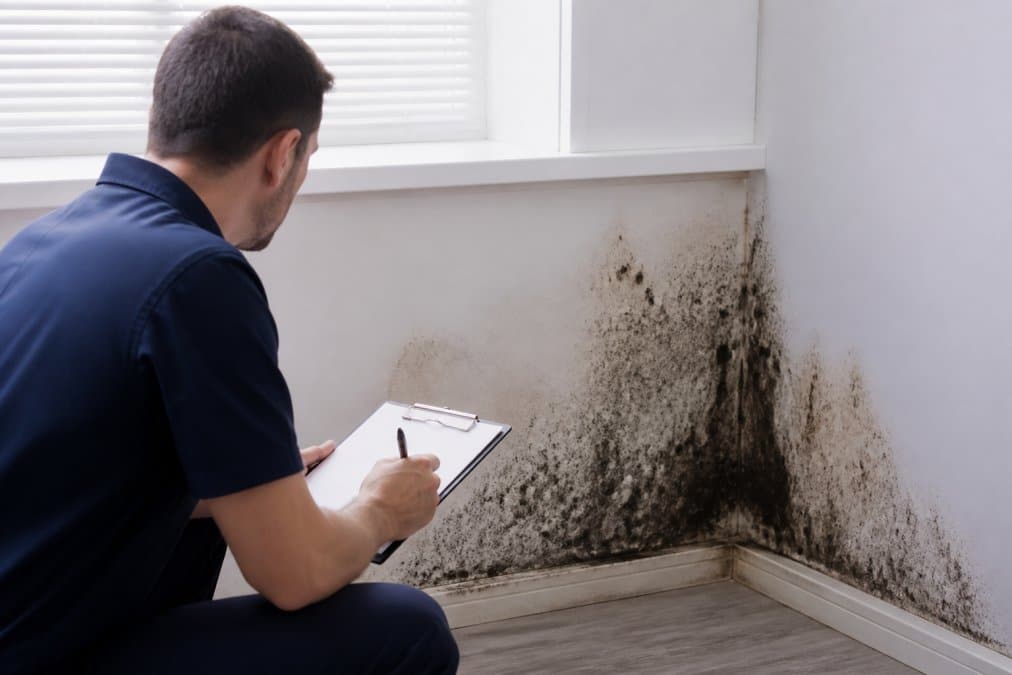
Table of Contents
- Does Homeowners Insurance Cover Mold? The Short Answer
- When Is Mold Damage Covered by Insurance?
- When Is Mold Damage NOT Covered?
- Documenting Mold Damage for Insurance Claims
- How to File a Mold Insurance Claim: Step-by-Step
- Your Claim Was Denied: What to Do Next
- Hiring a Public Adjuster for Mold Claims
- Preventing Mold Growth and Future Damage
- Frequently Asked Questions
Last Updated: September 9, 2026
Does Homeowners Insurance Cover Mold? The Short Answer
Whether is mold damage covered by insurance rarely gets a simple yes or no. Standard policies typically exclude mold remediation but often cover it when mold results from a “covered peril” like a burst pipe or storm damage. The distinction hinges on the cause, not the mold’s presence.
Barclays Public Adjusters evaluates property damage claims across South Florida, and mold is among the most misunderstood coverage areas.
The critical question is whether the moisture event was sudden and accidental or the result of gradual neglect, that single determination often decides your claim’s outcome.
When Is Mold Damage Covered by Insurance?
Mold damage is covered by insurance when it stems from a sudden and accidental event, such as a burst pipe, storm damage, or appliance failure. Coverage typically extends to the mold remediation costs associated with the original water intrusion, subject to your policy limits and deductible.
The most common covered scenario involves plumbing failure. When a supply line bursts and floods a wall cavity, the resulting mold growth is generally treated as part of the water damage claim.
Insurance Information Institute’s guide on mold coverage explains that most standard policies provide some coverage for mold when it results from a covered peril, though amounts are often capped. These limits vary by carrier and policy form, so reviewing your declarations page matters before you file.
Sudden and Accidental vs. Gradual Damage
The distinction between sudden and accidental damage versus gradual damage determines whether your claim proceeds. Sudden events include burst pipes, storm damage, and appliance malfunctions. Gradual damage includes long-term leaks, seepage through foundations, and humidity-related condensation.
Insurers deny claims when the homeowner failed to address ongoing moisture, a slow leak behind a wall that went unnoticed for months reads as maintenance neglect rather than an insurable event.
If mold results from a leak you noticed but delayed repairing, the insurance company will likely classify the damage as gradual and deny your claim. Document the date you discovered the moisture and act immediately to mitigate further damage.
When Is Mold Damage NOT Covered?
Standard homeowners policies exclude mold damage that results from neglect, long-term moisture, or conditions the homeowner reasonably should have prevented. Flood-related mold requires separate flood insurance through the National Flood Insurance Program.
Common denial scenarios include:
- Mold from condensation or high humidity without a specific water event
- Fungus growth from seepage through foundations or basement walls
- Mold following a leak the homeowner knew about but did not repair
- Damage from poor ventilation in bathrooms or attics
- Mold present before the policy period began
Many policies contain explicit fungus, mildew, and wet rot exclusions that limit or eliminate coverage. Some carriers offer mold coverage as a policy endorsement for an additional premium. If mold coverage matters to you, ask your agent about adding this endorsement before damage occurs.
The Federal Emergency Management Agency’s flood insurance resources clarify that standard homeowners policies do not cover mold from flooding. Flood-related claims require a separate NFIP policy, which has its own mold provisions.
Documenting Mold Damage for Insurance Claims
Documentation separates successful mold claims from denied ones, but the bar for proving “sudden and accidental” causation is higher than most homeowners realize. Adjusters evaluate what you can prove, not what you describe.
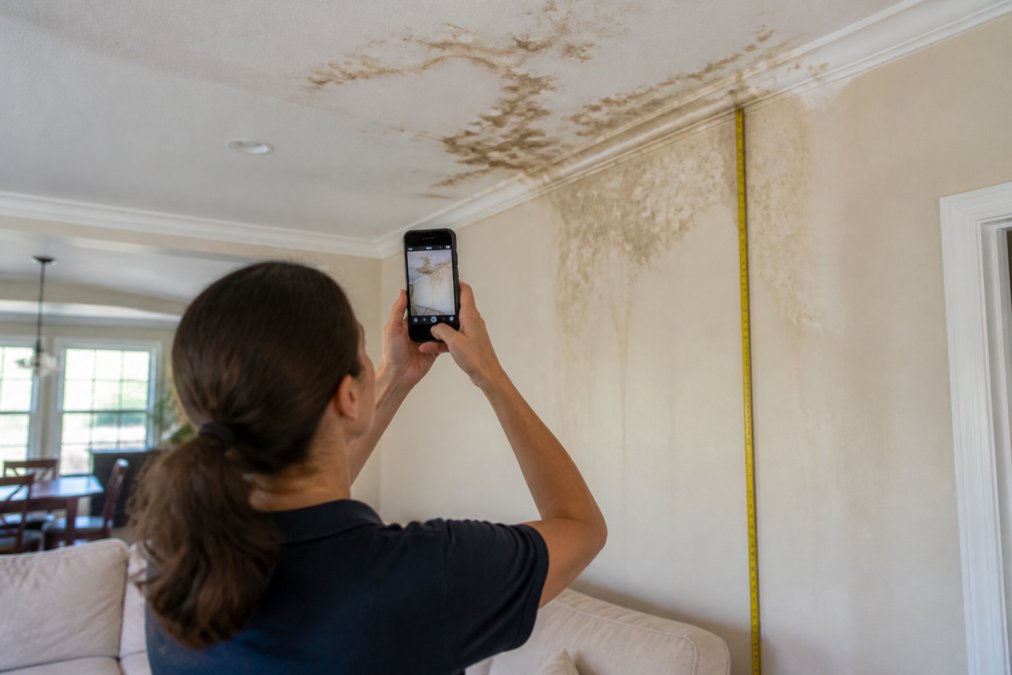
The Evidence Checklist That Proves ‘Sudden’
- Date-stamped photos of the water source itself. If a pipe burst, photograph the failed joint or crack before any repair work begins. This is your single strongest piece of evidence that the event was sudden.
- A written timeline with specific times, not just dates. Note when you first saw water, when you called a plumber, and when you began drying. Gaps of more than 24 hours between discovery and mitigation will be read as neglect.
- Receipts for emergency mitigation with timestamps. A water extraction service invoice showing arrival within hours of the event supports your claim. A receipt dated a week later undermines it.
- Moisture meter readings. If you hire a mitigation company, ask for their moisture meter readings on drywall, studs, and subflooring. Readings above 15% on wood or above 12% on drywall indicate active saturation. These readings create a professional record that a photo cannot capture.
- Photographs of the mold itself before any cleaning. Capture the pattern of growth. Mold that appears in a concentrated patch directly beneath a pipe leak tells a different story than mold spread evenly across a wall base, which suggests rising damp or seepage.
- Your insurance company’s claim number and the name of every representative you speak with. Note the date, time, and summary of each conversation. If an adjuster tells you something verbally, follow up in writing to confirm it.
Do not throw away mold-damaged materials before your insurance adjuster inspects them. Many homeowners lose claims because they cleaned up before documentation. If emergency remediation is necessary, photograph everything first and keep a sealed sample of the damaged drywall or insulation in a plastic bag. Label it with the date and location.
Why Physical Samples Matter More Than Photos
A sealed bag of drywall with visible mold provides physical evidence your adjuster cannot dismiss, but only if you connect it to the water event.
If your policy requires you to allow the insurer’s inspector to take samples, do not refuse access, that can void coverage. Instead, take your own samples in addition.
The Independent Mold Inspection Option
If your insurer’s adjuster concludes the damage is gradual, you have the right to hire an independent mold inspector at your own expense. A licensed industrial hygienist or mold assessment consultant can perform air sampling and surface testing that produces a laboratory report identifying the mold species and its likely source.
The report’s value lies in its objectivity. An independent inspector has no financial interest in denying your claim. If the lab results indicate the mold species is one commonly associated with clean water intrusion (such as Aspergillus or Penicillium from a pipe leak) rather than chronic moisture, that report becomes powerful evidence in your appeal.
Ask your independent inspector to specifically address causation in their written report. A statement such as “The pattern of growth and moisture readings are consistent with a single water intrusion event” carries more weight than a generic mold identification.
Preserve the Chain of Evidence
Adjusters look for gaps in your timeline, if you discovered water Monday but did not call a plumber until Thursday, the adjuster will assume the leak was slow and ongoing.
Your documentation package is also your foundation if the claim goes to appraisal or litigation, build that record as if you expect a challenge.
How to File a Mold Insurance Claim: Step-by-Step
Filing a mold insurance claim follows a specific sequence that affects your outcome.
- Mitigate further damage immediately. Stop the water source, dry affected areas, and prevent additional mold growth. Your policy requires reasonable mitigation efforts.
- Review your policy documents. Identify your coverage limits, mold exclusions, and the deadlines for reporting claims.
- Notify your insurance company in writing. Provide the date of discovery, cause of the water intrusion, and description of damage.
- Schedule the adjuster’s inspection. Be present during the inspection and point out all affected areas.
- Submit your documentation package. Include photos, videos, receipts, and your written timeline.
- Track all claim-related expenses. Keep records of every cost associated with the damage and filing process.
Your Claim Was Denied: What to Do Next
A denial does not end your options, but the path forward depends on the reason stated in your denial letter. Most mold denials fall into three categories: gradual damage, a specific policy exclusion, or failure to mitigate promptly.
Schedule your FREE Claim Consultation today →
Step 1: Decode the Denial Letter
Your denial letter must state a specific policy provision or factual finding. Read it twice, if it cites an exclusion, look up that exact provision, as many homeowners discover the cited exclusion does not actually apply.
If the denial is based on “gradual damage” or “wear and tear,” focus on causation, gather evidence pointing to a sudden event, such as the date-stamped photo of the failed pipe or the plumber’s invoice.
Step 2: File a Written Appeal Within the Deadline
Your policy specifies a deadline for appealing a denial, typically 30 to 60 days from the date of the denial letter. Missing this deadline waives your right to challenge the decision. Submit your appeal in writing via certified mail with return receipt requested. Your appeal letter should include:
- Your policy number and claim number
- The date of the denial letter
- A point-by-point response to each reason stated in the denial
- New evidence not previously submitted (photos, receipts, inspection reports)
- A request for a specific outcome: coverage of the remediation costs, payment of the claim, or a written explanation of why the denial stands
Do not rely on phone calls to appeal a denial. Verbal promises from an adjuster or supervisor are not binding. Everything must be in writing, and you must have proof the insurer received it.
Step 3: Request an Independent Appraisal
Most standard policies include an appraisal clause for when you and the insurer disagree on the amount of a loss. Appraisal is not appeal, you and the insurer each hire an appraiser, and those two select a neutral umpire.
Appraisal is most effective when the dispute is about remediation or repair cost, not whether coverage exists.
Step 4: File a Complaint With Your State’s Department of Insurance
Every state has a department of insurance that regulates carrier conduct. Filing a complaint is free and does not require a lawyer. While it cannot force payment, a finding of improper conduct can pressure the carrier to reconsider.
Step 5: Consider a Public Adjuster or Attorney
A public adjuster works for you, not the insurance company, and can re-open a denied claim by presenting a more complete documentation package. Public adjusters are licensed and paid only if you recover money.
An insurance bad-faith attorney becomes relevant if the insurer acted unreasonably, ignoring evidence, missing deadlines, or misrepresenting policy language. Bad faith claims are separate from the coverage dispute and can result in damages beyond the policy limit.
A denial based on “gradual damage” or “wear and tear” can be challenged if you can demonstrate the moisture event was sudden. Documentation of the date and cause of the water intrusion forms the foundation of any successful appeal. But do not delay, every step in the appeal process has a deadline, and missing one closes the door permanently.
The Role of Independent Mold Testing in an Appeal
If your denial rests on the insurer’s claim of chronic moisture, an independent mold inspection can provide counter-evidence. Species associated with clean water intrusion, such as Aspergillus or Penicillium, support a sudden-event theory, while Stachybotrys (black mold) is more commonly linked to prolonged moisture.
This testing can be the difference between a sustained denial and a successful appeal, an independent laboratory report carries more weight than your own photographs.
Hiring a Public Adjuster for Mold Claims
When your mold claim faces resistance, hiring a public adjuster for mold claims can level the playing field.
A public adjuster evaluates your policy, documents your damage comprehensively, and presents a complete claim package to the insurer, understanding how carriers interpret mold exclusions and which arguments succeed.
Barclays Public Adjusters operates on a No Recovery, No Fee basis, you pay nothing unless we recover money for you. Our team handles documentation, negotiation, and communication so you can focus on repairing your home. We serve property owners throughout South Florida with expertise in mold, water damage, and complex insurance disputes.
Preventing Mold Growth and Future Damage
Prevention remains your strongest defense against mold-related losses.
- Fix plumbing leaks immediately, even minor drips
- Maintain proper ventilation in bathrooms, kitchens, and laundry areas
- Monitor humidity levels and use dehumidifiers in damp spaces
- Clean gutters and direct water away from your foundation
- Inspect your roof regularly for damage after storms
- Insulate cold water pipes to prevent condensation
Regular maintenance also protects your insurability. Insurers review claim history when renewing policies, and repeated moisture claims can affect your premiums or coverage availability. The Environmental Protection Agency’s mold remediation guidance recommends addressing moisture problems within 24 to 48 hours to prevent mold growth.
Understanding whether is mold damage covered by insurance requires careful review of your policy and the cause of your damage. When your claim faces denial or undervaluation, professional representation makes a measurable difference. Barclays Public Adjusters provides expert evaluation, strategic documentation, and direct negotiation with your insurance company to maximize your settlement. Schedule your FREE Claim Consultation today and let our licensed adjusters handle your mold claim from start to finish.
Frequently Asked Questions
Does standard homeowners insurance cover mold caused by a pipe burst?
Yes, mold damage coverage often applies when the mold results from a sudden and accidental event like a burst pipe, which is a covered peril. Your policy typically pays to remediate the mold and repair the water damage. However, coverage is subject to your policy limits and deductible. Review your policy declarations page to understand your exact coverage limits.
What documentation is required to prove a mold insurance claim?
Strong documentation is critical. Start by taking dated photos and videos of the water source and all visible mold growth before any cleanup. Keep receipts for any emergency repairs, like a plumber fixing a burst pipe. Save samples of any removed materials, like drywall or carpet, if possible. Finally, obtain a detailed estimate from a licensed mold remediation contractor. This evidence helps your adjuster distinguish covered damage from pre-existing conditions.
How do I get my insurance company to pay for mold damage?
To get coverage, you must prove the mold was caused by a covered peril, such as a sudden pipe burst or storm damage, rather than long-term neglect. Report the claim immediately and describe the water damage event, not just the mold. Mitigate further damage by drying the area and making temporary repairs. If the claim is denied or undervalued, a public adjuster can help document the cause of loss and negotiate with your insurer.
Should I tell my insurance company about mold?
Yes, you should report mold damage to your insurance company promptly if you believe it resulted from a covered peril. Delaying the report can give the insurer grounds to deny the claim, arguing that the damage worsened due to your negligence. When you file, be clear that the mold is a result of a specific event, like a burst pipe. This allows the adjuster to investigate the cause while evidence is still fresh.