
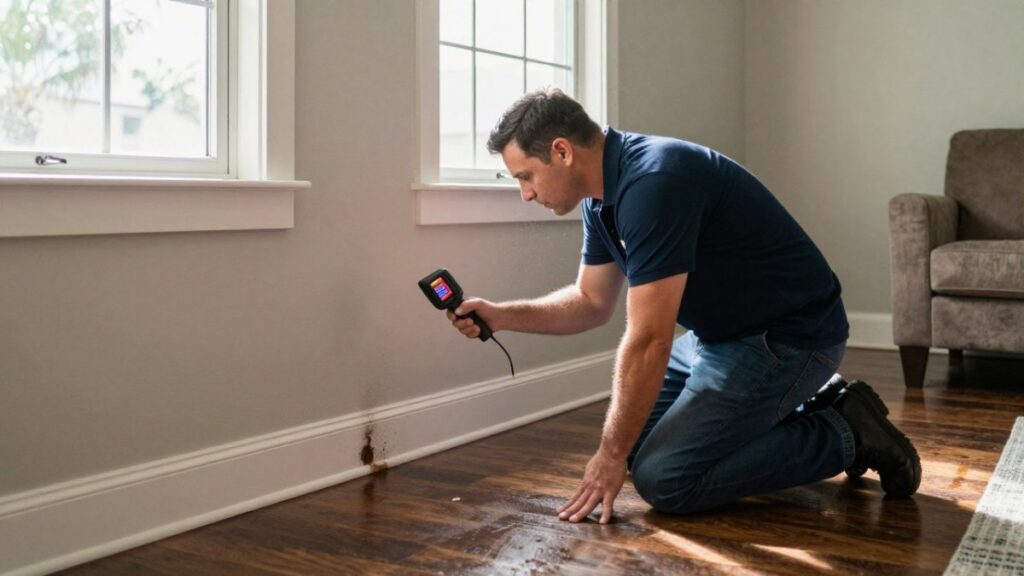
Quick Summary
To prove a plumbing leak was sudden, document the failure point before cleanup, including dated photos, the failed part retained by the plumber, and a written plumber’s report naming the failed component. Pair this with meter readings and a dated timeline. Physical evidence like mineral crust, layered staining and rust patterns points to long-term seepage instead.
- Photograph affected areas and the failure point before any cleanup begins.
- Ask the plumber to bag and label the failed pipe, fitting or hose.
- Get a written plumber’s report stating the failed part and whether the failure was sudden.
- Record water meter readings on discovery day and after the repair.
- Keep a dated timeline and log every call with the insurer.
Table of Contents
- Why Insurers Deny Water Damage as Long-Term Seepage
- Signs of a Hidden Plumbing Leak That Point to Duration
- How Plumbers Do Leak Detection and Pinpoint the Source
- How Long a Water Leak Can Go Unnoticed and What That Means for Your Claim
- Building Plumbing Leak Insurance Claim Evidence Step by Step
- Proving Sudden and Accidental Water Damage to an Adjuster
- Your Next Step: Getting a Free Claim Review Before the Deadline
- Frequently Asked Questions
Last Updated: November 15, 2026
Water damage claims are often denied for one reason: the insurer decides the leak was slow seepage, not a sudden event. Proving the difference can decide whether a claim is paid or thrown out. Households waste nearly 1 trillion gallons of water each year nationwide, according to the EPA WaterSense Fix a Leak Week guidance. Many of those leaks run for months before anyone sees them.
Why Insurers Deny Water Damage as Long-Term Seepage
Insurers often treat a leak as “wear and tear” rather than a sudden burst. That label can end a claim before it starts. See how old-pipe water damage claims are treated and what insurers actually cover.
Here is what that means for you:
- The insurer may argue the pipe failed slowly over years.
- You may need to show the timeline of the leak.
- Gaps in your records can be used against you.
Some insurers rely on forensic engineers to tell long-term seepage apart from a sudden, accidental pipe burst. Learn the common reasons insurers deny these claims and how to challenge a denial on the Why Insurance Companies Deny Water Damage Claims page.
Signs of a Hidden Plumbing Leak That Point to Duration
Most guides tell you a leak is either sudden or slow. An adjuster does not decide that from a description, they decide it from physical evidence that accumulates at a predictable rate. Recognizing which evidence points to a single event and which points to months of seepage, then preserving it before cleanup destroys it, is central to building a strong file.
Physical evidence that points to a long-running leak
- Mineral buildup and efflorescence. Water that has been weeping through a pinhole or a failed solder joint for months leaves a white, chalky crust where it evaporates. A fresh burst does not have time to deposit minerals.
- Rust patterns on fittings and fasteners. Corrosion that spreads evenly around a joint, or rust bleeding down a vertical run of pipe, suggests prolonged moisture exposure. A clean break with bright metal at the fracture and rust only on the surrounding pipe points to a recent failure.
- Concentric staining rings. Repeated wetting and drying leaves layered tide marks on drywall, subfloor, or framing. A single event usually leaves one edge, not a series of rings.
Physical evidence that points to a sudden failure
- A single, clean water line. Fresh pooling with one clear high-water mark and no secondary staining suggests one release.
- Bright metal at the failure point. A split copper fitting, a cracked supply line, or a blown braided hose connector often shows little internal corrosion at the break itself.
- Damage confined to one room or one wall cavity. Water that has not traveled through framing into adjacent rooms is more consistent with a short duration.
- No musty odor before the event. A homeowner who can honestly say there was no smell, no damp spot, and no prior stain has useful testimony, but only if it is written down early.
What to record before anything is cleaned
Photograph each item above in place, with a scale reference (a coin, a tape measure) and the original file timestamp intact. Note the location, the material, and what you observed.
Watch out: cleanup crews often discard the failed pipe section, stained drywall, and corroded fitting as debris.
A homeowner who is certain the leak was sudden but has no photo of the failure point, no retained part, and no dated note may find that combination very hard to recover after the fact.
How Plumbers Do Leak Detection and Pinpoint the Source
A licensed plumber can use several tests to find where water is escaping. Each one can give you evidence to keep.
Moisture meters, stop tap tests and water meter checks
- Moisture meters read dampness inside walls and floors, showing how far water has spread.
- Stop tap tests shut off the water supply and watch the meter. If the dial still moves, a leak is active.
- Water meter checks compare readings over a set period. A sudden spike in usage can point to a recent break.
Ask the plumber to put the readings in writing, with the date and time. Those records carry real weight with an adjuster.
How Long a Water Leak Can Go Unnoticed and What That Means for Your Claim
A small leak can run for weeks or months without being noticed.
This matters for your claim. If the leak ran for a long period, the insurer may argue it is excluded. If the damage happened in one event, the claim may be covered.
Be honest in your claim. Overstating the timeline can damage your credibility. Let the evidence speak for itself.
Building Plumbing Leak Insurance Claim Evidence Step by Step
An adjuster evaluating a ‘sudden and accidental’ clause is asking three questions: did the water escape from a single identifiable event, did it happen at a date you can support, and did you mitigate further damage once you knew. Every item below exists to answer one of those questions. Build the file in this order.
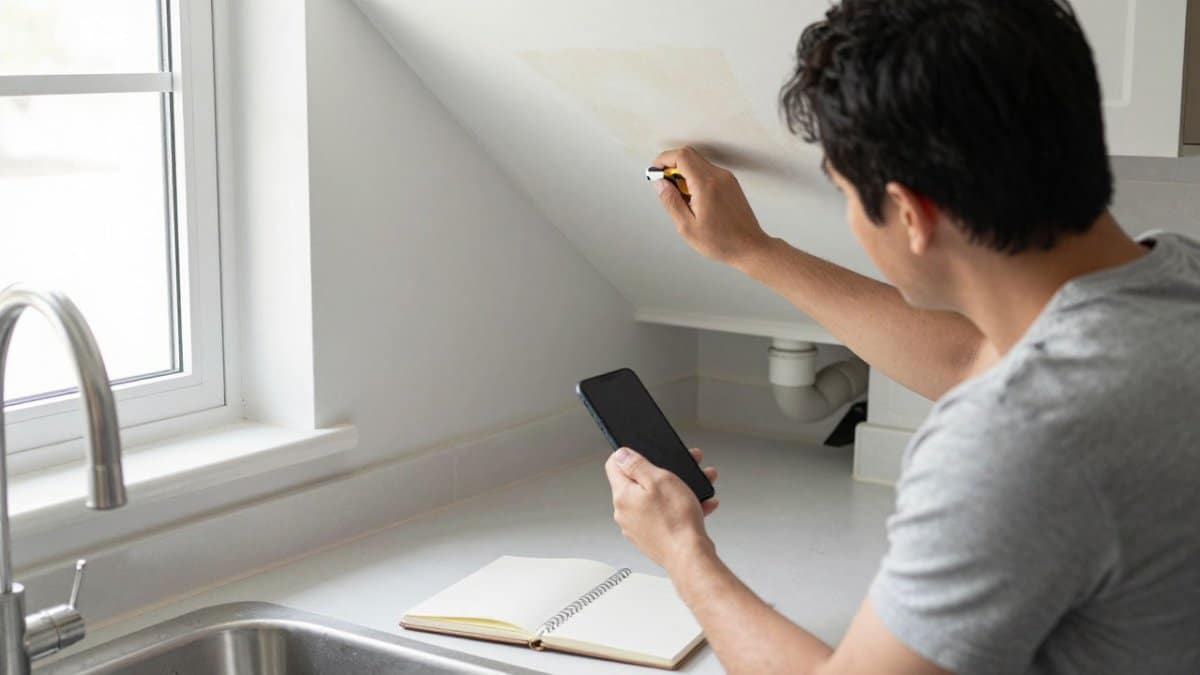
- Stop the water and mitigate. Shut the supply valve, call a licensed plumber, and dry what you safely can. Keep every receipt for emergency mitigation, insurers expect mitigation and often reimburse it, but only with documentation.
- Photograph before cleanup. Wide shots of each affected room, then close-ups of the failure point, the water line, and any staining. Do not delete the originals or strip metadata.
- Retain the failed component. Ask the plumber to cut out and bag the failed section of pipe, fitting, or hose and label it with the date and location. Store it somewhere dry.
- Get a written plumber’s report. The report should state the failed component, the apparent cause (for example, a split fitting versus long-term corrosion), and the plumber’s professional opinion on whether the failure was sudden. Ask for the license number on the report.
- Log water meter readings. Record the reading on the day of discovery, and again after the repair. If you have older bills, pull the usage history, a flat baseline followed by a spike supports a sudden event.
- Build a dated timeline. One page, chronological: when you first noticed water, when you shut it off, when the plumber arrived, when you notified the insurer. Note who was present and how you can corroborate each entry.
- Notify the insurer promptly and in writing. Keep copies of every email, portal submission, and letter. Note the claim number and the name of each person you speak with.
- Keep a contact log. Date, time, name, phone number, and a one-line summary of every call. Adjusters change; your log is the memory of the claim.
A documentation template you can copy
Create one folder, physical and cloud, labeled with the claim number and date of loss. Inside, keep these subfolders:
- 01 Photos, originals only, named by date and location (for example, 2026-11-15_kitchen-supply-line.jpg).
- 02 Plumber, report, invoice, license number, and the bagged failed part.
- 03 Meter and bills, photos of meter readings plus the last 12 months of water bills.
- 04 Timeline, a single dated document updated after every event.
Digital record-keeping that holds up
- Keep original timestamps. Do not crop, filter, or re-save photos before submitting them; send copies and keep the originals.
- Back up to cloud storage so a damaged or lost phone does not erase the file.
- Use one naming convention across every file so an adjuster can follow the sequence without calling you.
- If you record a call with the insurer, confirm first whether state law requires you to notify the other party before recording.
Watch out: a timeline written weeks after the event, with dates you are unsure of, is weaker than a short note written the day you found the water.
If the adjuster disputes suddenness, ask for the denial or partial denial in writing and for the specific policy language relied on.
The table below summarises the core steps to take, in order, so the file answers an adjuster’s key questions.
| Step | What to do | Timing |
|---|---|---|
| Stop the water and mitigate | Shut the supply valve, call a licensed plumber, keep mitigation receipts | Immediately |
| Photograph before cleanup | Wide shots, close-ups of failure point, originals kept with metadata | Before any cleanup |
| Retain the failed component | Plumber bags and labels failed pipe, fitting or hose | Before disposal |
| Get a written plumber’s report | Failed part, apparent cause, opinion on whether failure was sudden | After repair |
| Log water meter readings | Reading on discovery day and after repair; pull 12 months of bills | Day of discovery and after repair |
| Build a dated timeline | One chronological page from discovery to insurer notice | Start on day one |
| Notify the insurer in writing | Keep emails, portal submissions and letters; note claim number | Promptly |
| Keep a contact log | Date, time, name, phone number and one-line summary per call | Every call |
Proving Sudden and Accidental Water Damage to an Adjuster
Your goal is to show that the water came from one identifiable event. Lead with the facts:
- A plumber’s report naming the failed part and the date it failed.
- Meter readings before and after the event.
- Photos showing fresh water and clean staining.
- A timeline that matches the damage you found.
Stay calm and factual when you speak with the adjuster. Answer questions directly, and do not guess about dates you are unsure of. If the claim is denied, ask for the denial in writing and the specific policy language they used.
Your Next Step: Getting a Free Claim Review Before the Deadline
Insurance policies have filing deadlines, and missing one can cost you the claim. If your claim has been denied or underpaid, a free review can show what evidence is still missing. Barclays Public Adjusters works only on a “No Recovery, No Fee” basis, so you pay nothing unless we recover money for you. If you are weighing whether to get help, read about hiring a public adjuster for water damage.
Frequently Asked Questions
How long can a water leak go unnoticed?
A slow leak can run for months before anyone sees visible damage, and an undetected leak can waste thousands of gallons over a year. Insurers often treat long-running leaks as seepage, which is why the timeline matters. Document warning signs such as spiking water bills, musty odor, soft flooring or stains as they appear, since those dated records help show when the leak began and whether it was sudden or gradual.
What evidence can show that a plumbing leak was sudden?
Useful evidence includes photos or video taken right after the event, plumber or leak-detection reports, a sudden jump in your water bill, a failed pipe section that is visibly fresh, and dated records of when you first noticed water. Keep the failed fitting if you can. A forensic engineer can examine the break to tell a fresh burst from corrosion that has been building for years.
Should I repair a plumbing leak before the insurance adjuster inspects it?
Document the damage thoroughly before any repair work starts, including photos, video and a written description. Then make emergency repairs to stop further damage, since most policies require you to mitigate losses. Keep every receipt and retain the removed pipe section where possible. Repairing before documentation can weaken your claim, so notify your insurer first if the adjuster has not yet inspected.
How do I document a plumbing leak for an insurance claim?
Start with dated photos and video of the water, stains and affected materials, then save plumber invoices, leak-detection reports and water bills. Store everything in one digital folder with the claim number. Write a short timeline of when you noticed the leak and what you did next. Clear, organized records make it harder for an insurer to argue the damage was long-term wear and tear.
