
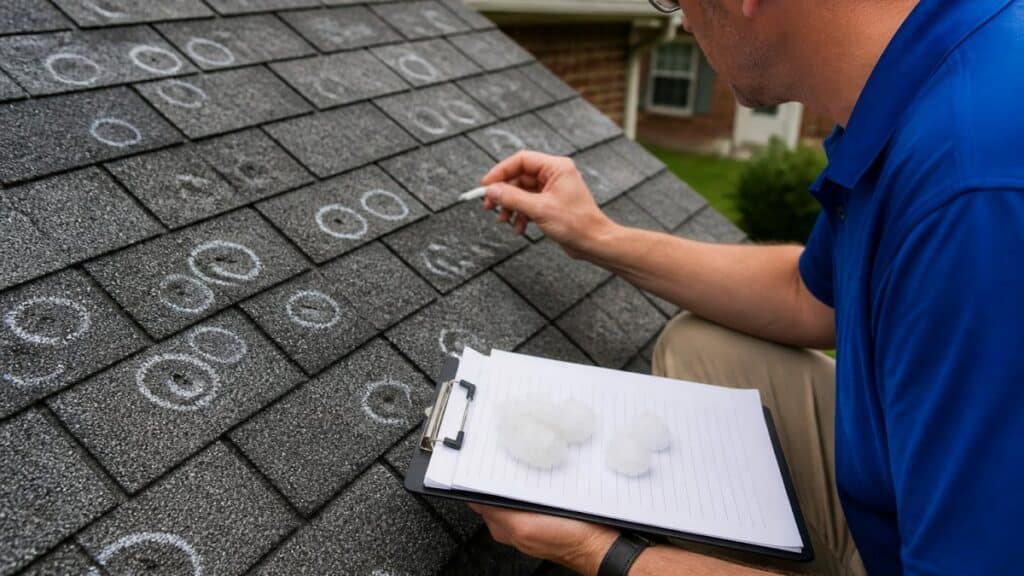
Quick Summary
A hail damage claim denial is usually disputed by reading the denial letter line by line, checking your policy’s deadlines, and gathering evidence that answers the specific reason given. Then send a written appeal letter and request a reinspection. Acting before deadlines pass is critical.
- Denial letters usually name one specific reason, such as wear and tear, cosmetic damage, or late reporting.
- Missing an appeal deadline can end your right to dispute the decision, even with strong evidence.
- Match each piece of evidence directly to the denial reason stated in the letter.
- Send your appeal by certified mail or email with a read receipt, and keep a copy.
- Prepare for a reinspection by marking damage, organizing evidence, and confirming the visit in writing.
Table of Contents
- Why Hail Damage Claims Get Denied or Delayed
- Step 1: Read the Denial Letter Line by Line
- Step 2: Review Your Policy Coverage, Exclusions, and Deadlines
- Step 3: Gather Evidence That Proves Hail Caused the Damage
- Step 4: Write a Hail Damage Insurance Appeal Letter
- Step 5: Request a Reinspection and Prepare for the Visit
- Protecting Your Roof and Next Steps While the Dispute Is Open
- Frequently Asked Questions
Why Hail Damage Claims Get Denied or Delayed
Hail damage claims get denied for a handful of common reasons, and the denial letter usually names one of them. Knowing the reason is the first step toward fixing it.
The most frequent reasons include:
- Wear and tear or age: The insurer says the roof was already worn and the damage was not new.
- Cosmetic damage only: The adjuster finds dents on gutters or vents but calls them cosmetic and not functional.
- Insufficient hail size: The insurer argues the hailstones were too small to cause real harm.
A delay is different from a denial, but it can be just as stressful. Delays often happen when the insurer needs more time to schedule an inspection or when it asks for documents you have not yet sent.
Step 1: Read the Denial Letter Line by Line
The denial letter is your roadmap. Read every line, not just the summary at the top. Insurers generally explain the reason for a denial in writing, and that explanation tells you what to answer.
Look for these details:
- The specific reason cited and the policy language it relies on
- The inspection report or adjuster notes that the decision is based on
- Any deadlines for filing an appeal or disputing the decision
Mark every point you disagree with. If the letter says “wear and tear,” ask for the exact policy section and the inspection findings that support it.
Step 2: Review Your Policy Coverage, Exclusions, and Deadlines
Your policy is the contract, so read the parts that matter for hail. Focus on the coverage grant, the exclusions, the deductible for windstorm or hail, and the deadlines for filing and appealing.
Check these items:
- Whether windstorm and hail are covered perils
- Whether a separate or percentage deductible applies to hail
- Whether the policy pays replacement cost or actual cash value
Many people miss the deadlines. Write down the dates as soon as you find them.
Watch out: Missing an appeal deadline can end your right to dispute the decision, even when your evidence is strong. Calendar the date the day you receive the letter.
Step 3: Gather Evidence That Proves Hail Caused the Damage
Evidence wins hail disputes, but generic evidence is easy for an adjuster to dismiss. Learn how to build a storm-damage claim file that matches each denial reason. The stronger approach is to match each document to the specific denial reason in your letter. Use the checklist below to build a file that answers the insurer’s actual argument, not just a pile of photos.
Evidence checklist tied to common denial reasons
| Denial reason in the letter | Evidence that directly answers it |
|---|---|
| Wear and tear or age | Dated maintenance records, receipts for prior roof work, and a contractor statement describing the roof’s pre-storm condition. An independent inspection report that separates new hail hits from older granule loss. |
| Cosmetic damage only | Close-up photos with a scale reference, contractor findings on compromised function (cracked shingles, exposed mat, dented vents that no longer seal), and manufacturer or trade guidance on when cosmetic damage affects performance. |
| Insufficient hail size | Weather records from multiple sources (local storm reports, radar archives, nearby weather stations) showing hail size on the date of loss, plus an inspection report that measures hail-hit diameters on soft metals. |
| Late reporting | A timeline showing when you first discovered the damage, any earlier correspondence with the insurer, and evidence that the damage was not reasonably discoverable sooner. |
| Pre-existing damage | Pre-storm photos or video, a prior roof inspection report, and a contractor opinion distinguishing old weathering from fresh impact marks. |
Distinguishing hail damage from wear, age, and other causes
A common basis for denial is causation, so learn what hail damage looks like compared with ordinary aging. Hail hits on asphalt shingles typically appear as random, circular bruises where granules are displaced, often with a soft spot underneath.
Document these distinctions in your own notes and ask your inspector to state them in writing. A report that says “hail damage present” is weaker than one that says “fresh circular impact marks on the south slope, inconsistent with the uniform granule loss on the north slope.”
Collect the core documents
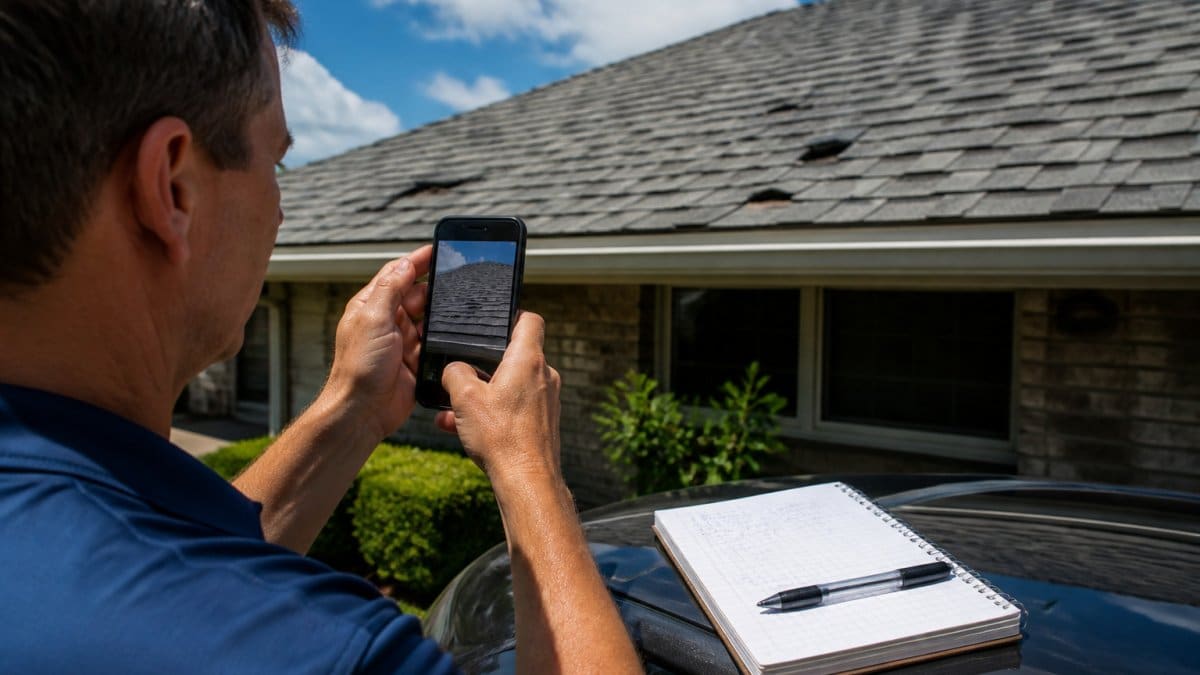
- Dated photos and video of the roof, siding, gutters, windows, and vehicles, taken from several angles, with a ruler or coin for scale
- Weather records showing hail on or near your property on the storm date, from more than one source if possible
- An independent roof inspection report that describes hail hits, their size, and their location on each slope
A simple tracker helps. Make a spreadsheet with columns for the date, the document, who sent it, and which denial reason it answers.
The photo step is where many homeowners go wrong. Take photos of the damage before any temporary repairs, but do not let the damage get worse while you wait. Keep receipts for any emergency work, such as tarping.
Ask your inspector to photograph each hail hit with a scale and to note the slope, direction, and height. That level of detail is hard for an adjuster to wave off as cosmetic.
Step 4: Write a Hail Damage Insurance Appeal Letter
A clear appeal letter shows the insurer you know the policy and have the facts. Keep it short, specific, and polite. Include your policy number, claim number, and the date of loss at the top.
Use this structure:
Schedule your FREE Claim Consultation today →
Subject: Appeal of Claim Denial, Claim No. [number]
I am writing to dispute the denial of my hail damage claim dated [date of loss]. Your letter of [date] states that the damage is [denial reason]. I disagree for the following reasons:
- [Your strongest evidence, with the document name and date]
- [Policy language that supports coverage, quoted exactly]
- [Response to the specific denial reason]
I request a written reconsideration and a reinspection by a qualified adjuster. Please respond by [date, 15 to 30 days out]. Enclosed are the photos, weather records, and estimates referenced above.
Sincerely,
[Name, phone, email]
Send the letter in a way you can prove, such as certified mail or an email with a read receipt, and keep a copy. A written appeal creates a record.
Step 5: Request a Reinspection and Prepare for the Visit
A reinspection is often the turning point in a hail dispute, but most homeowners walk into it unprepared. The insurer’s reinspection is a second look at the same property, usually by a different adjuster or a supervisor. Your job is to make the second look harder to deny than the first.
What happens during a reinspection
A reinspection generally follows a predictable sequence:
- Scheduling and confirmation. The insurer contacts you or your representative to set a date. Confirm the appointment in writing, by email or text, and note who will attend.
- Document review. The adjuster reviews the original inspection report, your appeal letter, and any evidence you submitted before arriving.
- On-site inspection. The adjuster walks the roof and property, photographs damage, and may use a ladder, drone, or moisture meter.
- Comparison to the first report. The adjuster compares new findings with the original report and notes any differences.
- Written follow-up. The insurer should provide a revised decision or report. Ask when to expect it and in what form.
Who should attend
You should attend if you can, and you may bring your contractor or a licensed public adjuster. A contractor can point out technical damage in trade language. A public adjuster can help manage the conversation and the documentation. If you bring someone, tell the insurer in advance so there are no surprises at the door.
How to prepare, step by step
- Schedule the visit when you can be present, and confirm the time in writing.
- Walk the roof or property yourself and note every spot you think is hail damage, using the causation guidance in Step 3.
- Mark the damage with chalk or tape so it is easy to point out, but avoid anything that could be mistaken for fresh damage.
- Bring your evidence folder, including the denial letter, photos, weather records, and estimates, organized by denial reason.
During the visit, stay calm and factual. Point to each damaged spot, explain how you know hail caused it, and ask the adjuster to note your comments. Do not argue about the policy on site. Save that for the written follow-up.
Follow up in writing
Send a short email or letter within a few days summarizing what the adjuster saw, what you pointed out, and what you were told. Attach any new photos. This written record matters if the reinspection does not resolve the dispute and you need to escalate.
If the reinspection does not fix the problem, you still have options, including a second written appeal, a complaint to your state insurance regulator, or hiring a public adjuster or insurance attorney. Keep every document from the reinspection in your file.
Protecting Your Roof and Next Steps While the Dispute Is Open
A dispute can last weeks or months, and a damaged roof can leak in the meantime. You can compare roof leak insurance coverage options while the dispute is open.
While you wait, keep a running log of calls, emails, and letters. Note the date, the person you spoke with, and what was said.
Some property owners choose to bring in a licensed public adjuster to handle the dispute. You can read more about denied insurance claim review services and public adjuster support for roof leak claims, or learn how a roof leak insurance claim is typically handled while a dispute is open.
Whatever path you choose, act early, keep records, and do not let a deadline pass. A denied hail claim is rarely the final word.
Frequently Asked Questions
What should I do if my hail damage insurance claim is denied?
Start by reading the denial letter closely to identify the specific reason, such as wear and tear, pre-existing damage, or a claim that hail did not cause the damage. Then request the adjuster’s full inspection report and photos, compare them against your policy, and gather your own evidence, including dated photos, weather records for the storm date, and an independent roof inspection. Submit a written appeal that answers each stated reason directly and asks for a reinspection. Keep copies of everything and note every deadline in the letter and your policy.
How long do I have to appeal a denied hail damage claim?
Deadlines come from two sources: your policy, which often sets a time limit for disputes or lawsuits after a denial, and Florida law, which sets its own timelines for filing claims and disputes. Check the denial letter and your policy for the exact dates, and do not assume you have more time than stated. If you are close to a deadline, file a written appeal immediately and keep proof of when you sent it. An insurance attorney can confirm the deadlines that apply to your claim.
Should I get a second roof inspection after a hail claim denial?
A second inspection by a qualified roofer or independent adjuster can document hail impacts that the insurer’s inspector missed or characterized as wear. Ask the inspector to note the number of impacts per test square, the type of damage such as granule loss, bruising, or cracked shingles, and the storm date they associate with it. Give the report to the insurer along with your written appeal, and request a reinspection so both inspectors can review the same roof.
Can a public adjuster help with a denied hail damage claim?
A licensed public adjuster works for the policyholder rather than the insurance company. They can review the denial, document damage, prepare the appeal, and negotiate with the insurer’s adjusters. Public adjusters are licensed by the state, and fees are typically a percentage of the settlement, so ask about the fee structure and whether it is a ‘no recovery, no fee’ arrangement before you sign anything. Compare any proposal against the policy terms and your own evidence.
