
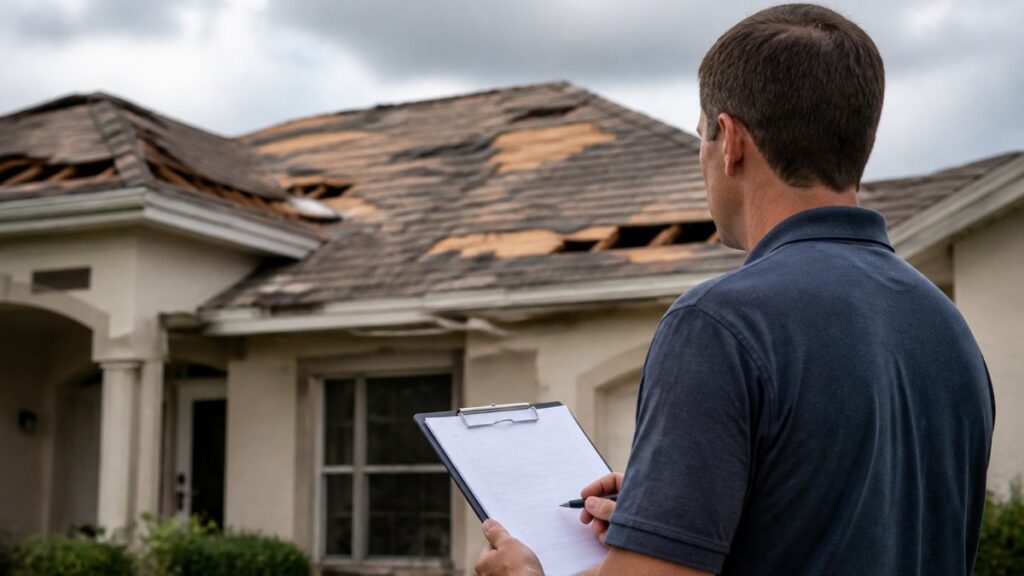
Last Updated: October 30, 2026
Quick Summary
Document all windstorm damage with photos, video, and a written log before the windstorm claim adjusters arrive, then walk the property with them and point out every item. Ask direct questions about the estimate’s scope and deductible, and dispute missed items in writing with a documented contractor estimate.
- Photograph everything before any cleanup, including wide shots of each exterior side and close-ups of damage.
- Confirm your dwelling limit and windstorm deductible before the inspection, since windstorm deductibles are often a percentage.
- Ask the adjuster to check hidden damage such as attic moisture, because wind-driven rain often appears there first.
- Do not sign a sworn proof of loss or final settlement release at the inspection; review it first.
- Dispute underpayments with a line-by-line contractor estimate, photos, and a written list of missed items.
Table of Contents
- Why the Adjuster Visit Shapes Your Entire Windstorm Claim
- Tip 1-3: Document Damage Before the Adjuster Arrives
- Insurance Adjuster Inspection Checklist for Homeowners
- What to Say to an Insurance Adjuster (and What to Avoid)
- Questions to Ask an Insurance Adjuster Before Accepting an Estimate
- Windstorm Insurance Claim Timeline and When to Escalate
- Booking Your Free Claim Consultation with Barclays Public Adjusters
- Frequently Asked Questions
Why the Adjuster Visit Shapes Your Entire Windstorm Claim
An insurance adjuster’s visit is often the single most influential moment in a windstorm claim.
That is why preparation matters so much. Handling a windstorm claim adjuster well starts long before the windstorm claim adjusters arrive at your door.
Here is what you need to know. The adjuster works for the insurance company, not for you.
Below, we walk through practical tips for handling windstorm claim adjusters from start to finish, including what to document, what to say, and when to push back.
Tip 1-3: Document Damage Before the Adjuster Arrives
The first three tips focus on documentation, because evidence is the foundation of any windstorm claim.
- Tip 1: Photograph everything before any cleanup. Shoot wide photos of each exterior side, then close-ups of individual damage like missing shingles, bent gutters, and broken windows.
- Tip 2: Record video. Walk the property slowly with your phone and narrate what you see, including the date and time.
- Tip 3: Keep a written damage log. List each item, its location, and when you first noticed the problem.
Many homeowners skip the log, but it becomes valuable when the adjuster’s report leaves items out. For step-by-step methods to record hidden water damage specifically, see detailed steps for recording hidden water damage.
Watch out: Do not throw away damaged materials until the adjuster has seen them. Keep a few samples if you must make repairs.
Insurance Adjuster Inspection Checklist for Homeowners
A windstorm inspection goes better when you treat it like a scheduled walkthrough rather than a surprise visit. The adjuster is there to observe and measure; your job is to make sure nothing gets skipped and that the record you build matches what you saw. Use this chronological checklist from the day you report the claim through the days after the visit.
Before the inspection (the week prior):
- Pull your policy declarations page and confirm two numbers: your dwelling coverage limit and your windstorm or named-storm deductible. Windstorm deductibles are often expressed as a percentage of the dwelling limit rather than a flat dollar amount. Knowing this number before the adjuster arrives keeps the conversation grounded.
- Confirm whether your policy treats the event as a “named storm” or a general windstorm. The label can change which deductible applies and whether a separate hurricane or windstorm deductible is triggered.
- Gather your claim number, the date you reported the loss, your photo and video library, and your written damage log.
- Make a simple one-page index of damaged areas, roof, siding, gutters, windows, fence, outbuildings, interior ceilings, so you can walk the adjuster through each one in order.
During the walkthrough:
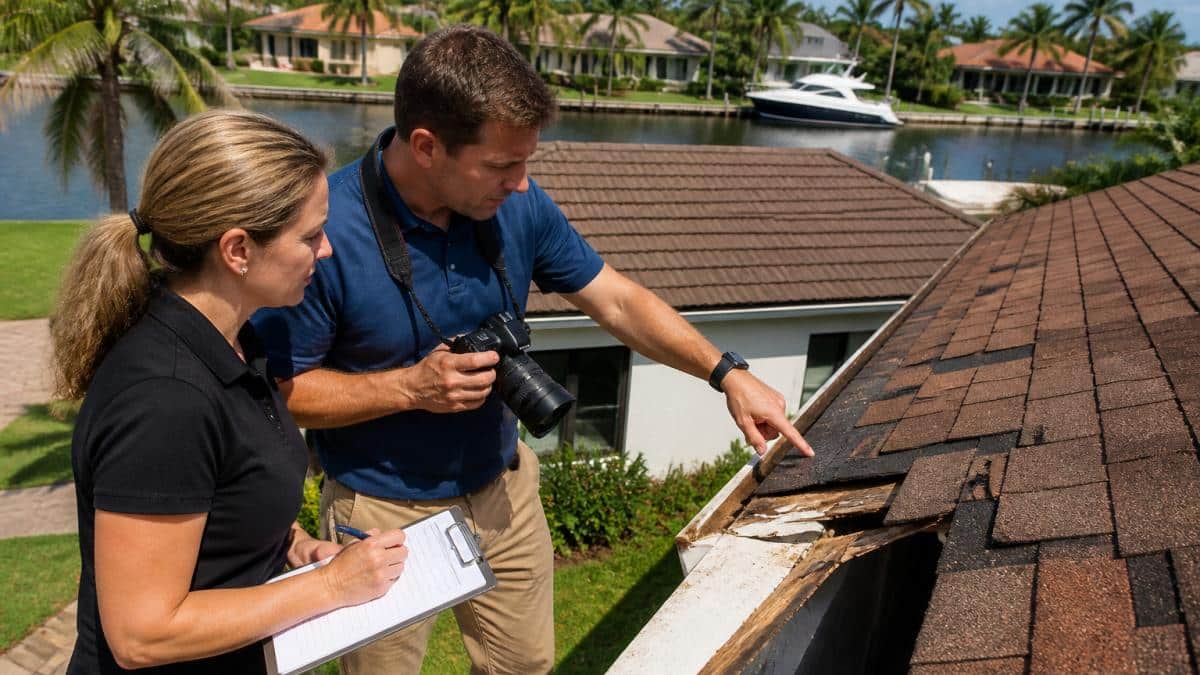
- Walk the property with the adjuster rather than staying inside. Point out each damaged area yourself and ask them to note it.
- Ask the adjuster to check hidden damage you cannot easily see, roof decking, attic moisture, wall cavities, and the underside of eaves. If you are worried about mold, see whether mold is covered and how a public adjuster would handle it. Wind-driven rain often leaves evidence in the attic before it shows on a ceiling.
- Confirm the adjuster’s full name, license or identification number if offered, company, phone number, and the date and time of the inspection.
- Ask when the estimate and report will be sent and in what format (portal, email, mail).
After the inspection:
- Send a short follow-up email summarizing what was inspected and any items you believe were missed. This creates a written record tied to the inspection date.
- Keep every receipt for temporary repairs, tarps, hotel stays, and materials, these are part of your claim file and support your mitigation efforts.
- Do not discard damaged materials until the adjuster has seen them and, ideally, until the claim is resolved. If you must make repairs to prevent further damage, photograph the materials in place first and keep a sample.
Ask the adjuster directly: “Is there anything you need from me that would help you complete the report?” Adjusters are often working from a standard form, and a specific request, a contractor’s written scope, a receipt, a closer photo, can prevent a follow-up reinspection later.
Do not sign a sworn proof of loss or a final settlement release at the inspection. Those documents have legal consequences and deadlines, and you are entitled to review them with your own records, or your own advisor, before signing.
The checklist breaks the inspection into three stages, with the key actions for each.
| Stage | Key action | Why it matters |
|---|---|---|
| Before the inspection | Confirm dwelling limit and windstorm deductible | Keeps the conversation grounded in real numbers |
| Before the inspection | Index damaged areas and stage damaged materials | Lets you walk the adjuster through each area in order |
| During the walkthrough | Walk the property with the adjuster | You point out damage and the adjuster notes it |
| During the walkthrough | Ask about hidden damage like attic moisture | Wind-driven rain often shows up there first |
| During the walkthrough | Record adjuster name, company, and inspection date | Creates a clear record of who inspected and when |
| After the inspection | Send a follow-up email summarising the inspection | Ties a written record to the inspection date |
| After the inspection | Keep receipts for temporary repairs and materials | Supports your mitigation efforts in the claim file |
| After the inspection | Do not discard damaged materials until seen | The adjuster can inspect them rather than rely on your word |
What to Say to an Insurance Adjuster (and What to Avoid)
Your words during the inspection matter. Be honest, calm, and specific. To understand possible grounds for a denial, read the common reasons insurers deny claims.
Schedule your FREE Claim Consultation today →
Say:
- “The damage started after the storm on this date.”
- “I noticed water stains on the ceiling in this room.”
- “Can you note this area in your report?”
Avoid:
- Guessing about causes or costs you cannot confirm.
- Saying the damage is “probably old” without evidence.
- Signing any document you have not read or do not understand.
Many people feel pressure to agree quickly. You are allowed to take your time, ask for clarification, and say you need to review the paperwork before signing.
Questions to Ask an Insurance Adjuster Before Accepting an Estimate
An estimate is a starting position, not a final answer. If you are weighing outside help, see the questions to ask before hiring a professional claims adjuster service. Before you accept one, ask questions that force the adjuster to explain the scope, the pricing method, and the deductible math.
Questions that surface how the estimate was built:
- How did you determine the scope of damage, and which areas of the property did you inspect versus exclude?
- Which line items did you include, which did you leave out, and what was the reason for each exclusion?
- Does the estimate include code upgrades required by current building rules, for example, roof-to-wall connections, decking replacement, or permit costs?
- Is this estimate actual cash value (ACV) or replacement cost value (RCV)? If it is ACV, what depreciation was applied and how was it calculated?
- How was my windstorm or named-storm deductible applied, and does it apply separately to structures and contents?
If the estimate looks incomplete or too low, dispute it in writing:
- Request the adjuster’s report and estimate in writing if you have not already received them. You need the line items to compare.
- Get an independent contractor estimate that mirrors the adjuster’s format, same line items, same quantities, same unit pricing, so the two documents can be compared side by side rather than argued in generalities.
- Send a written dispute letter that lists each disputed line item, the amount you believe is correct, and the documentation supporting your number (photos, contractor estimate, receipts, manufacturer specifications).
- Request a reinspection and ask that a different adjuster or a supervisor review the file if the same adjuster missed items on the first visit.
- Ask about the appraisal clause in your policy. Many policies include an appraisal process in which each side selects an appraiser and the two appraisers select an umpire; if the appraisers disagree, the umpire decides. Appraisal is not the same as a lawsuit, and it is often faster.
- Escalate through the insurer’s complaint channel and, if the dispute remains unresolved, through your state insurance department’s consumer complaint process. Keep copies of every letter, email, and portal message.
The strongest disputes are documentary, not emotional. A line-by-line contractor estimate plus photos plus a written list of missed items is far more persuasive than a call saying the offer is too low. Specific, documented discrepancies are generally more persuasive than general complaints.
Deadlines matter. Policies and state rules set time limits for reporting claims, submitting proof of loss, filing a supplemental claim, and demanding appraisal. Confirm the deadlines that apply to your policy before you wait on a dispute, and put every request in writing so the date is recorded.
Windstorm Insurance Claim Timeline and When to Escalate
Claim timelines vary by insurer, policy, and the size of the loss. Check your policy for the deadlines that apply to reporting the claim, submitting proof of loss, and disputing a decision.
Keep a simple timeline record:
- Date you reported the claim
- Date of the adjuster inspection
- Date you received the estimate
- Each follow-up call or email, with the name of the person you spoke to
Escalate if the insurer stops responding, delays without explanation, or issues a denial you believe is wrong. Your options may include a written appeal, a request for a second inspection, or bringing in a licensed public adjuster.
Booking Your Free Claim Consultation with Barclays Public Adjusters
If your windstorm claim has stalled, been underpaid, or been denied, you do not have to handle the adjuster alone. Barclays Public Adjusters works on a “No Recovery, No Fee” basis, so you pay nothing unless the claim is paid.
Schedule your FREE Claim Consultation today. To find a licensed public adjuster in Boca Raton and book a consultation, start here.
Frequently Asked Questions
How long does a windstorm insurance claim take?
Timelines vary with the size of the loss, the insurer’s workload, and whether the claim is disputed. Keep dated records of every submission, call, and inspection, because a clear paper trail helps you push for timely decisions. If the insurer misses its required response deadlines, note that in writing and ask for a written explanation of the delay. Escalation options, including a formal complaint to your state insurance department, are available if progress stalls.
What should I do if the adjuster’s estimate misses damage?
Do not sign off on an estimate you believe is incomplete. Compare it line by line against your own photos, videos, and contractor estimates, and list each omitted item with supporting evidence. Submit a written request for a reinspection or a supplemental claim that identifies the missed damage. Ask the adjuster to explain in writing why any item was excluded. If the gap is significant, consider getting an independent estimate or engaging a licensed public adjuster to present the evidence and negotiate on your behalf.
Should I get my own estimate after windstorm damage?
Yes, an independent contractor estimate gives you a benchmark to compare against the insurer’s figures. A detailed estimate that lists materials, labor, and code upgrades can reveal scope the adjuster overlooked, such as damaged underlayment or fascia. Keep the estimate itemized and dated, and share it with the insurer in writing. Having it on file also supports a later dispute if the company’s offer falls short.
What’s the biggest mistake people make when dealing with an insurance claim?
The most common mistake is accepting the first offer without a full damage assessment. Many homeowners also fail to document damage before temporary repairs, discard receipts for mitigation work, or miss policy deadlines for filing a proof of loss. Another frequent error is making casual statements to the adjuster that minimize the damage. Keep every communication factual, put requests in writing, and track deadlines from the day the loss occurred.
