

Table of Contents
- How Long Do Insurance Claims Take? The Short Answer
- The Four Stages of a Property Insurance Claim
- Factors Delaying Insurance Claims After Storm or Water Damage
- How to Expedite Property Insurance Claims: A Step-by-Step Checklist
- Step 1: Document Before You Clean Up
- Step 2: File in Writing and Confirm Receipt
- Step 3: Get Two Independent Repair Estimates
- Step 4: Keep a Dated Log of Every Contact
- Step 5: Submit a Complete, Itemized Proof of Loss
- Step 6: Request the Carrier’s Valuation Worksheet
- Step 7: Follow Up Every Seven Days in Writing
- Step 8: Escalate on a Schedule, Not on Frustration
- Digital Claim Tracking Tools and Escalation Paths for Delayed Claims
- Hiring a Public Adjuster for Claim Delays: When It Makes Sense
- Conclusion
- Frequently Asked Questions
Last Updated: September 13, 2026
How Long Do Insurance Claims Take? The Short Answer
Property insurance claims can vary in duration from filing to payout, with complex storm, water, or fire claims often taking longer. At Barclays Public Adjusters, we tell clients in Boca Raton and across South Florida the same thing: the calendar matters less than the paperwork trail behind it. A clean claim moves fast; a thin one stalls.
Insurance claims take as long as the weakest link in your documentation allows.
A typical timeline looks like this:
- Filing and acknowledgment: 1-5 days
- Adjuster inspection and damage assessment: 7-21 days
- Investigation and proof of loss review: 15-45 days
- Settlement offer and negotiation: 10-30 days
- Payment issuance: 5-15 days after agreement
That is the clean path. Few claims follow it exactly.
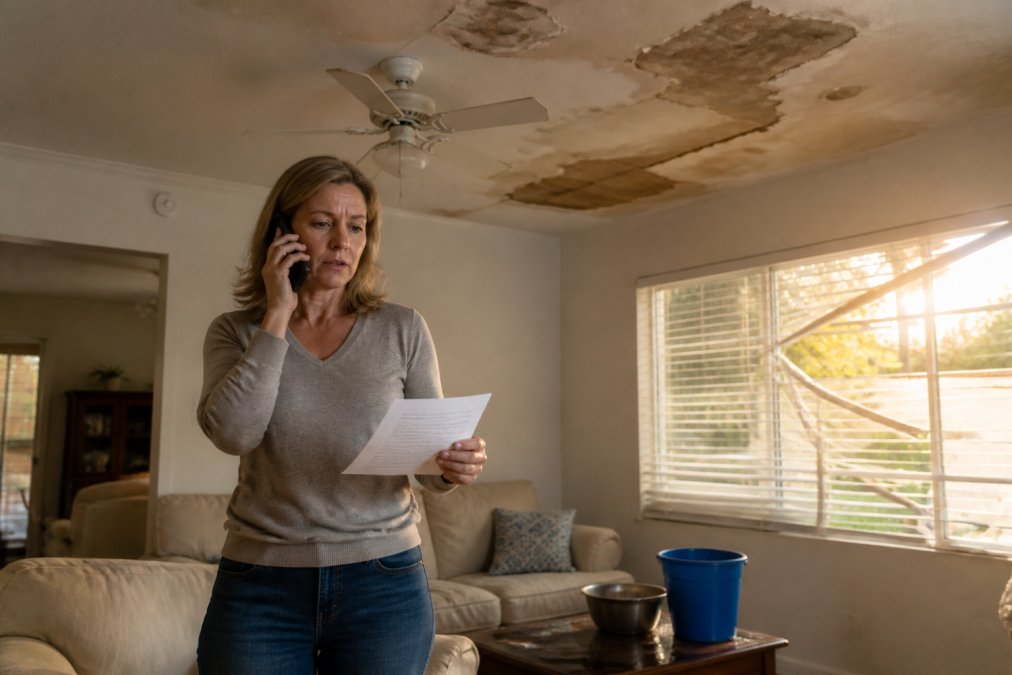
The Four Stages of a Property Insurance Claim
Every property claim moves through four predictable phases, and knowing which one you are in tells you what to do next. Rushing a stage is the most common reason claims drag.
| Stage | Typical Duration | Your Main Job |
|---|---|---|
| Filing and initial review | 1-5 days | Confirm receipt in writing |
| Damage assessment | 7-21 days | Document everything before repairs |
| Investigation and proof of loss | 15-45 days | Submit complete, itemized records |
| Settlement and negotiation | 10-30 days | Compare offer to your own estimate |
Filing and Initial Review
The clock starts the day the carrier logs your claim, not the day you call. A common mistake is assuming a phone call opened the file. Always request a claim number and written confirmation. Under Florida’s insurance consumer resources, policyholders have the right to a prompt written acknowledgment, and that document is your anchor for every follow-up.
Damage Assessment and Investigation
An adjuster inspects the property, then the carrier’s investigation begins. This is where insurance claims take their first real detour. If your documentation is vague, the adjuster’s assessment becomes the default record and you will spend weeks disputing it. Photograph everything before any repair and log every call.
Settlement Offer and Negotiation
The first offer is rarely the final one. Carriers open low, and many policyholders accept because they do not know what a fair settlement looks like. Compare the offer line by line against your own repair estimate, negotiation is often the difference between a partial payout and full replacement.
Request the carrier’s own claim file, including the adjuster’s worksheet, in writing. Seeing how they calculated depreciation tells you exactly where to push back.
Factors Delaying Insurance Claims After Storm or Water Damage
Storm and water claims take longer than almost any other property category because causation is contestable. A roof leak after a hurricane can be filed as wind damage or long-term wear, and carriers lean toward the cheaper interpretation. Mold adds another layer, since most policies cap or exclude it unless it traces to a covered peril.
Why Causation Drives the Timeline
Every storm or water claim turns on one question: was the damage sudden and accidental, or gradual and long-term? Sudden damage is covered. Gradual damage is usually excluded as maintenance. The carrier’s adjuster is trained to look for evidence of the second, and that investigation is where weeks disappear.
A common pattern looks like this:
- A wind event lifts shingles, water enters, and staining appears weeks later.
- The carrier argues the stain shows long-term intrusion, not the storm.
- The policyholder has no moisture readings from the day of the loss.
- The claim stalls while both sides commission competing opinions.
The fix is evidence created at the moment of loss, not after the dispute starts. Moisture meter readings, dated photos of dry attic decking, and a roofer’s written causation opinion all push the file toward the covered interpretation.
The Policy Language That Slows Claims Down
Three clauses do most of the damage:
- Mold caps and exclusions. Many policies cap mold remediation at a fixed dollar amount and exclude it entirely unless it traces to a covered peril. If your water damage sat for more than 48 hours, expect the carrier to test the mold causation before paying (the EPA).
- Matching and code-upgrade provisions. If your shingles are discontinued, the carrier may pay to repair rather than replace, leaving a mismatched roof. Code upgrades required by local ordinance are often excluded unless you bought that endorsement.
- Ordinance or law and wear-and-tear exclusions. These are the two most common denial reasons on older roofs and older plumbing.
Read these clauses before you file, not after a denial. Knowing which exclusion the carrier will reach for tells you which evidence to gather first.
The Modern Bottleneck: Repair Shop and Contractor Backlogs
Legacy guides describe claim delays as a paperwork problem. In practice, the biggest delay in many markets is that no one can produce a repair estimate on time. Roofers, water-mitigation crews, and general contractors are booked out weeks or months, and a claim cannot be valued until an estimate exists.
That backlog creates a trap: the carrier’s adjuster writes an estimate using pricing software, the policyholder cannot get a competing bid for six weeks, and the claim sits in limbo. The carrier is not stalling, the file is simply incomplete.
What actually helps:
- Get on a contractor’s schedule the day you file, even if the inspection is weeks out.
- Ask for a written scope and estimate, not a verbal range.
- If your contractor cannot produce an estimate quickly, ask a public adjuster or independent estimator to build one from photos and measurements.
- Keep every scheduling email. A documented backlog is evidence the delay is not your fault.
Other Delays That Show Up in Storm and Water Files
- Missing or late police, fire, and incident reports
- No moisture readings or mold testing before demolition
- Repair estimates that do not match the carrier’s pricing software line by line
- Disputes over whether damage is sudden or gradual
- Overlapping perils, such as wind and flood, where two carriers each point at the other
That last one is the quiet killer in coastal markets. When a loss could be wind or flood, the two carriers can spend months arguing about which policy responds while your claim waits. If you have both policies, file with both and let them sort out contribution.
Never authorize permanent repairs before the adjuster inspects. Once the damaged material is gone, you have destroyed the evidence the carrier needs to approve your claim, and in a causation dispute, that evidence is the whole case.
How to Expedite Property Insurance Claims: A Step-by-Step Checklist
Speed comes from preparation, not pressure. Carriers move at the pace their file allows, and every missing document is a legitimate reason to pause. The checklist below is ordered by leverage.
Step 1: Document Before You Clean Up
Photograph and video every room, wall, ceiling, and closet before anything is moved. Include wide shots that establish the room and close shots that show the damage. If water is present, take a moisture meter reading and photograph the display next to the affected material.
Why this matters: the adjuster’s inspection happens days or weeks after the loss, so your photos are the only record of the loss at its worst. Without them, the carrier’s assessment becomes the default record.
Step 2: File in Writing and Confirm Receipt
Submit through the carrier’s portal or by email, save the confirmation, and request a claim number plus the assigned adjuster’s direct contact.
Why this matters: a written filing creates a timestamp. If the carrier later claims it never received your proof of loss, your sent-folder is the answer.
Step 3: Get Two Independent Repair Estimates
Obtain at least two written estimates from licensed contractors, each with a line-item scope rather than a lump sum. If your contractor uses the same pricing software as the carrier, the estimates can be compared line by line.
Schedule your FREE Claim Consultation today →
Why this matters: with no competing estimate, the carrier’s number is the only number in the file. Two independent estimates give you a defensible range and a basis to negotiate.
Step 4: Keep a Dated Log of Every Contact
Log every call, email, portal message, and site visit with a date, a name, and a one-line summary, including calls that are not returned.
Why this matters: most states require carriers to acknowledge claims and communicate within set timeframes. A dated log is how you prove a missed deadline if you later file a complaint with your state insurance department.
Step 5: Submit a Complete, Itemized Proof of Loss
Proof of loss is a sworn, itemized statement of your damages submitted to the insurer. An incomplete one is the fastest route to a delay. Send it once, complete, and keep a copy.
Why this matters: the carrier’s investigation period runs from receipt of a complete proof of loss, and every amendment can restart the clock. One complete submission beats five partial ones.
Step 6: Request the Carrier’s Valuation Worksheet
Ask in writing for the adjuster’s worksheet and the depreciation calculation to see how the carrier arrived at its number.
Why this matters: the worksheet shows you exactly where the carrier applied depreciation, what it excluded, and which line items it undervalued. That is your negotiation map.
Step 7: Follow Up Every Seven Days in Writing
A weekly written follow-up keeps the file active and creates a paper trail. Keep it short: reference the claim number, ask for the current status, and ask what the carrier needs to move forward.
Why this matters: claims that go quiet go slow. A weekly written nudge forces a documented response and makes it harder for the file to sit untouched.
Step 8: Escalate on a Schedule, Not on Frustration
If the claim has not moved in 30 days, escalate to the adjuster’s supervisor in writing; at 60 days, to the carrier’s internal claims department; at 90 days, or after a denial, file a complaint with your state insurance department.
Why this matters: escalation works because it creates an external record. Internal pressure is easy to absorb. A regulator’s inquiry is not.
Request the carrier’s own claim file, including the adjuster’s worksheet, in writing. Seeing how they calculated depreciation tells you exactly where to push back, and it is the single fastest way to find the gap between the offer and a fair settlement.
Digital Claim Tracking Tools and Escalation Paths for Delayed Claims
Most major carriers now offer portals and apps to track claim status, upload documents, and see adjuster notes. Use them. A timestamped upload is far stronger evidence than a phone call nobody recorded.
When a claim stalls, escalate in order:
- The assigned adjuster, in writing
- The adjuster’s supervisor
- The carrier’s internal claims department
- Your state insurance department, which accepts consumer complaints
Under NAIC consumer complaint guidance, filing a complaint with your state regulator creates an external record and often produces a response within weeks. Keep it as use, not as a first move.
The paper trail is the claim. Every document you upload, every email you send, and every call you log shortens the investigation period because it removes reasons for the carrier to ask again.
Hiring a Public Adjuster for Claim Delays: When It Makes Sense
Hiring a public adjuster for claim delays makes sense when your claim has stalled past 60 days, been denied, or involves damage too complex to build a credible estimate alone. A public adjuster works for you, not the carrier, and negotiates directly with the insurer on your behalf.
Where it matters most:
- Denials citing wear and tear that you believe are wrong
- Underpaid offers that ignore code upgrades or matching materials
- Large losses where a few percentage points of settlement are significant
- Claims involving mold, smoke, or overlapping perils
Barclays Public Adjusters operates on a No Recovery, No Fee policy, so there is no out-of-pocket cost if nothing is recovered. Our licensed public insurance adjusters handle the documentation, the appraisal process, and the negotiation, which is why clients like Ginny Cormeny say they “cannot recommend Barclay public adjusters enough.”
Homeowners and commercial property owners whose claims have stalled past 60 days, been denied, or come back underpaid relative to an independent repair estimate.
Not every claim needs representation. A small, well-documented claim with a cooperative adjuster usually resolves faster without it. The honest test is whether you can produce a better estimate than the carrier did. If you cannot, get help.
Conclusion
The real question is not how long insurance claims take in the abstract, but how long yours will take given the evidence you can put on the table. Carriers move quickly when the file is complete and slowly when it is not, and that gap is where most policyholders lose money. Barclays Public Adjusters brings expert policy evaluation, strategic documentation, and direct negotiation with carriers, backed by a No Recovery, No Fee policy. Schedule your free claim consultation today and find out what your claim is actually worth.
Frequently Asked Questions
What are the four stages of the insurance claim process?
The process moves through four stages: filing and initial review, damage assessment and investigation, settlement offer and negotiation, and final payout. Each stage has its own timeline. Filing and review typically takes 1-2 weeks. Assessment and investigation can run 2-6 weeks depending on damage complexity and adjuster availability. Negotiation adds another 1-4 weeks if the first offer is disputed. Payout follows once you accept a settlement.
Why is my insurance claim taking so long?
Common factors delaying insurance claims include incomplete documentation, adjuster backlogs after widespread storm events, disputes over damage cause (such as wear and tear versus storm damage), repair shop backlogs that slow the repair estimate process, and requests for additional proof of loss. In South Florida, hurricane season volume spikes can push timelines well past the standard 30-60 day window. If your claim exceeds your state’s prompt-pay deadline, you may have grounds to escalate.
Can I speed up my property insurance claim settlement?
You can help expedite property insurance claims by submitting a complete proof of loss with photos, receipts, and a police report if applicable, responding to adjuster requests within 24 hours, keeping a written log of every call and email, and requesting a supervisor review if the claim stalls. Hiring a licensed public adjuster can also move things forward because they manage documentation and negotiate directly with the carrier on your behalf.
What should I do if my insurance claim is delayed indefinitely?
If your claim sits without movement, send a written demand letter and request the claim file and a written explanation for the delay. If the carrier still does not respond, consider filing a complaint with the relevant regulatory body and hiring a public adjuster for claim delays. An adjuster can review your policy, rebuild your documentation, and negotiate a fair settlement or pursue appraisal or arbitration.