

Table of Contents
- Why Insurance Companies Make Low Settlement Offers
- How to Review and Evaluate Your Settlement Offer
- How to Document Property Damage for Insurance
- Using an Insurance Settlement Demand Letter Template
- Negotiation Tactics for a Lowball Settlement Offer
- When to Reject an Offer and Consider Hiring a Public Adjuster for Property Damage
- Frequently Asked Questions
Last Updated: September 14, 2026
Why Insurance Companies Make Low Settlement Offers
An insurance settlement offer that lands well below your documented damages is not a mistake on the adjuster’s part. It is a deliberate opening position, and understanding that changes how you respond.
Insurance is a business. Every dollar an insurer does not pay out is a dollar it keeps, and first offers are routinely built to leave room for negotiation. Many homeowners in South Florida discover this the hard way after a hurricane or windstorm claim, when the gap between what repairs actually cost and what the insurer offers can be significant.
At Barclays Public Adjusters, we see this pattern constantly: a claim that looks straightforward on paper, paired with an offer that ignores half the damage.
The psychology matters as much as the math. Adjusters are trained negotiators working a volume of claims, and they know most policyholders accept the first number because they are exhausted, intimidated, or simply unsure what else to do.
Adjuster Tactics and Psychological Pressure
A common tactic is urgency. The adjuster implies the offer expires soon, or that rejecting it means starting over. Neither is usually true, but the pressure works because it plays on fear.
Another is selective documentation. The adjuster’s report may omit damage you can clearly see, then treat that omission as fact. If you do not push back with your own evidence, the record stays incomplete.
The thing nobody tells you about adjuster tactics is that they are scripted. Once you recognize the pattern, the pressure loses most of its force.
How to Review and Evaluate Your Settlement Offer
Before you accept or reject anything, read the offer line by line against your own documentation. A settlement offer is only as good as the damages it actually covers, and the fine print is where gaps hide.
Start with a simple comparison:
| What to Check | What the Offer Says | What Your Evidence Shows |
|---|---|---|
| Repair line items | Partial scope | Full scope from contractor estimates |
| Materials and labor | Depreciated values | Current replacement costs |
| Additional living expenses | Often missing | Receipts for temporary housing |
| Excluded damage | Listed as wear and tear | Photos and inspection reports |
If the offer misses items you can prove, you have grounds to negotiate. If it covers everything fairly, you may be looking at a reasonable number.
Economic vs. Non-Economic Damages Explained
Economic damages are the measurable losses: repair costs, medical expenses, lost wages, and out-of-pocket expenses tied to the claim. Non-economic damages, such as pain and suffering, are harder to quantify and are more common in personal injury claims than in property damage disputes.
For most property claims, the fight centers on economic damages. That is good news, because economic damages are provable with receipts, estimates, and photographs.
How to Document Property Damage for Insurance
Documentation is where most claims are won or lost. A well-documented claim leaves the adjuster little room to dispute scope or value.
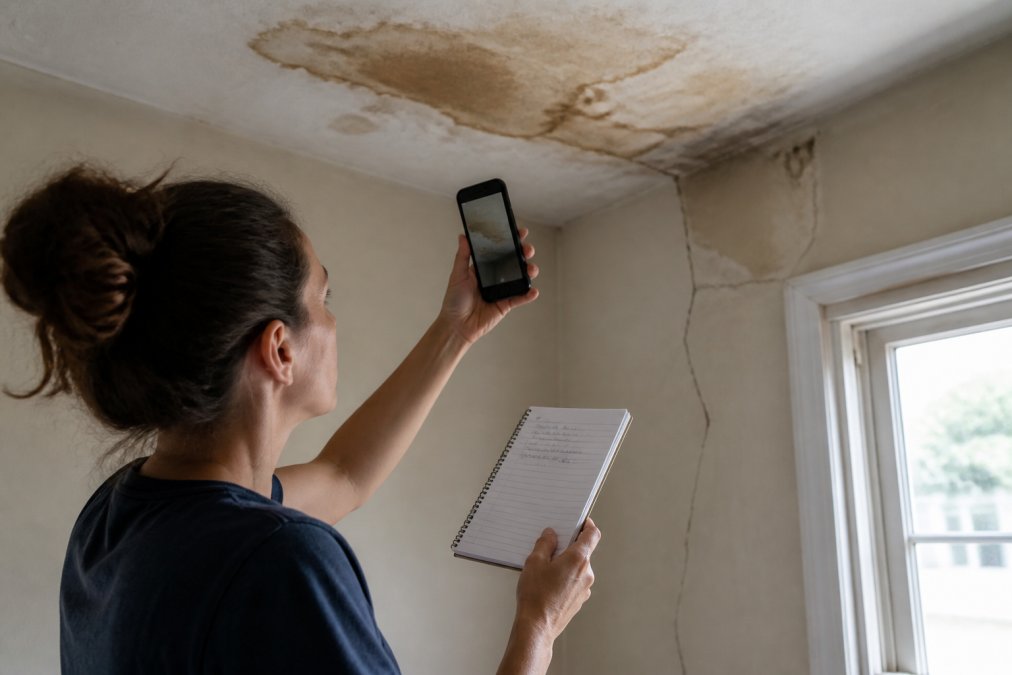
Follow this sequence:
- Photograph and video every affected area before any cleanup or repair
- Date-stamp your images and keep a written damage log
- Collect contractor estimates from at least two licensed professionals
- Save every receipt, invoice, and hotel bill related to displacement
- Request the adjuster’s full report and compare it to your own records
Photograph the same damaged area from multiple angles and include something for scale, like a tape measure or a coin. Adjusters dispute vague photos far more often than detailed ones.
Using an Insurance Settlement Demand Letter Template
A demand letter is your formal, written response to a low offer. It states what you are owed, why, and what evidence supports your position. Sending one signals that you are organized and serious.
Use this structure as a starting point:
Re: Claim [Claim Number] – Formal Demand
Dear [Adjuster Name],
I am writing in response to your settlement offer dated [Date] in the amount of [Offer Amount]. After reviewing your estimate against my documentation, I am requesting a revised settlement of [Your Amount].
The difference reflects the following: [list omitted line items, with attached estimates and photographs]. My contractor’s estimate of [Amount] and the attached receipts for [expenses] support this figure.
I request a written response within [number] days. If we cannot reach agreement, I am prepared to pursue appraisal or other dispute resolution options available under my policy.
Sincerely,
[Your Name]
[consumer guidance on filing insurance claims(/2026/09/how-long-do-insurance-claims-take/) | consumer.ftc.gov] can help you understand your rights before you send anything formal.
Negotiation Tactics for a Lowball Settlement Offer
Negotiation is a documented back-and-forth, not an argument. The policyholder who brings evidence and stays calm usually gets further than the one who simply demands more. But the mechanics matter as much as the tone, and most guides skip them entirely.
The Anchoring Bias Works Against You First
The adjuster’s opening number is an anchor. Research on negotiation consistently shows that the first figure put on the table pulls the entire range of the discussion toward it, even when both sides know it is arbitrary (pubmed.ncbi.nlm.nih.gov). That is why a lowball first offer is not really about the number; it is about setting the ceiling for everything that follows.
Your counter-anchor should be your documented repair cost, not a round number you invented. If your contractor estimates total $68,400 and the insurer offered $31,200, your counter is $68,400 with the estimate attached, not $50,000 because it ‘feels’ like a compromise. A number tied to evidence is much harder to dismiss than a number tied to emotion.
Time Pressure Is a Script, Not a Deadline
A common adjuster tactic is implying the offer expires soon, or that rejecting it means starting the claim over. In practice, most policies do not contain a clause that voids an offer the moment you hesitate, and reopening a claim is usually a matter of paperwork, not a full reset. When you hear a deadline that is not written into your policy, treat it as a negotiation move rather than a fact.
A useful response is to put the pressure back in writing: ‘I received your offer dated [date]. I am reviewing it against my contractor’s estimate and will respond in writing within [number] days.’ That single sentence converts a phone call into a paper trail and removes the artificial clock.
Reciprocity and Small Concessions
Skilled adjusters often open with a small, easy concession, agreeing to cover a minor line item, to create a sense of reciprocity before asking you to accept the larger number. Recognizing the pattern lets you accept the small item without feeling obligated to fold on the big one.
Practical Rules That Hold Up
- Never accept a verbal promise; ask for everything in writing
- Reference your policy’s coverage clauses by section
- Set a reasonable deadline for a response
- Keep a log of every call, email, and letter
- Counter once with your full documented number before offering any compromise
- If the adjuster will not put a revised offer in writing, that itself is information
Accepting a settlement check and signing a release of liability ends your claim permanently. Once you cash that check, you generally cannot reopen the dispute, even if new damage appears later. Read the release language before you sign, not after.
Sample Counteroffer Language You Can Adapt
“Thank you for your offer of [Amount]. Based on the attached contractor estimates totaling [Amount] and photographs documenting [specific damage], this figure does not reflect the full scope of my loss. I am requesting [Amount] to cover [specific items]. I am open to discussing this further and can provide any additional documentation you need.”
Keep it short, specific, and tied to evidence. Send it in writing, keep a copy, and note the date you sent it.
When to Reject an Offer and Consider Hiring a Public Adjuster for Property Damage
Reject the offer when the gap between what you can prove and what the insurer will pay stays wide after good-faith negotiation. At that point, professional representation often pays for itself.
Hiring a public adjuster for property damage means bringing in a licensed advocate who works for you, not the insurer. A public adjuster re-evaluates your policy, rebuilds your documentation, and negotiates directly with the carrier. Public adjusters are licensed at the state level, and their fees are typically a percentage of the recovery, which is why the ‘No Recovery, No Fee’ structure exists: it aligns their incentive with yours.
Barclays Public Adjusters operates on a No Recovery, No Fee policy, which means you owe nothing unless a recovery is secured. Our team handles the documentation and negotiation so you can focus on repairs.
Bad Faith Insurance Practices and Your Options
Bad faith is when an insurer handles a claim unreasonably. The line is not always obvious, but common patterns include:
- Denying a valid claim without a written explanation tied to policy language
- Delaying payment without a legitimate reason after coverage is confirmed
- Failing to investigate properly, for example, relying on a desk review instead of an inspection when the damage warrants one
- Misrepresenting policy language to discourage a legitimate claim
- Offering far below documented damages without justification
If you suspect bad faith, document everything: the dates of every communication, the exact language used, and the gap between what you submitted and what was offered. Remedies vary by state, and some states allow extra-contractual damages when bad faith is proven, so this is the point where consulting an attorney is worth the cost of a conversation.
The Release of Liability Trap
Before you sign anything, understand what a release does. A settlement release is a contract: in exchange for the payment, you give up the right to pursue the claim further. Once signed and the check is cashed, reopening the claim is generally not possible, even if a contractor later finds hidden damage, mold behind the walls, or a code upgrade the original estimate missed.
That is why the review step matters. If the offer is close but not complete, ask for a revised release that covers the missing scope before you sign, not after.
information on insurance claim disputes and consumer protections outlines how disputes are typically resolved through appraisal, mediation, or arbitration, all of which are options before litigation, and all of which are foreclosed once a release is signed.
Frequently Asked Questions
How do you respond to a low settlement offer from an insurance company?
Start by requesting the adjuster’s written justification for the valuation, then compare it against your own documentation, including contractor estimates, medical records, and receipts for out-of-pocket expenses. Send a formal counteroffer in writing that cites specific line items the adjuster undervalued or omitted. Reference your policy language on covered losses. If the adjuster refuses to budge, you can request a re-inspection, invoke your policy’s appraisal clause, or bring in a licensed public adjuster to negotiate on your behalf.
Why is my insurance settlement offer so low?
Common reasons include incomplete claim documentation, adjusters undervaluing repair costs, and policy limits you may not be aware of. Adjusters also know many homeowners accept the first number without pushing back, so initial offers often leave room for negotiation. Reviewing your policy limits, gathering proof of loss, and comparing the offer to independent contractor estimates can reveal where the gap comes from.
Should I reject a settlement offer if it is too low?
You can reject an offer that does not cover your documented losses, but do it strategically. Send a written counteroffer first, with evidence supporting your number. Rejecting without a clear alternative can stall your claim. If negotiations reach a dead end and the gap is significant, a licensed public adjuster can review your policy and push for a fair settlement. Never sign a release of liability until you are satisfied with the amount.
What evidence do I need to counter an insurance settlement offer?
You need proof of loss that supports every dollar you are claiming. That includes contractor or repair estimates, photographs and video of the damage, receipts for emergency repairs, and any correspondence with the adjuster. A written demand letter that ties each expense to a policy provision strengthens your position. The more organized and specific your documentation, the harder it is for the adjuster to justify a lowball number.
Can I negotiate an insurance settlement after receiving an offer?
Yes. A settlement offer is a starting point, not a final decision. You can submit a counteroffer, request a re-inspection, or invoke the appraisal clause in your policy if you and the insurer disagree on the value of damages. Keep everything in writing and set a reasonable deadline for the insurer to respond. If the insurer refuses to negotiate in good faith, that may constitute bad faith, and you may want to consult a public adjuster or attorney.
When should I hire a public adjuster for a low settlement offer?
Hire a public adjuster when the gap between the offer and your documented losses is large enough that professional negotiation makes financial sense. Public adjusters work on a contingency fee, so you pay only if they recover more for you. They handle claim valuation, evidence gathering, and direct negotiation with the insurance company. If your claim involves complex damages like mold, roof leaks, or fire and smoke, their expertise can be especially valuable.
A low settlement offer is not the final word on your claim. It is an opening move, and you have more leverage than the adjuster wants you to believe. If the gap between the offer and your documented damages feels impossible to close alone, Barclays Public Adjusters can step in with expert evaluation, thorough documentation, and direct negotiation backed by a No Recovery, No Fee policy. Schedule your FREE Claim Consultation today and find out what your claim is actually worth.