
Table of Contents
- Start Your Hurricane Damage Claims the Right Way
- Hurricane Damage Insurance Claim Checklist
- Documents Needed for a Hurricane Insurance Claim
- Review Your Policy: Coverage, Exclusions, and Deductibles
- Distinguishing Wind, Rain, Storm Surge, and Flood Damage
- How Long Does a Hurricane Insurance Claim Take?
- Hurricane Insurance Claim Denial: Your Options
- When to Bring in a Public Adjuster
- Frequently Asked Questions
Last Updated: October 17, 2026
Start Your Hurricane Damage Claims the Right Way
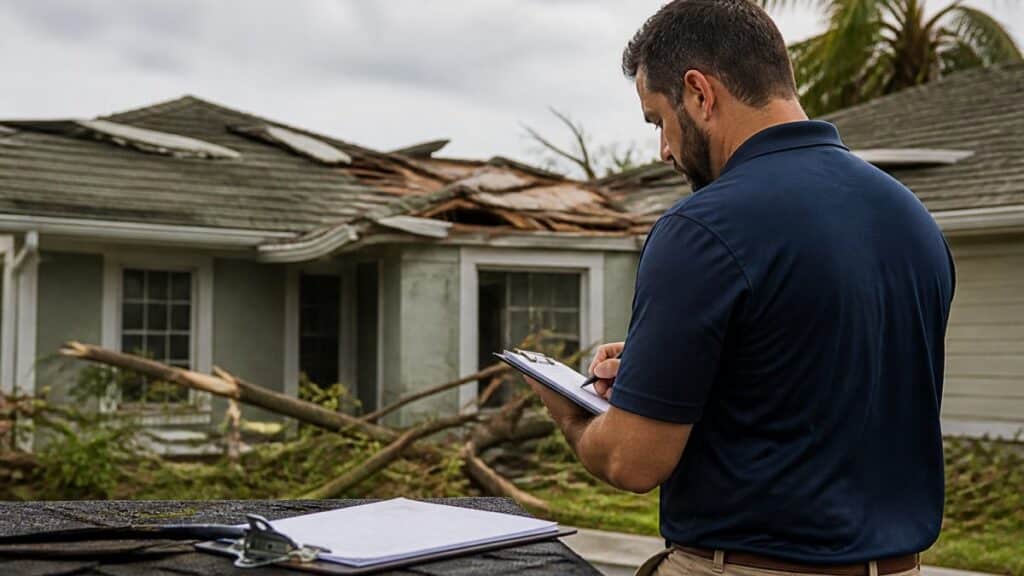
The process for filing hurricane damage claims starts with two moves: report the loss to your insurer right away, then stop the damage from spreading. Everything else follows from those two. At Barclays Public Adjusters, we see the same pattern in South Florida after every storm. Homeowners who act in the first 48 hours recover more than those who wait a week to call.
Here is the part most guides get wrong: your claim does not begin when the adjuster shows up. It begins with your first phone call and your first set of photos. Those early records set the ceiling on what you can recover later.
Report the Loss Promptly
Call your insurer or file online as soon as it is safe to do so. Most homeowners policies require prompt notice of a loss, and delays give the carrier room to question whether the damage is even storm-related. Report the claim, get a claim number, and write down the date, time, and name of the person you spoke with. That single note has settled more disputes than any argument.
Prevent Further Damage With Temporary Repairs
Your policy generally requires you to mitigate further damage. That means tarps on the roof, boards over broken windows, and shutting off water where pipes burst. Keep every receipt. These costs are often reimbursable on top of the main claim, but only if you can prove what you spent.
Do not make permanent repairs before the adjuster inspects. If you replace the roof before the inspection, the carrier may argue the original damage can no longer be verified. Temporary fixes protect the home; permanent ones can cost you the claim.
Hurricane Damage Insurance Claim Checklist
A hurricane damage insurance claim checklist keeps you from missing steps that carriers count on you forgetting. Work through it in order, and keep a copy of everything you send.
- Report the loss and record your claim number
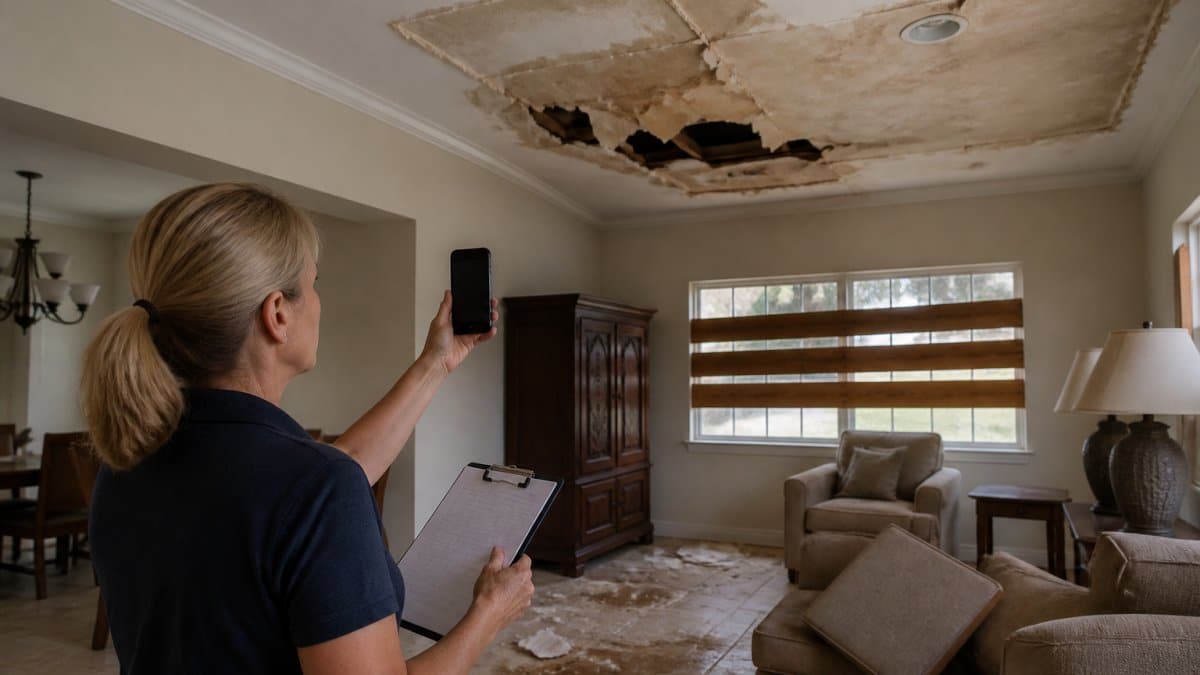
- Photograph and video every damaged area before cleanup
- Make temporary repairs and save all receipts
- List damaged personal property room by room
- Pull your policy and read the coverage and exclusions
- Keep a log of every call, email, and adjuster visit
- Submit your proof of loss by the deadline in your policy
- Review the adjuster’s estimate line by line
- Request a supplement if the scope is incomplete
Documents Needed for a Hurricane Insurance Claim
The documents needed for a hurricane insurance claim fall into four groups: proof of the loss, proof of ownership, proof of value, and proof of expense. Carriers rarely pay what they cannot see in writing.
- Photos and video of every damaged area, taken before you move anything
- A room-by-room inventory of damaged belongings with brand, age, and replacement cost
- Receipts and bank statements for high-value items like electronics and furniture
- Temporary repair receipts for tarps, labor, and materials
- Your policy declaration page and any endorsements
- A claim log of calls, emails, and inspection dates
- Proof of loss form, signed and dated
A common mistake is tossing damaged items before the adjuster sees them. Keep them if they are safe to store. If mold or contamination makes that impossible, photograph each item first and note the date you disposed of it.
Review Your Policy: Coverage, Exclusions, and Deductibles
Read the policy before you argue about money. Three numbers decide most hurricane claims: your dwelling limit, your hurricane deductible, and your coverage for additional living expenses.
Most homeowners policies treat the hurricane deductible as a percentage of the dwelling limit rather than a flat dollar amount. That means a higher coverage limit can mean a higher deductible, and you need to know that figure before you judge any settlement offer.
Then check the exclusions. Flood damage is typically excluded from a standard homeowners policy and requires separate flood insurance (Buy a Flood Insurance Policy). Wind damage is usually covered, but some policies carry separate wind deductibles. Matching the damage type to the right policy is the single most important step in the whole process.
Distinguishing Wind, Rain, Storm Surge, and Flood Damage
Damage type decides which policy pays, and insurers are strict about the lines. Here is how the categories usually break down:
- Wind damage: lifted shingles, torn siding, downed fences. Usually covered under homeowners insurance.
- Rain damage: water pushed through a breached roof or window. Often covered when the breach came from wind.
- Storm surge: seawater pushed ashore. Generally treated as flood.
- Flood damage: rising water, storm runoff, and overflow. Requires flood insurance.
The wind-versus-flood question is where many claims get denied or underpaid. A roof torn open by wind that then lets rain in is a wind claim. Water that rose from the ground is a flood claim. Document the direction and source of the water in your photos and notes, because that detail often decides the outcome.
How Long Does a Hurricane Insurance Claim Take?
There is no single federal deadline for hurricane claims. The clock is set by your policy and by your state’s insurance code, and the two often run on different tracks.
Clock 1: Notice of loss. Your policy requires prompt notice, commonly stated as “immediately” or within a short window after discovery.
Clock 2: Acknowledgment. Most state insurance departments require the carrier to acknowledge a claim within a set number of days after notice, often in the range of 10 to 15 calendar days, though the exact figure varies by jurisdiction.
Clock 4: Supplemental claims. If damage is discovered after the first payment, hidden roof decking rot, mold behind drywall, a cracked slab, you can usually file a supplement.
Because these figures vary by state and by policy form, verify the actual numbers in two places: your policy’s “Duties After Loss” section and your state insurance department’s published claims-handling rules. State insurance department claims-handling rules
As a practical matter, a clean claim with a complete file often resolves in a few weeks to a few months. Large-loss, disputed, or appraisal-bound claims routinely run six months to a year or more.
Schedule your FREE Claim Consultation today →
Build a one-page claim timeline log: date of loss, date reported, claim number, date of each carrier contact, date proof of loss submitted, and date of each payment or denial letter. When a claim stalls, that log is the document that shows exactly which deadline the carrier missed.
If your claim goes quiet past the state deadline, a short written follow-up that cites the specific rule and the date of your last submission is usually more effective than a phone call. Keep a copy.
Hurricane Insurance Claim Denial: Your Options
A hurricane insurance claim denial is not the end of the road, but the order in which you respond matters.
Step 1: Request the specific reason in writing. Carriers must explain their position. Ask for the denial letter, the adjuster’s estimate, and any engineer’s or consultant’s report the carrier relied on.
Step 2: Review the estimate line by line. This is where most denials and underpayments are actually won or lost, and it is the step most guides skip. Put the carrier’s estimate next to your own contractor’s estimate and compare scope, not just total. Look for:
- Missing line items, tear-out, haul-away, permits, code-upgrade costs, and matching of undamaged materials are commonly omitted.
- Quantity errors, square footage of roofing, drywall, or flooring that does not match measurements.
- Unit price differences, the carrier may use a regional pricing database that is lower than local labor and material costs.
- Cause-of-loss mismatches, damage coded as flood when your evidence shows wind breach, or vice versa.
Document each disagreement in a written line-item comparison. A scope disagreement supported by photos and measurements is far stronger than a general objection to the total.
Step 3: Request a reinspection. Ask for a reinspection with your documentation in hand and, if possible, your contractor present.
Step 4: File a supplement. If the denial or underpayment rests on an incomplete scope, a supplement is the correct tool, not an appeal of the whole claim.
Step 5: Use the appraisal clause if your policy has one. Appraisal is a dispute-resolution mechanism built into many policies.
Step 6: File a complaint with your state insurance department. A regulator complaint creates a record and often prompts a carrier response.
Step 7: Bring in professional help if the amount in dispute justifies it. A licensed public adjuster or an attorney experienced in first-party property claims can take over documentation and negotiation.
Denials for “wear and tear” are common after hurricanes and can often be overturned with dated photos, maintenance records, and an engineer’s report linking the damage to the storm rather than to age.
The strongest denial response is a written line-item comparison: carrier estimate on one side, your documented scope on the other, with photos and measurements supporting every difference. General objections to the total rarely move a carrier; specific, documented scope gaps do.
When to Bring in a Public Adjuster
Bring in a public adjuster when the gap between the offer and the real repair cost is large enough to matter, or when the carrier has denied or stalled your claim. A public adjuster works for you, not the insurer, and is licensed to document, value, and negotiate the claim on your behalf.
At Barclays Public Adjusters, we evaluate your policy, build the documentation file, and negotiate directly with the carrier. Our No Recovery, No Fee policy means we are paid only when you recover. For South Florida homeowners facing a denial, an underpayment, or a claim that has gone quiet, that changes the math on getting help.
| Situation | Best Next Step | Why |
|---|---|---|
| Claim approved, offer looks fair | Accept and close | No dispute to resolve |
| Offer below repair estimates | Request supplement or hire an adjuster | Scope is likely incomplete |
| Claim denied | Appeal with documentation | Denials are often reversible |
| Claim stalled past deadline | Written follow-up, then escalate | Deadlines create use |
| Large or complex loss | Hire a public adjuster | Professional negotiation pays |
Frequently Asked Questions
How long do you have to file a claim after a hurricane?
Most homeowners policies require you to report a hurricane damage claim promptly, and many set a deadline of 60 days to 1 year from the date of loss, depending on your policy and state rules. Florida law generally gives you up to 3 years to file a lawsuit over a claim, but waiting can hurt your payout. Report the loss as soon as you notice damage, and check your policy’s claim notice and proof of loss deadlines so you do not miss them.
What evidence do I need to support a hurricane damage claim?
Build a file with dated photographs and video of every damaged area, a written inventory of damaged personal property with values, receipts for temporary repairs, and any contractor repair estimates. Keep your policy number, claim number, and all correspondence with the insurer. This documentation is essential to the process for filing hurricane damage claims and helps prevent underpayment when the insurance adjuster inspects your property.
What should I do if my hurricane insurance claim is denied?
Read the denial letter carefully to see the stated reason, such as a policy exclusion, a missed deadline, or a disputed cause of damage. You can request a re-inspection, submit additional evidence like photos or an independent repair estimate, and file a formal appeal. If the insurer still refuses to pay covered damage, a licensed public adjuster can review your policy and negotiate on your behalf, often under a no recovery, no fee arrangement.
How long does a hurricane insurance claim take to pay out?
Timelines vary by policy and state. Many states require insurers to acknowledge a claim within a set number of days and to pay or deny within a defined period after proof of loss, often 30 to 90 days. Complex hurricane claims with large repair scopes or disputes can take several months. Keep records of every submission and follow up in writing so delays are documented if you need to escalate.
A hurricane claim rewards preparation and punishes delay. If your claim has been denied, underpaid, or stuck in review, Barclays Public Adjusters can step in with a full policy review, a documented damage file, and direct negotiation with your carrier. Our licensed adjusters work on a No Recovery, No Fee basis, so you owe nothing unless we recover for you. Schedule your free claim consultation today and let us take the dispute off your plate.