
Quick Summary
To report wind damage, call your insurer or file online as soon as you find it, since most policies require prompt notice. Have your policy number ready, photograph the damage before moving anything, and keep damaged parts until an adjuster inspects them.
- Check your declarations page and policy for the exact reporting deadline, which varies by insurer.
- Confirm the damage is safe to inspect and avoid downed power lines and standing water.
- Photograph everything, record a video walkthrough, and make a written inventory of damaged items.
- Keep damaged materials until the adjuster has seen them, and save receipts for temporary repairs.
Table of Contents
- When and How Quickly You Need to Report Wind Damage
- Gathering Your Policy Information Before You Call
- Documenting the Damage: Photos, Videos, and Inventory
- What to Say When You Call or File Online
- Preventing Further Damage and Keeping Receipts
- Writing a Wind Damage Claim Letter (With Template Elements)
- Your Next Step: Deciding Whether to Bring In a Public Adjuster
- Frequently Asked Questions
When and How Quickly You Need to Report Wind Damage
Last Updated: November 21, 2026
If a windstorm tore off shingles, lifted siding, or broke a window, the clock on your insurance claim has already started.
Most homeowners policies require you to report damage within a set window after the storm.
Here is what to do first:
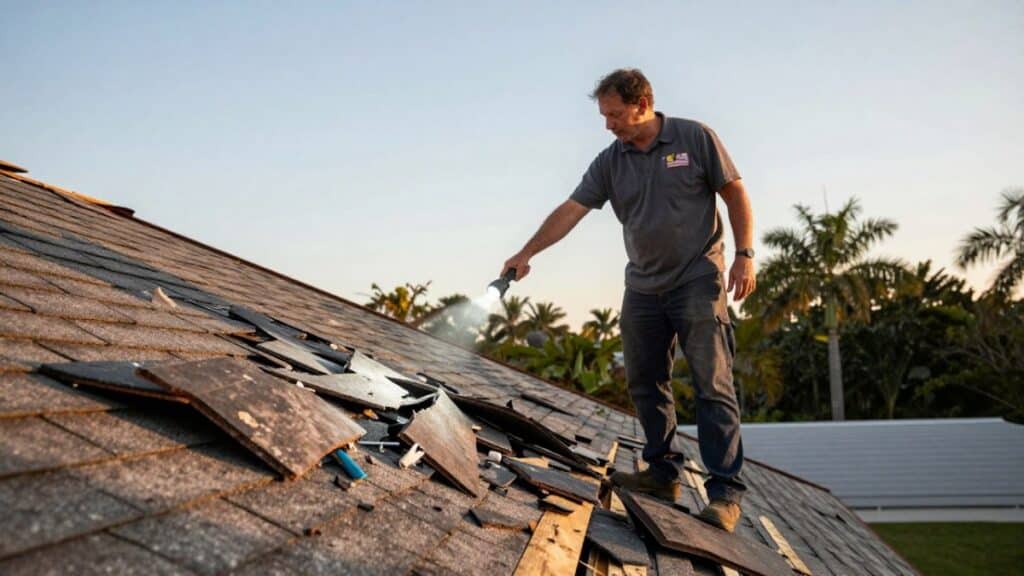
- Confirm the damage is safe to inspect. Stay away from downed power lines and standing water. Our visible roof damage signs that justify filing show what to look for.
- Note the date and approximate time the storm hit.
- Take a few quick photos before you move anything.
- Call your insurer or file online to open the claim.
A common mistake is assuming minor damage is not worth reporting.
Many homeowners also wait to see if a contractor will fix the problem first. That approach can backfire.
Gathering Your Policy Information Before You Call
Before you contact your insurer, pull together the details they will ask for. Having them ready keeps the call short and organized.
Collect these items:
- Your policy number
- Your declarations page, which lists your coverage limits and deductibles
- The name of the insurance company and your agent’s contact information
- The date, time, and type of storm
- A short description of the damage you can see
Pay close attention to your wind deductible.
Also review exclusions. Policies often exclude damage from wear and tear, poor maintenance, or flooding, and flood damage typically requires a separate policy.
The article lists the details to have ready and the coverage terms to check before you file, which can be summarised as follows.
| Item | What to check | Why it matters |
|---|---|---|
| Policy number | Find it before calling | Keeps the call short |
| Declarations page | Lists coverage limits and deductibles | Shows your coverage |
| Wind deductible | Often a percentage of dwelling coverage | Shows what you may pay |
| Agent contact | Name and phone number | Helps if questions arise |
| Storm details | Date, time and type of storm | Supports the claim |
| Exclusions | Wear and tear, poor maintenance, flooding | Limits what is covered |
Documenting the Damage: Photos, Videos, and Inventory
Strong documentation makes the claim process faster and harder to dispute. Start before you clean up anything.

!Homeowner photographing storm-damaged roof shingles in a residential yard
Use these methods to record the damage:
- Photograph everything. Take wide shots of each structure and close-ups of each damaged area.
- Record a video walkthrough. Narrate what you see, including the date and location of each item.
- Make a written inventory. List each damaged item, its age, and its approximate value.
- Keep the damaged parts. Save broken shingles, fallen tree limbs, or cracked glass until the adjuster inspects them.
For the inventory, include receipts, appliance manuals, or photos of items taken before the storm. These records help prove what you owned and what it was worth.
Watch out: do not throw away damaged property before the insurer has a chance to see it.
Documenting Causation, Not Just Damage
The harder question an adjuster will ask is not “what broke?” but “what broke it?” Wind claims are frequently disputed on causation, the insurer may argue the shingles were already curling, the fence was rotted, or the leak predated the storm.
Build a causation record with these steps:
- Capture the pattern of damage. Wind damage tends to be directional: missing shingles clustered on one slope, lifted ridge caps, torn flashing, or debris impact marks. Photograph the pattern from multiple angles and note which side of the structure faces the prevailing wind.
- Photograph the edges, not just the hole. Show the torn or lifted edge of a shingle, the crease in bent metal, or the fresh break in a fence board. Clean breaks and lifted fasteners suggest force; frayed, mossy, or rusted edges suggest age.
- Date-stamp your evidence. Use your phone’s timestamp or a newspaper in the frame. A dated photo taken the day of the storm is far stronger than one taken a week later after a contractor has been on the roof.
- Keep a written timeline. Note when the storm hit, when you first noticed each item, and when you made each temporary repair. A short log is persuasive and easy to produce later.
- Preserve pre-storm evidence. If you have older photos from a home inspection, a listing, or a prior claim, pull them. They can show the roof or siding was in good condition before the storm.
A common pattern is that insurers deny or reduce wind claims by attributing damage to maintenance.
If the damage is large or the cause is contested, ask the adjuster to document their causation finding in writing. That written explanation becomes the basis for any later dispute, appraisal, or complaint.
What to Say When You Call or File Online
When you call, stay calm and stick to facts. Here is a simple script you can follow:
- “I’m calling to report wind damage from the storm on [date].”
- “My policy number is [number], and the property address is [address].”
- “I can see damage to [roof, windows, fence, and so on]. I’ve taken photos.”
- “I’d like to open a claim and find out the next steps for an adjuster inspection.”
Write down the representative’s name, the claim number, and the date and time of the call. Ask when an adjuster will contact you.
If you file online, follow the same order. Describe only what you can see and document, and avoid guessing at the cause or the total cost.
Keep your descriptions factual. Saying “shingles lifted and several are missing along the north slope” is more useful than guessing at the total repair price.
Preventing Further Damage and Keeping Receipts
Your policy requires you to take reasonable steps to prevent further damage. Insurers generally pay for emergency repairs that stop additional loss, but they do not pay for upgrades.
Reasonable steps include:
- Covering a damaged roof with a tarp
- Boarding up broken windows
- Pumping out standing water
- Moving undamaged belongings away from leaks
Keep every receipt for these expenses. Save invoices from contractors, hardware store purchases, and rental equipment. Label each receipt with the date and purpose.
A practical tip: take a photo of the temporary repair itself. This shows the adjuster what you did and when.
Writing a Wind Damage Claim Letter (With Template Elements)
A short written letter can back up your phone call and give you a dated record of the claim. Include these elements:
Date: [Today’s date]
To: [Insurance company name and claims address]
Re: Claim number [number], policy number [number]I am writing to report wind damage to my property at [address] from the storm on [date]. Damage includes [list items]. I reported the claim by phone on [date] and was given claim number [number].
Enclosed are photos, an inventory of damaged items, and receipts for temporary repairs. Please confirm receipt and let me know the next steps, including when an adjuster will inspect the property.
Sincerely,
[Your name, phone number, and email]
Send the letter by a method that creates a record, such as certified mail or email with a read receipt. Keep a copy for your files.
Your Next Step: Deciding Whether to Bring In a Public Adjuster
Once you have reported the claim, the process does not always move smoothly. Delays, low offers, and partial denials are common, and how you respond in the first few weeks often determines the outcome. Work through the steps below before deciding whether to bring in outside help.
If the Insurer Delays
Most policies require the insurer to acknowledge and act on a claim within a reasonable time. The specific timeline depends on your policy and your state’s insurance rules.
- Put your follow-up in writing. Email or send a letter asking for the status, the assigned adjuster, and the next scheduled step. Keep a copy.
- Log every contact. Record the date, the representative’s name, and what you were told. A pattern of unanswered calls is itself useful evidence.
- Ask for the delay in writing. A written explanation forces the insurer to state a reason and creates a record.
If the Offer Is Too Low
A low offer is usually a documentation problem or a scope disagreement, not a final number.
- Request the adjuster’s estimate in writing. Compare line items against your own photos and contractor estimates.
- Submit a supplemental claim. Provide the missing photos, receipts, contractor bids, and a written list of items the estimate omitted. Supplemental documentation is a normal part of the process, not an accusation.
- Ask for a reinspection. A second look with your contractor present often resolves scope disputes.
If the Claim Is Denied
A denial letter should state the reason and cite the policy language. Read it carefully and compare it to your policy.
- Request the specific policy provision relied on. If the insurer cannot point to one, that is worth documenting.
- Respond in writing with your evidence. Address the stated reason directly using your causation record, photos, and contractor opinion.
- Ask about the appraisal clause. Many policies include an appraisal process for disputes over the amount of loss, where each side selects an appraiser and a neutral umpire resolves differences. Appraisal does not resolve coverage denials, only valuation disputes.
- Consider a regulatory complaint. State insurance departments accept consumer complaints about claim handling. A complaint does not decide your claim, but it creates an official record and often prompts a response.
When to Bring In a Public Adjuster
Consider a public adjuster if the settlement offer seems too low, the insurer denies part of the claim, the process drags on, or the damage is large enough that the percentage fee is worth the potential increase. Our guide to whether hiring a public adjuster is worth it walks through the cost trade-off.
Before signing, confirm the fee percentage in writing, ask whether the agreement covers supplemental claims, and check the adjuster’s license with your state insurance department.
Barclays Public Adjusters works with property owners in South Florida on wind, water, fire, and other storm claims. You can browse the public adjuster services offered here. Their “No Recovery, No Fee” policy means you pay nothing unless the claim results in a settlement.
Frequently Asked Questions
How long do you have to report wind damage to insurance?
Most homeowners policies require prompt notice, and many insurers set a specific window in the policy language. Read your policy’s conditions section for the exact deadline, and report as soon as you discover the damage rather than waiting for the timeline to run out. Acting quickly also helps prevent further damage, which insurers may not cover if you delayed mitigation. If you are unsure about a deadline, report the loss now and ask the insurer to confirm the timeline in writing.
What should you not say in an insurance claim?
Avoid guessing about causes, estimating repair costs you have not verified, or describing damage as older or newer than you know it to be. Do not admit fault or minimize the damage to speed things up, and do not sign a settlement or release before you understand what it covers. Stick to facts you can document: when the storm occurred, what you observed, and what you have done to protect the property. Ask for a copy of anything you sign.
Do insurance companies pay for wind damage?
Many standard homeowners policies cover wind damage, but coverage depends on your policy form, your deductible, and any wind or hurricane deductible or exclusions that apply in your area. Some policies pay actual cash value first and replacement cost later, so read the settlement terms carefully. Damage from poor maintenance or pre-existing wear may be excluded. A review of your declarations page and endorsements will show what applies to your property.
Should you call your insurance company or a roofing contractor first?
Report the claim to your insurance company first, then arrange temporary protection and an inspection. Your insurer’s adjuster will need to see the damage, and a contractor’s repairs before that inspection can complicate the claim. Get any emergency tarping done to prevent further damage, keep the receipts, and photograph the damage before anyone changes it. Be cautious with contractors who promise to waive your deductible, since that practice may violate state rules.
