
Last Updated: November 9, 2026
Quick Summary
To win a slow plumbing leak insurance claim, document the damage with dated photos and keep every water bill and invoice before any repairs begin. Insurers often deny these claims under seepage or long-term leakage exclusions, so you must show the damage was sudden and that you acted promptly once you knew about it. Consider a public adjuster for disputed or high-value claims.
- Take dated photos and videos of the leak before calling a plumber or starting cleanup.
- Keep monthly water bills, since a sudden spike in usage helps show when the leak began.
- Insurers often deny slow leaks under the seepage exclusion for continuous or repeated leakage.
- Shut off the water supply and begin mitigation as soon as you discover the leak to meet your duty to limit damage.
- For disputed or high-value claims, a public adjuster works for you and typically takes a percentage of the settlement.
Table of Contents
- Why Slow Plumbing Leaks Are Hard to Claim
- Tip 1: Document the Leak Before Anything Is Repaired
- Tip 2: Understand the Long-Term Neglect Exclusion
- Tip 3: Choose Between an Independent Adjuster and a Company Adjuster
- Tip 4: Watch What You Say to the Adjuster
- Tip 5: Track the Timeline and Review the Settlement Offer
- What a Fair Payout Looks Like for Water Damage
- Your Next Step: Getting a Claim Review Before You Accept an Offer
- Frequently Asked Questions
A slow plumbing leak can cost a homeowner thousands of dollars before anyone notices it. Many insurance claims for these leaks get denied or cut short, and the reason is often simple: the homeowner did not document the damage the right way.
Most plumbing leaks start small and grow over time. The Property Insurance Coverage Law Blog notes that most leaks go undetected for a long time, often until significant damage has already appeared (Property Insurance Coverage Law Blog analysis of seepage and leakage exclusions).
Why Slow Plumbing Leaks Are Hard to Claim
Insurers often deny slow leak claims by pointing to “seepage” or “long-term leakage” exclusions. Under these exclusions, the burden of proof can fall on the homeowner to show that the damage was sudden and accidental.
Here is what that means in practice:
- A pipe that bursts suddenly is usually easier to claim.
- A pipe that drips for months is often treated as a maintenance problem.
- Monthly water bills are often the first clue that a leak has been running.
Sudden spikes in water usage on a monthly bill are a primary indicator of a hidden, slow-developing leak (Washington State Office of the Insurance Commissioner guidance on water damage). Keep those bills.
Tip 1: Document the Leak Before Anything Is Repaired
Photos and videos are the strongest evidence you have. Step-by-step methods for documenting hidden water damage walk through each step before repairs begin.
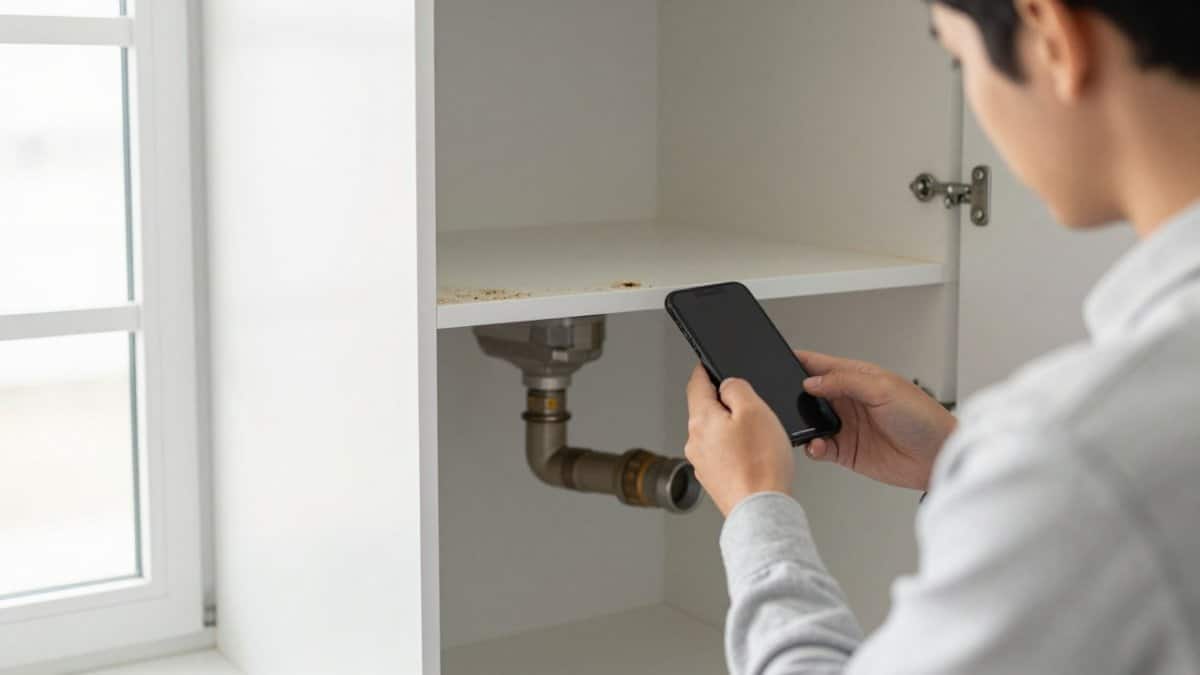
Keep a dated file with:
- Photos and videos with timestamps
- Your monthly water bills
- Plumber invoices and any leak detection reports
Documentation is the core of a claim. Insurers look for a clear timeline, and good records make it harder for them to argue the damage was gradual.
Tip 2: Understand the Long-Term Neglect Exclusion
A slow plumbing leak claim is often denied because of policy language that treats long-running water damage as maintenance rather than a covered loss. Most homeowners policies cover water damage that is “sudden and accidental,” and most exclude damage from “continuous or repeated seepage or leakage” that occurs “over a period of weeks, months, or years.” To see how this applies to a common cause, read Is Water Damage From a Dishwasher Leak Covered?.
That means the fight in a slow leak claim is almost never about whether water damaged your home. It is about when the damage started and whether you acted once you knew. Insurers use the seepage exclusion to convert a covered “sudden” event into an uncovered “gradual” one, and the burden often shifts to you to show the loss was sudden and accidental rather than neglect.
Read the exclusion like an adjuster
Pull your policy declarations page and the water damage section, then highlight every appearance of these terms:
- “Continuous or repeated seepage or leakage”
- “Over a period of time”
- “Weeks, months, or years”
Each of those phrases is a lever the adjuster can pull. Your job is to build a record showing the damage you are claiming was not the slow, ignored kind the exclusion targets. A pinhole leak that finally let go behind a cabinet is treated very differently from a supply line that dripped into a subfloor for a year.
The two-part test most adjusters apply
In practice, most carriers evaluate a slow leak claim against two questions:
- Was the loss sudden and accidental? A fitting that failed, a supply line that burst, or a valve that gave way can qualify even if a smaller leak preceded it, provided you can show the failure was not the predictable result of years of ignored dripping.
- Did you mitigate once you knew or should have known? Policies impose a duty to protect the property from further damage after a loss. If you discovered moisture, shut off the supply, and called a plumber, you have a strong mitigation record. If the leak ran for months after visible staining appeared, the carrier will argue the later damage is your responsibility.
Build the record that defeats the exclusion
Because the exclusion turns on timing and knowledge, your evidence should answer both. Claims that are documented well often include:
- Monthly water bills going back 12 months. A step change in usage, not a gradual creep, supports a sudden failure. A slow, steady rise over a year supports the insurer’s gradual-damage theory, so read your own bills honestly before you rely on them.
- A licensed plumber’s written opinion on the cause and age of the failure. Ask the plumber to state, in writing, what failed, why, and whether it is consistent with a recent event or long-term deterioration. That letter is often the difference between a paid and denied claim.
- A leak detection report from a licensed contractor if the source was hidden, describing where the water traveled and how long the damage appears to have been present.
Mitigation duties you cannot skip
Once you know about a leak, the policy’s duty to mitigate kicks in immediately. Shut off the main water supply, cut power to any wet electrical area at the breaker, and get a plumber and a water mitigation contractor on site. Keep the receipts.
Watch out: Waiting weeks to report a leak or begin repairs hands the insurer a ready-made denial under the seepage exclusion and the mitigation duty, so report the damage and start drying as soon as you find it, even if you have not decided whether to file a claim.
When the exclusion is likely to win
Be realistic about cases where the exclusion is hard to beat: a slow drip under a sink that stained the cabinet for months before anyone acted, a supply line that corroded over years, or damage the homeowner admits noticing and ignoring. In those files, the better strategy is often to separate the covered portion, for example, the sudden failure that finally occurred, from the excluded long-term seepage, and to negotiate the scope rather than argue the exclusion does not apply at all.
Tip 3: Choose Between an Independent Adjuster and a Company Adjuster
Most homeowners do not realize there are three different people who can put a number on their water damage claim, and the choice among them can move a settlement by thousands of dollars. The table below is the short version; the rest of this section explains when each option is worth it for a slow leak claim specifically.
| Option | Who They Work For | Who Pays Them | Best For |
|---|---|---|---|
| Company (staff) adjuster | The insurance carrier | The carrier | Straightforward, well-documented claims |
| Independent adjuster | The carrier, on contract | The carrier | Catastrophe overflow, remote or high-volume inspections |
| Public adjuster | You, the policyholder | You, usually a percentage of the settlement | Disputed, underpaid, or high-value claims |
The company adjuster is not on your side, and that is fine
A staff adjuster is a claims professional who works for the insurer and is measured on how the file is handled. That does not make them dishonest, but their scope of loss is built from the carrier’s estimating platform and the carrier’s view of the policy. For a small, clean, sudden leak with clear photos and a plumber’s invoice, a staff adjuster is usually the fastest path to payment.
What an independent adjuster actually is
An independent adjuster is a licensed contractor the carrier hires to handle inspections, often during catastrophe surges or in remote areas. They are sometimes confused with public adjusters, but they are paid by the insurance company and owe their duties to it. Hiring one yourself does not give you an advocate, it gives you a second set of eyes working for the carrier.
When a public adjuster earns their fee
A public adjuster is licensed by the state to represent the policyholder (Adjuster – crop, independent or public). They inspect the loss, prepare an independent estimate, document the cause and timeline, and negotiate with the carrier on your behalf. Public adjuster fees are often a percentage of the final settlement, and fee limits vary by state. Check your state’s current rules for the applicable cap.
A slow leak claim can be a public adjuster file for several reasons:
- The scope is easy to undercount. Hidden moisture, wet subfloor, and damaged cabinetry are frequently missed by a carrier’s initial estimate. An independent estimate that documents moisture and hidden damage can sometimes recover more than the fee.
- The coverage fight is technical. The seepage exclusion, the mitigation duty, and mold sub-limits all require policy analysis most homeowners cannot do alone.
- The negotiation is repetitive. A public adjuster can go back to the carrier with supplements and revised scopes without the homeowner absorbing the stress of each round.
Questions to ask before you sign with a public adjuster
- What is your fee percentage, and is it capped by state rule for this type of claim?
- Is the fee charged on the gross settlement or the net after your deductible?
- Are you licensed in this state, and what is your license number?
Watch out: Signing a public adjuster contract before you understand the fee basis, gross versus net, and whether the fee applies to the full settlement including amounts you would have recovered anyway, is the most common way homeowners give up more of a slow leak recovery than the representation is worth.
A practical decision rule
If your slow leak claim is small, undisputed, and fully documented, use the company adjuster and keep your file tight. If the claim is denied on seepage grounds, the scope is disputed, mold is involved, or the estimate is well into five figures, get a public adjuster or a coverage attorney to review the file before you accept anything.
Tip 4: Watch What You Say to the Adjuster
Adjusters take notes during every conversation, and those notes can be used in the claim decision. Stick to facts. Say what you saw, when you saw it, and what you did about it. Do not guess about when the leak started, and do not say the damage is “probably old” unless you have proof.
Avoid these common mistakes:
- Admitting you “noticed a drip weeks ago” without context
- Agreeing to a settlement on the spot
- Signing a release before you review the full estimate
Ask for every inspection report in writing, and keep copies of everything you send.
Tip 5: Track the Timeline and Review the Settlement Offer
Write down every date: when you noticed the leak, when you reported it, when the adjuster visited, and when you received each response.
Compare the settlement offer line by line against your own contractor estimate. If the offer already seems too low, see what to do next. Look for missing items, low labor rates, and depreciation taken too far.
What a Fair Payout Looks Like for Water Damage
A fair payout covers repair of the leak source, removal of wet materials, drying, and restoration of damaged finishes and belongings, subject to your policy limits and deductible. Many policies pay replacement cost after repairs are complete and may pay actual cash value first, so check which applies to you. Mold coverage varies widely, and sub-limits often apply, so read that section closely.
Your Next Step: Getting a Claim Review Before You Accept an Offer
If your slow leak claim was denied, underpaid, or you are unsure how the exclusions apply, a claim review can show you where the insurer’s position is weak. Barclays Public Adjusters helps South Florida property owners review the policy, organize the documentation, and negotiate with the insurer. Schedule your FREE Claim Consultation today.
Frequently Asked Questions
Does homeowners insurance cover a slow or hidden plumbing leak?
Many policies cover sudden and accidental water damage but exclude seepage and long-term leakage. Insurers often argue that a slow leak that went unnoticed for months was a maintenance issue rather than a covered event. Whether your claim is covered depends on your specific policy language, the duration of the leak, and how the damage developed. Reviewing your policy declarations and exclusions is the first step, and an independent review can help you understand how the exclusions apply to your situation.
How long does a water damage insurance claim take?
Timelines vary widely. Straightforward claims may settle in a few weeks, while disputed claims involving slow leaks, hidden damage, or mold can take several months or longer. Delays often come from incomplete documentation, disagreements about the cause of damage, or back-and-forth over the scope of repairs. Keeping a dated log of every communication and submitting complete documentation early can help move the process along.
What should I avoid saying to an insurance adjuster about water damage?
Avoid guessing about when the leak started, speculating about the cause, or minimizing the damage. Statements like ‘I think it’s been leaking for a while’ can be used to support a long-term neglect denial. Stick to facts you can verify, such as when you first noticed a stain or a higher water bill, and say you are still investigating the cause if you are not sure. Keep your recorded statements factual and avoid signing documents you have not reviewed.
What evidence should I collect for a water leak insurance claim?
Collect dated photos and videos of the damage from several angles, along with receipts for emergency repairs, water bills showing unusual spikes, and any maintenance records for the plumbing system. Keep damaged materials until the adjuster has inspected them when possible. A plumber’s written report identifying the leak source can also be valuable. Organized evidence makes it harder for the insurer to dispute the timeline and extent of the damage.
